


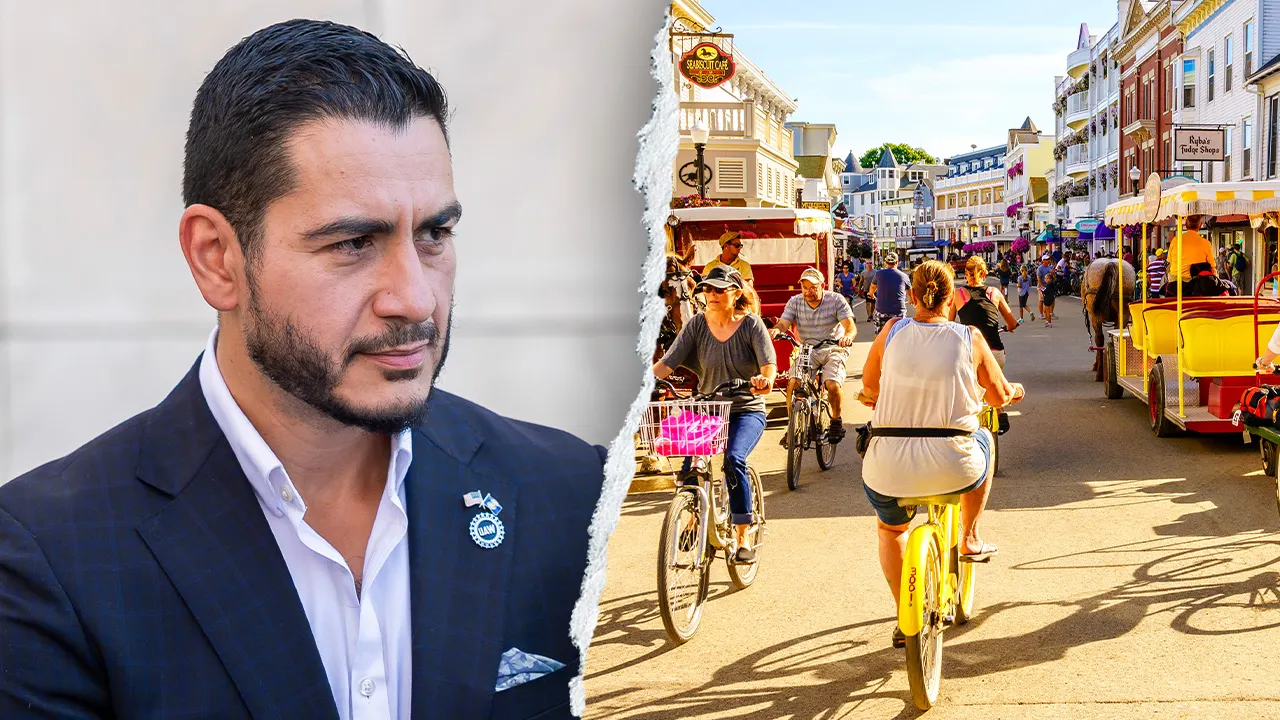
To understand why a simple, offhand comment could ignite a raging firestorm across the Great Lakes State, one must first comprehend the almost sacred status that Mackinac Island holds in the collective imagination of Michiganders. Nestled quietly in the glittering waters of Lake Huron, precisely where the state’s Upper and Lower Peninsulas reach out toward one another, this historic island exists as a living time capsule. Since the late 1890s, when the rumble of early gasoline engines threatened to disturb the peace of local carriage horses, personal motor vehicles have been strictly banned, forcing residents and tourists alike to traverse its historic pathways on foot, by bicycle, or via the rhythmic clip-clop of horse-drawn carriages. With its pristine Victorian architecture, towering limestone cliffs, historic Fort Mackinac, and the majestic facade of the legendary Grand Hotel, the island represents a nostalgic sanctuary of simpler times. For generations of families, a trip to Mackinac is a cherished rite of passage, marked by the sweet, rich aroma of fresh fudge wafting from downtown shops and quiet summer evenings spent watching ferries glide across the water. To criticize this island is not merely to voice a distaste for a tourist destination; to many locals, it is akin to insulting their childhood memories, their heritage, and the very soul of Michigan’s natural and historical beauty.
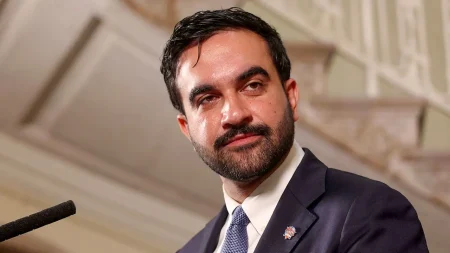
This deep-seated cultural reverence explains why a recently resurfaced video clip of Abdul El-Sayed, a prominent progressive voice and Democratic Senate nominee, sparked such an intense and polarized reaction when it swept across social media. The clip, captured during a 2020 documentary filming El-Sayed’s previous gubernatorial campaign and brought back to light by the news outlet The Midwesterner, shows him walking through the picturesque streets of Mackinac Island. Visibly weary and seemingly out of sync with his idyllic surroundings, El-Sayed looks at the camera and confesses, “I hate Mackinac so much,” before reflecting on the irony that, should his campaign succeed, the governor’s official summer residence on the island would become his temporary home. He goes on to muse about how, every time he has visited the island, he has felt an overriding sense of misery, questioning why he is even there in the first place. When the snippet went viral online, it instantly transformed from a candid, exhausted political behind-the-scenes moment into a highly charged cultural battleground, with critics eagerly seizing on his words as evidence of a deeper, systemic disdain for the traditional American lifestyle.
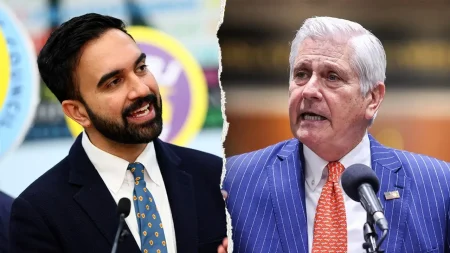
The backlash from conservative commentators and political rivals was swift, severe, and deeply personal, illustrating how quickly modern digital media can turn an unpolished moment into a referendum on a candidate’s character. High-profile figures took to social media to dissect the brief clip, framing El-Sayed’s distaste for the island as a symptom of a broader ideological detachment from everyday citizens. Mollie Hemingway, editor-in-chief of The Federalist, argued that the rising stars of the Democratic Party harbor a fundamental dislike for traditional America and no longer feel the need to hide it for political gain. Others, like sports commentator Clay Travis, shared their own deeply sentimental attachments to the island, expressing sheer bewilderment that anyone could harbor negative feelings toward Northern Michigan during its breathtaking summer season. Former Republican gubernatorial candidate Tudor Dixon took the criticism a step further, contrasting El-Sayed’s fond recollections of his family’s summers in Egypt with his apparent contempt for Michigan’s most celebrated landmark, asserting that his lack of respect for local traditions disqualified him from representing the state’s people. To these critics, the aversion to Mackinac was not just a preference; it was a revealing glimpse into what they characterized as an elitist and unpatriotic worldview.
However, behind the outrage machine lies a crucial layer of political context that defenders of El-Sayed argue was deliberately stripped away to manufacture a controversy. Journalists and supporters quickly pointed out that El-Sayed’s frustration was not directed at the natural beauty of the island, the historic carriage rides, or the local fudge shops, but rather at the grueling reality of the Mackinac Policy Conference. Held annually at the Grand Hotel, this high-profile summit serves as a massive gathering place for Michigan’s political elite, corporate executives, lobbyists, and media power brokers. For grassroots candidates and political outsiders, the conference is often viewed as a dizzying, artificial bubble where the wealthy and well-connected schmooze behind closed doors, far removed from the urgent, everyday struggles of working-class families. Seen through this humanizing lens, El-Sayed’s sigh of exhaustion was not a rejection of Michigan’s heritage, but rather a visceral reaction to the performative, exhausting nature of elite political theater. For any candidate running on a populist, anti-establishment platform, walking into a dense crowd of corporate lobbyists on a secluded island can easily feel like entering the belly of the beast, making a candid confession of misery entirely understandable.
Rather than shrinking from the digital onslaught or offering a standard, sterile political apology, El-Sayed chose to engage with the controversy head-on, injecting a dose of sharp wit and local irony back into the conversation. Responding directly to a post by a conservative influencer account called “End Wokeness,” which had declared Mackinac Island to be “the most American place in Michigan,” El-Sayed pointed out a glaring paradox that resonates deeply within the state’s industrial identity. He dryly noted the humor in labeling a place that completely bans motor vehicles as the ultimate symbol of American and Michigan culture—in a state globally famous as the birthplace of the modern automotive industry and the home of Detroit’s Big Three automakers. By shifting the debate to the state’s deeply ingrained car culture, El-Sayed cleverness highlighted how cultural symbols are often selectively weaponized in political disputes. His counter-argument reminded voters that the definition of what makes a place “authentically Michigan” is complex, and that a car-free paradise, while undeniably beautiful, is also an exceptional luxury rather than a representation of daily life for most working-class residents.
Ultimately, this viral incident serves as a striking microcosm of the modern American political landscape, where the line between genuine human emotion and calculated campaign optics has been entirely erased. In an era dominated by smartphone cameras, round-the-clock media coverage, and instant social media amplification, political figures are rarely allowed to have unscripted, human moments of fatigue, cynicism, or frustration without them being dissected for partisan advantage. What began as a candidate’s private, exhausted complaint about a grueling political retreat was quickly repackaged into a sweeping culture-war narrative about patriotism, belonging, and identity. The saga of the Mackinac Island video highlights the incredible difficulty of navigating public life today, where even a simple walk on a beautiful, historic island can become a high-stakes debate over who truly understands and respects the heart of a community. As voters are left to weigh the outrage against the context, the incident underscores a persistent truth in political communication: in the digital age, a single unguarded phrase can speak volumes, but the human truth behind it is often far more nuanced than a viral headline suggests.