


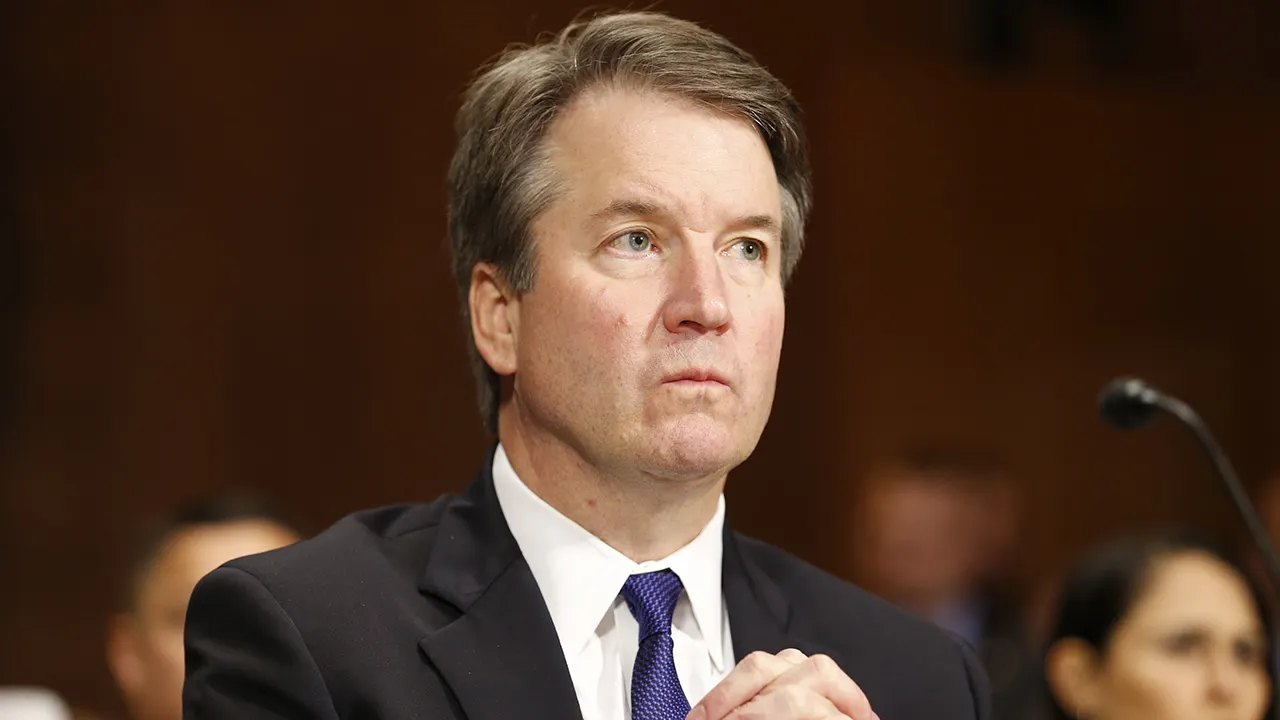
In the high-stakes and deeply emotional arena of American immigration policy, few debates carry the profound human weight and long-term societal impact of the fight over birthright citizenship. When the Supreme Court delivered a major blow to former President Donald Trump’s immigration agenda by blocking Executive Order 14160, the immediate reaction from many was that a definitive line had been drawn. The executive order had sought to unilaterally dismantle a cornerstone of American civil rights by restricting automatic citizenship to children born only to U.S. citizens or legal permanent residents, a move that would have radically altered the lives of millions of families. While the striking 6-3 majority decision seemed to decisively crush this hardline conservative ambition, a more subtle, complex legal drama began to unfold beneath the surface of the ruling. This drama was initiated by none other than Justice Brett Kavanaugh, one of Trump’s own high-profile appointees to the high court. Voting with the majority, Kavanaugh agreed that the president had overstepped his authority, yet his concurring opinion took an unexpected turn. Rather than closing the door on the policy forever, Kavanaugh meticulously laid out a glittering legislative roadmap. By arguing that the executive branch had simply tried to bypass Congress, he handed Republicans a tactical blueprint to pursue the exact same restrictionist goals through federal legislation, transforming a dramatic executive defeat into a long-term legislative battle.
To understand the depth of Kavanaugh’s legal logic and why it has re-energized the conservative movement, one must dive into the rich, tangled history of the Fourteenth Amendment and its statutory evolution. The principle of birthright citizenship, which guarantees that anyone born on U.S. soil is automatically a citizen, was first written into federal statute by Congress in 1940 and later solidified in the Immigration and Nationality Act of 1952. Crucially, as Kavanaugh pointed out, these key pieces of legislation were passed well after the Supreme Court’s landmark 1898 decision in United States v. Wong Kim Ark, a case that firmly established birthright citizenship for the children of immigrant parents. Kavanaugh argued that because Congress adopted this language after the court’s ruling, lawmakers had effectively coded the court’s judicial interpretation into federal statute rather than making it an unyielding constitutional mandate. Therefore, while a sitting president cannot use a single executive order to overturn a law already passed by Congress, Congress itself possesses the ultimate power to rewrite its own statutes. Kavanaugh posited that the modern era, characterized by unprecedented international travel and massive waves of undocumented immigration, has created a socio-political landscape that the Reconstruction-era authors of the 14th Amendment could never have imagined. Consequently, he suggested that Congress has the constitutional authority to write new laws creating specific exceptions to birthright citizenship for children born to parents who are either in the country illegally or on temporary visas, comparing them to historical exceptions like children born to foreign diplomats or occupying enemy forces.
The reaction to this judicial roadmap on Capitol Hill was immediate, exposing deep, intriguing strategic divides among Republican leadership on how to best turn this legal theory into reality. On one side of the debate, key traditionalists and constitutional purists expressed skepticism about the limits of regular legislation. House Speaker Mike Johnson quickly spoke out, labeling birthright citizenship a noble and historically vital concept that had unfortunately become “thwarted, overused, and abused” by modern exploitation. For Johnson, alongside conservative Senators like Rand Paul of Kentucky and Mike Lee of Utah, the only bulletproof way to fix the system is through the grueling process of a constitutional amendment. Paul took to social media to advocate for his recently introduced constitutional amendment, arguing that ordinary bills would simply not withstand the inevitable judicial scrutiny. Meanwhile, Donald Trump took a completely different, much more urgent stance. Releasing a fiery statement on Truth Social, the former president bypassed the idea of a “long and unwieldy” constitutional amendment, calling on Congress to start working immediately on simple legislation to end what he branded as an “expensive and unfair” system. Trump’s call to action injected fresh life into existing legislative proposals, including Senator Tom Cotton’s Constitutional Citizenship Clarification Act, as well as bills by Senators John Cornyn of Texas and Rick Scott of Florida aiming to eliminate the practice of “birth tourism”—where expectant foreign mothers travel to the U.S. solely to give birth to American citizens.
However, the path Kavanaugh charted is far from a guaranteed victory, and it faces a formidable wall of constitutional skepticism from legal scholars and civil rights advocates. The core obstacle stems from the constitutional framing of the Supreme Court’s majority decision, which determined by a 5-4 margin that the Citizenship Clause of the Fourteenth Amendment itself inherently protects birthright citizenship, meaning that any simple piece of congressional legislation attempting to restrict it would face immediate, devastating legal challenges. Law professors, such as Notre Dame’s Haley Proctor, have emphasized that while some conservative justices like Clarence Thomas are open to revisiting historical precedents, the court as a whole does not overturn landmark constitutional interpretations lightly, and the only truly secure way to alter birthright citizenship is indeed through a constitutional amendment. Facing these daunting judicial realities, the Justice Department under the Biden administration decided to quietly pivot its enforcement operations. Rather than expending massive political and legal capital defending the now-defunct Executive Order 14160, federal prosecutors announced a redirected focus on direct law enforcement, launching a wide-reaching crackdown on the criminal networks behind “birth tourism,” prosecuting major visa fraud rings, and targeting those exploiting the system for financial gain rather than engaging in a symbolic constitutional war.
Interestingly, this is not the first time Justice Kavanaugh has acted as a strategic guide for conservative policymakers, offering them a detailed map of how to bypass a wall he himself helped build. Legal analysts quickly pointed to a striking parallel in a recent high-profile Supreme Court case concerning Trump’s trade policies. In that instance, the Court struck down the administration’s attempts to impose sweeping international tariffs, ruling that Trump had overstepped his authority by relying on a federal emergency statute known as the International Emergency Economic Powers Act (IEEPA). Yet, in a very similar fashion to the birthright citizenship ruling, Kavanaugh concurred with the majority’s rejection of executive overreach while simultaneously writing a detailed guide on how the administration could legally achieve the exact same economic policies. He explicitly noted that the former president had merely “checked the wrong statutory box” and pointed out several other existing trade laws that the executive branch could have utilized to impose the tariffs legally, provided they took the proper regulatory steps. This habit of giving “homework” to the executive branch has earned Kavanaugh a unique status among conseratives; Trump himself famously praised the justice on social media as his “new hero” following the tariff dissent, showing how modern political strategists have learned to read Kavanaugh’s opinions not as dead ends, but as practical instructional manuals for future administrative and legislative maneuvers.
At its heart, the battle over birthright citizenship transcends mere legal semantics, touching on the core principles of what it means to be an American and how a nation defines its community. By refusing to let the president settle this matter with the stroke of a pen, the Supreme Court has pushed this complex, deeply personal issue back into the court of public opinion and the chambers of Congress. This shift ensures that the debate will not be quietly resolved by judicial decree, but will continue to play a central role in the nation’s political discourse, shaping upcoming election cycles and legislative agendas for years to come. Whether Congress attempts to follow Kavanaugh’s legislative blueprint, or pushes for the monumental task of a constitutional amendment, the fight has been reframed from a temporary administrative rule into a fundamental battle over national identity. Ultimately, while immigrants, families, and advocate groups breathe a temporary sigh of relief in the wake of the executive order’s defeat, both sides of the political spectrum are gearing up for a protracted, generational struggle—one where the very definitions of belonging, law, and national sovereignty remain hanging in the balance.