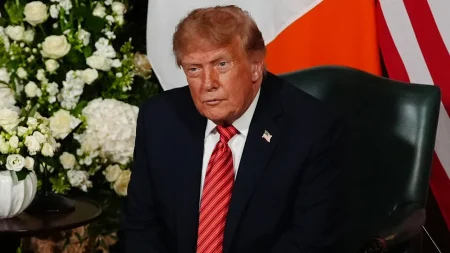



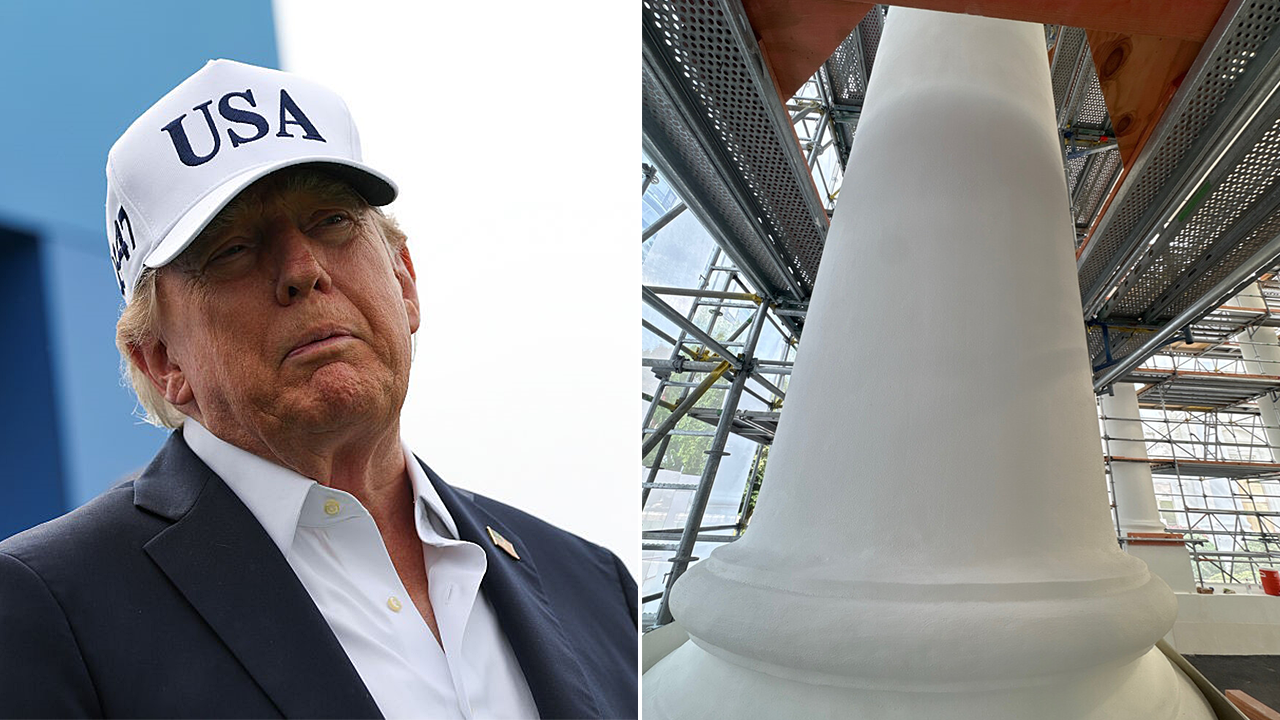
It began, as so many modern presidential proclamations do, not with a formal address or a prime-time press conference, but with a late-night burst of feeling on Truth Social. President Donald Trump, in his signature unfiltered style, looked back at the walls that have housed every American chief executive since John Adams and decided the world needed to know the truth: the White House was a mess before he got his hands on it. In his own words, the building was in “very bad condition, both inside and out” and, to put it plainly, a “dump.” He blamed the previous administrations, suggesting they simply had not cared for the structure the way it deserved to be cared for. But rather than simply complaining, he framed the renovation as a labor of love. “I love renovating it during my spare time, which is not much,” he wrote, striking a chord that felt less like a political statement and more like a homeowner’s proud confession. There is something deeply human about wanting to fix up the place where you live, to make it shine, to leave it better than you found it. For a man who has spent much of his life building towers and polishing gold-plated interiors, the White House was perhaps the ultimate fixer-upper—a historic but aging structure that, in his eyes, needed rescue from decades of neglect.
Trump did not stop at general complaints about peeling paint or worn carpets. He offered a vivid, almost dramatic image of a building in crisis, describing the exterior “skin” of the structure as “practically falling off.” In his telling, this was not just about aesthetics; it was about survival. He claimed the old building had been saved just in time, writing that any further delay would have “destroyed our beloved White House.” He gave credit where he felt it was due, praising the Department of the Interior and the various contractors who, in his words, were doing a “fantastic job.” And then came the boldest claim of all: that the White House, after his renovations, was “in better shape than when built in 1792.” It is a sweeping statement, one that historians may quibble with, but it reveals something important about the president’s mindset. For him, this was never just about maintenance. It was about restoration, about bringing a national treasure back to its former glory—and then some. The pride in his message was palpable. He spoke of the privilege of saving this “Great Structure” with the earnestness of a man who genuinely believes he has been handed a sacred duty. Whether one agrees with his methods or his taste, there is no denying that the White House has become, for him, a deeply personal project.
But these renovations have been anything but uncontroversial. The changes Trump has pursued go far beyond fixing a cracked foundation or repainting a hallway. They are bold, visible, and at times fiercely debated. He has fortified the North Portico entrance, adding a layer of security and grandeur that some see as necessary and others view as an intrusion on the building’s historic character. He has introduced gold ornamentation to the Oval Office and the Cabinet Room, a move that critics have called ostentatious. Then there is the Rose Garden, a beloved landscape that has been redesigned and paved over in parts, drawing the ire of preservationists who argue that some things should remain untouched. Perhaps the most ambitious—and most contentious—project is the demolition of the East Wing to make way for a planned 90,000-square-foot ballroom. That project has sparked a heated legal fight, with preservation groups going to court to stop what they see as an unnecessary and damaging alteration to a building that is both a home and a museum. To Trump, these projects are not acts of vandalism but of vision. He sees a White House that should reflect the power and confidence of the United States, a building that should inspire awe. For him, the gold, the paved gardens, and the grand ballroom are not excess; they are symbols of American greatness. He is not renovating a house—he is crafting a stage for the presidency.
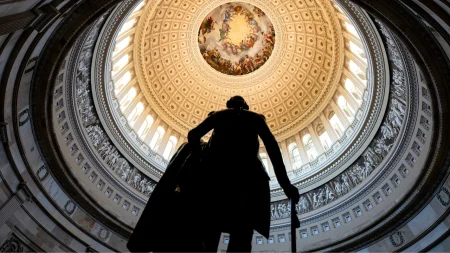
The White House, however, is not the only building in Washington to receive what might be called the Trump treatment. In recent months, the administration has undertaken a broader makeover of the nation’s capital, one that goes beyond bricks and mortar and touches on the very meaning of American memory. The Lincoln Memorial Reflecting Pool has been renovated, with an eye toward restoring its beauty and ensuring it remains a place of quiet reflection. The Eisenhower Executive Office Building, a grand Victorian next door to the White House, has been proposed for a fresh coat of paint, a seemingly small gesture that nonetheless signals a desire to reshape the look of official Washington. And the Kennedy Center, once a temple to the performing arts, has been the subject of extensive renovations under the president’s direct influence. Trump has talked about these changes as proof that America is rejecting what one of his top officials called “decline by choice”—the idea that the country had been wilfully allowing its public spaces to decay. In this telling, every fresh coat of paint, every rebuilt fountain, and every new monument is a rejection of pessimism and a declaration of renewal. It is a political philosophy expressed not in speeches but in scaffolding and marble, in the deliberate reshaping of the physical spaces where Americans encounter their history. The message is simple: America is not in decline; it is being rebuilt.
Yet the most striking, and perhaps the most controversial, proposals have been those that reach beyond renovation into the realm of new construction and commemoration. Trump has backed plans for a 250-foot triumphal arch near Arlington National Cemetery, a structure that would echo the great arches of ancient Rome and Paris. To supporters, it is a fitting tribute to the sacrifices of American soldiers and a symbol of national strength. To critics, it is a monumental intrusion on a landscape that should remain solemn and unchanged. Then there is the National Garden of American Heroes, a proposed outdoor sculpture park that would celebrate figures from American history, selected by the administration. This project, too, has generated fierce debate, with opponents questioning the criteria for inclusion and supporters arguing that the country needs more visible reminders of its heroes. These projects suggest that the president is thinking not just about the present but about the future—about how Americans will remember this era and the leaders who shaped it. He seems to understand that buildings and monuments are not just functional; they are messages in stone. To build a triumphal arch is to say that America is triumphant. To fill a garden with statues of heroes is to say that heroism is a defining American trait. For Trump, these are not just construction projects; they are acts of narrative, attempts to tell a story of strength, resilience, and greatness that will outlast any single presidency.
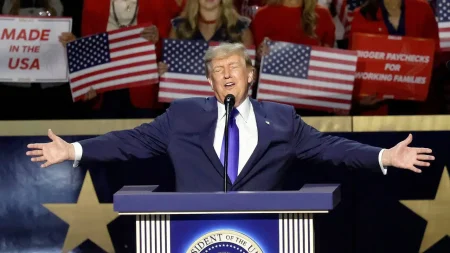
At the center of all this is a legal and political struggle that has played out in the courts as much as in the press. The construction of the ballroom, in particular, has become a battleground. Preservationist groups have argued that demolishing the East Wing would irrevocably damage a historic structure and set a dangerous precedent. They have filed lawsuits, sought injunctions, and raised public alarm, portraying the renovation as an act of cultural vandalism. The administration has fought back, insisting that the project is necessary, legal, and in the best interest of the White House. In a notable development, the Supreme Court recently gave the ballroom construction another lifeline in the midst of the heated legal fight, allowing the work to continue, at least for now. For Trump, this was a victory—not just legally, but symbolically. He has cast himself as a man fighting against the establishment, against the “swamp,” and against the inertia that he believes has gripped Washington for decades. The preservationists, in his view, are not guardians of history but obstacles to progress. He has positioned himself as the one person willing to take a sledgehammer to the status quo and rebuild it in a way that honors the past while embracing the future. It is a dramatic narrative, and like many of the stories he tells, it is built on black-and-white terms: on one side, those who would let the White House crumble; on the other, those who would save it. Whether history will judge him as savior or iconoclast remains to be seen, but there is no question that he has brought a remarkable energy, and an enormous amount of controversy, to the task of renovating the most famous house in America.
What does it all mean in the end? Perhaps more than politics, more than architecture, this is a story about the human desire to leave a mark. Trump’s renovation of the White House is not simply about fixing a roof or polishing a floor; it is about making a statement that he was here, that he cared, that he did not let things fall apart on his watch. There is something deeply relatable about that impulse. Many of us look at our homes—our aging kitchens, our dated bathrooms, the cracks in the ceiling—and dream of transforming them. We want our homes to reflect who we are, to be a source of pride rather than embarrassment. Trump has simply done this on a national scale, treating the White House as his own home and his own canvas. His critics see arrogance and excess; his supporters see a man who loves his country enough to want its most important building to look its best. The heated debates over the Rose Garden, the gold ornaments, the ballroom, and the triumphal arch are not really about construction at all. They are about the soul of America—about whether the country should be a museum of its past or a monument to its future. Trump has chosen the latter, with all the boldness and bluntness that define him. He has called the old White House a “dump” and promised something better, and in doing so, he has reminded us that even the most hallowed of structures are, in the end, made by human hands. Whether future generations will thank him or curse him is still an open question. But one thing is certain: the White House today looks different than it did before, and that difference is a testament to one man’s very personal, very passionate, and very American belief that nothing is beyond repair—and that with enough time, energy, and love, anything can be made great again.