


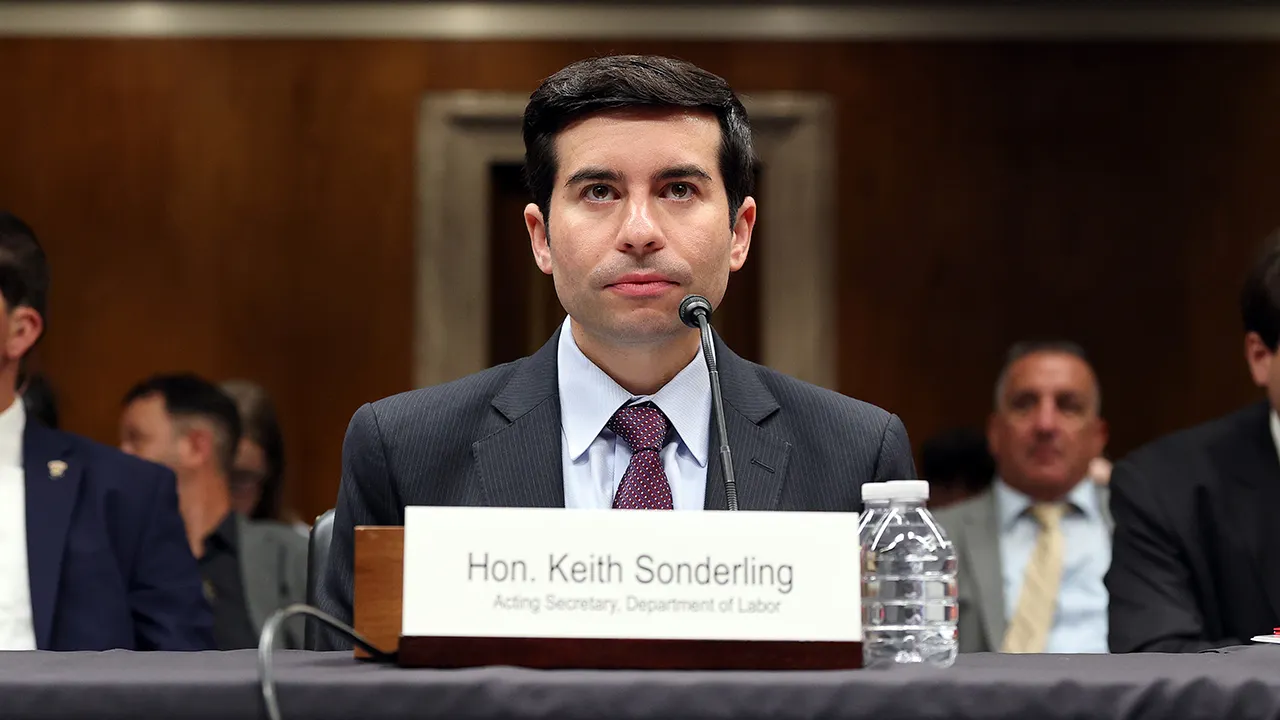
The soft morning light filtering through the windows of the Department of Labor headquarters in Washington, D.C., often reflects the quiet gravity of the work performed within its walls—work that directly impacts the livelihoods, safety, and economic security of millions of everyday Americans. It was against this backdrop of immense national responsibility that President Donald Trump officially announced his nomination of acting Labor Secretary Keith Sonderling to permanently lead the Cabinet-level agency, sending his selection to the Senate for formal confirmation. Since the abrupt departure of the former secretary in April, Sonderling has quietly and steadily guided the sprawling department on an interim basis, maintaining its focus on enforcing federal labor standards, administering vital workforce development programs, and driving the administration’s domestic employment agenda. President Trump expressed deep confidence in the nomination on his Truth Social platform, calling Sonderling an “outstanding” public servant and emphasizing his long history of administrative leadership. For Sonderling, the nomination is not merely an advancement in his political career, but a profound commitment to steer a vital federal institution through a period of transition, offering a steady hand to the thousands of career civil servants who work daily to protect the rights of the nation’s workforce.
To truly understand the man now tapped to lead this essential department, one must look at a career defined by an intimate, ground-level understanding of how labor policy affects ordinary citizens. Sonderling is far from a stranger to the inner workings of the agency; he previously served as its Deputy Secretary and Chief Operating Officer, and during the first Trump administration, he held key leadership roles as both the Acting and Deputy Administrator of the Wage and Hour Division. This specific division is often where the abstract concepts of federal law meet the concrete realities of an employee’s paycheck, handling critical issues like minimum wage, overtime pay, and workplace protections. Sonderling has built a professional reputation on finding practical, common-sense solutions to complex economic problems, championing initiatives that open up lucrative, stable career paths for young workers without forcing them to take on the crushing burden of student loan debt. By advocating for strong trade apprenticeships and fast-track employment programs, he has demonstrated a keen, empathetic awareness of the challenges facing working-class families who feel increasingly left behind by traditional higher education. In his endorsement, President Trump praised this deep-seated dedication to delivering tangible results for “the Hardworking People of our Country,” signaling that Sonderling’s permanent leadership would prioritize practical opportunities and economic empowerment for the American worker.
However, the path that led to Sonderling’s nomination was paved with significant organizational turmoil, revealing a human drama that deeply shook the foundations of the department he now seeks to lead. His elevation to the role of acting secretary in April was necessitated by the sudden, highly publicized exit of former Labor Secretary Lori Chavez-DeRemer. While transitions of power in Washington are often discussed in sterile, political terms, the reality within the agency was one of profound disruption and emotional strain for the dedicated career staff. When a high-profile cabinet official departs under a cloud of controversy, the immediate fallout is felt most acutely by the everyday employees who keep the department running, leaving many feeling vulnerable, distracted, and uncertain about the future of their mission. Stepping into this vacuum of leadership, Sonderling’s immediate task was not just policy management, but intensive damage control and cultural healing. He had to reassure a weary workforce, restore a shattered sense of organizational morale, and ensure that the vital daily operations of the department—from monitoring workplace safety to distributing unemployment benefits—continued without interruption while the political storm raged outside.
The details of the controversy surrounding Chavez-DeRemer’s exit, preserved in a series of deeply troubling whistleblower complaints, paint a vivid picture of a workplace culture that had become toxic and deeply dysfunctional. According to previous reporting, the former secretary faced grave allegations that struck at the core of workplace ethics, including claims of an inappropriate personal relationship with a member of her security detail, drinking while on duty, and keeping unauthorized stashes of alcohol within the office. Most damaging to the internal spirit of the department, however, were allegations that Chavez-DeRemer routinely abused her authority by treating junior, low-paid federal employees as personal servants. Whistleblowers claimed that staff members were coerced under the threat of professional retaliation to run private, non-official errands for her and her husband, such as picking up dry cleaning, purchasing wine, and cleaning out her personal closet—all on the taxpayers’ dime. The complaints also alleged that the secretary’s husband made unwanted advances toward department officials, creating an atmosphere of fear and discomfort. This systemic exploitation of subordinates represents a painful irony for an agency whose very purpose is to protect workers from harassment and unfair treatment, illustrating the deep human cost borne by young professionals who entered public service only to find themselves subjected to intimidation.
While Chavez-DeRemer has steadfastly denied all of these allegations, the Department of Labor’s Inspector General has launched a thorough, independent investigation into the matter to uncover the truth and restore public trust. An active federal investigation of this magnitude naturally casts a long, apprehensive shadow over any government office, as investigators interview staff, review documents, and audit administrative records to identify systemic failures. This painful chapter in the agency’s history highlights precisely why Sonderling’s nomination is so critical; rebuilding an institution takes far more than just signing new directives—it requires a profound cultural shift toward mutual respect, absolute transparency, and ethical accountability. Every individual who walks into a federal building to serve their country deserves to work in an environment free from harassment, exploitation, and arbitrary demands. By cooperatively supporting the Inspector General’s inquiry while simultaneously establishing rigid, professional boundaries within his office, Sonderling has the unique opportunity to demonstrate that the department will practice the very values of fairness and worker dignity that it is legally mandated to enforce nationwide.
Looking toward the future, the upcoming Senate confirmation process will undoubtedly subject Keith Sonderling to intense legislative scrutiny, but it also offers him a vital public forum to articulate a hopeful, worker-centric vision for the nation’s economic future. In a rapidly changing global economy defined by technological innovation, shifting labor dynamics, and persistent financial pressures on household budgets, the American workforce requires a Labor Department that is entirely focused on solutions rather than political distractions. Sonderling’s proposed permanent tenure represents a fresh start—a chance to move past previous scandals and dedicate the agency’s vast resources to supporting the people who build, feed, and power our nation. By focusing on robust vocational training, enforcing fair wage laws, protecting workplace safety, and fostering accessible pathways to steady, dignified careers, his leadership can help deliver on the fundamental promise of the American dream. Ultimately, this nomination is about restoring a sacred bond of trust between the government and its citizens, showing the hardworking men and women of America that their efforts are valued, their rights are protected, and their government is working diligently on their behalf.