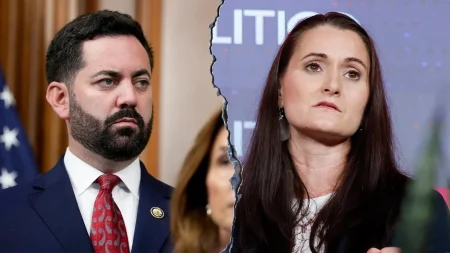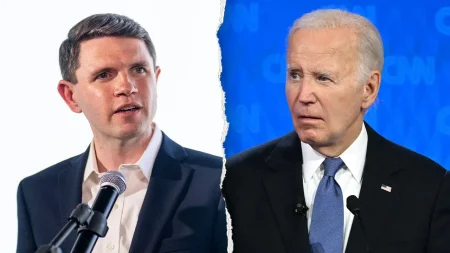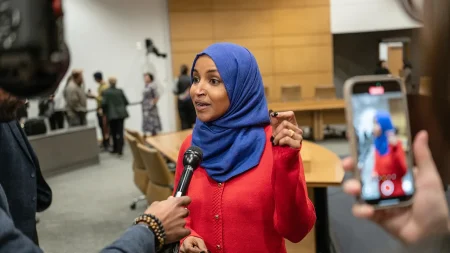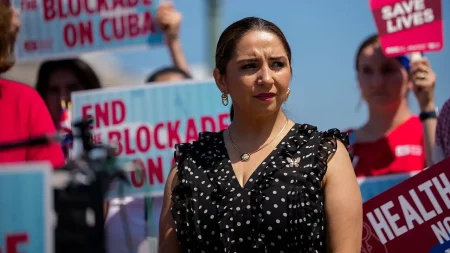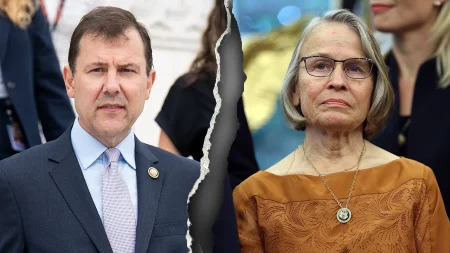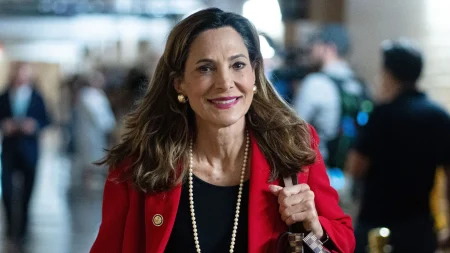



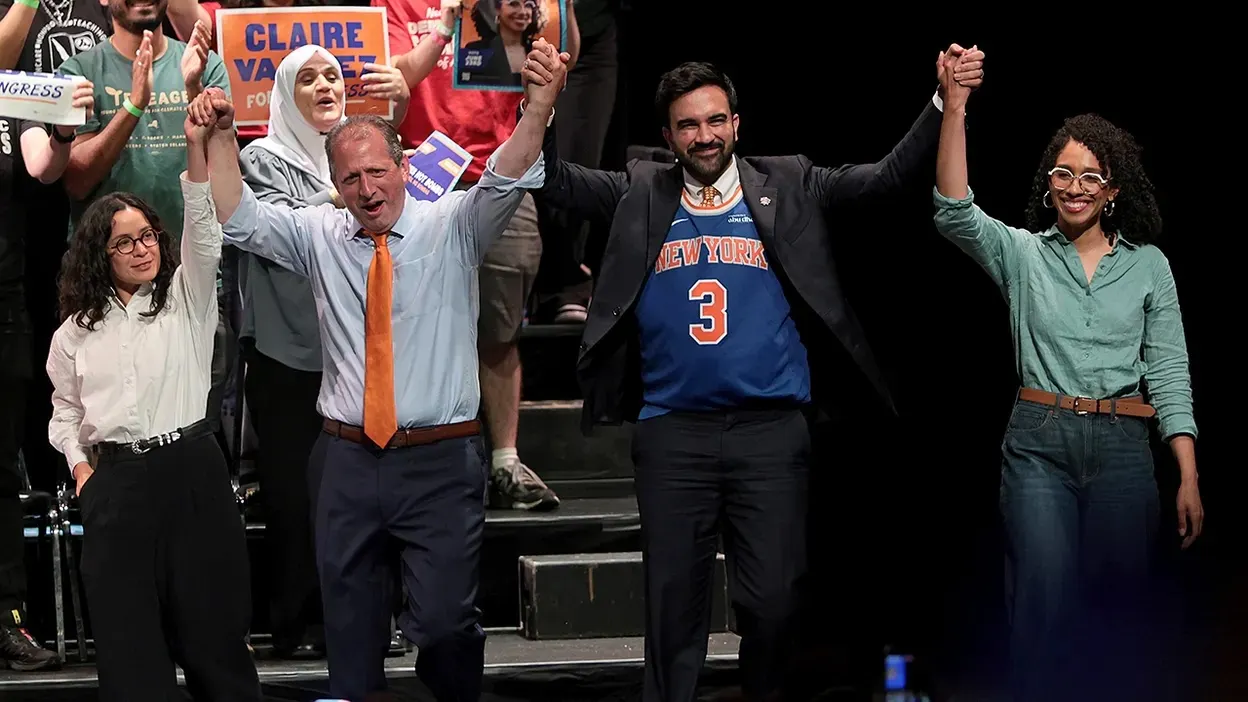
The political landscape of New York City recently became the epicenter of a major ideological earthquake as the Democratic Socialists of America (DSA) scored a series of stunning primary triumphs, immediately turning their gaze toward the American West. In a dramatic show of progressive grassroots power, Darializa Avila Chevalier, a passionate 32-year-old community organizer, successfully unseated seasoned incumbent Representative Adriano Espaillat, the influential chair of the Congressional Hispanic Caucus. At the same time, state Assembly Member Claire Valdez secured her own congressional primary victory by defeating a heavily funded, establishment-backed candidate. These seismic victories were not merely localized anomalies; they were actively propelled by the strategic endorsement and formidable political machinery of New York City’s prominent socialist Mayor, Zohran Mamdani. Feeling deeply vindicated and highly energized by these urban breakthroughs, the DSA wasted no time in signaling its intention to export this bold populist movement far beyond the Northeast. Taking to social media to announce their next moves, the organization declared, “Today, the East Coast, next week the Mountain West.” This declaration marks an intense escalation in a high-stakes struggle for the soul of the Democratic Party, pitting an emboldened democratic socialist wing against traditional, center-left moderate leaders who have guided party politics for decades.
The first major battleground for this western expansion is Colorado’s 1st Congressional District, a deeply blue stronghold in Denver that gave Vice President Kamala Harris a towering 56-point victory in the 2024 presidential election. In this progressive enclave, the DSA has thrown its support behind Melat Kiros, a first-time candidate and former attorney whose insurgent run highlights a stark generational divide. Kiros was born just four months after the incumbent, Representative Diana DeGette, first assumed her congressional seat nearly thirty years ago. Kiros’s campaign carries a highly charged personal narrative; she recently lost her legal position in New York after authoring an essay sharply critical of Israel, a circumstance that has galvanized progressive activists focused on foreign policy reform and free expression. Her bid has also attracted the valuable backing of Justice Democrats, the national political group famous for propelling “Squad” members like Alexandria Ocasio-Cortez, Ilhan Omar, Ayanna Pressley, and Rashida Tlaib into the national spotlight by toppling entrenched incumbents. By framing the Colorado primary as a direct choice between decades of orthodox representation and an unapologetically bold, democratic socialist future, the DSA is testing whether the progressive playbook that succeeded in New York’s dense urban districts can successfully adapt to the unique political landscape of the Mountain West.
Beyond Colorado, the progressive movement is strategically positioning itself to influence crucial statewide primaries in the industrial Midwest, aiming to capture key seats in upcoming battleground states like Michigan and Wisconsin. In Michigan, the DSA-aligned Abdul El-Sayed, a dynamic public health advocate and former Wayne County health director who previously ran an energetic campaign for governor, is now fighting to succeed retiring Democratic Senator Gary Peters. Meanwhile, in Wisconsin, state Representative Francesca Hong is generating significant momentum in a crowded Democratic primary to succeed retiring Governor Tony Evers. Hong openly celebrated the progressive wave on social media, proclaiming it “a great day to be a democratic socialist” and signaling that Wisconsin would be the very next battleground to embrace this ideological shift. By targeting these crucial swing states, progressive strategists hope to prove that democratic socialism is not merely an ideological boutique movement confined to coastal metropolises, but a viable, working-class platform capable of winning over Midwestern voters who feel abandoned by both the global economy and traditional, party-line politics.
At the heart of this progressive surge is a powerful focus on economic populism, particularly at a time when average Americans are struggling with a high cost of living, rising rent, and stagnant wages. Democratic strategist Joe Caiazzo, a veteran of Senator Bernie Sanders’ historic presidential campaigns, points out that the DSA and the broader left wing of the party are uniquely tapping into voters’ pocketbook anxieties. According to Caiazzo, while mainstream Washington politicians seem to offer few concrete solutions to soaring everyday expenses, the democratic socialist platform resonates because it addresses these economic pressures head-on with proposals for rent control, universal healthcare, and robust worker protections. This messaging holds immense appeal in deeply progressive urban pockets, often referred to as parts of New York’s “commie corridor” in Queens and Brooklyn, where voters have repeatedly chosen socialist representatives. However, moderate Democrats warn that this rhetoric is highly insular. Matt Bennett of Third Way, a prominent center-left organization, acknowledges the immense energy on the far left in deep-blue areas but stresses that these victories do not represent the broader electorate, arguing that pushing the party too far left could ultimately backfire in more competitive regions.
Outside of these deep-blue progressive strongholds, the broader national landscape paints a very different picture, with mainstream, center-left Democrats securing crucial primary victories of their own. In Manhattan’s highly competitive race to succeed retiring Representative Jerry Nadler, voters chose Micah Lasher, a moderate former congressional staffer, rejecting more left-leaning alternatives. Further north in New York’s swing 17th Congressional District, Army veteran Cait Conley won her primary, positioning herself as a pragmatic challenger to GOP Representative Mike Lawler in a race vital to determining control of the House. Similar centrist victories occurred in Utah, where business-friendly former Representative Ben McAdams triumphed, and in Maryland, where Steny Hoyer-backed Adrian Boafo emerged victorious in a diverse primary field. Moderate strategists point to these outcomes, along with Nancy Lacore’s victory in South Carolina, to argue that far-left candidates struggle heavily outside of safely Democratic districts. Critics like Bennett argue that the far-left has consistently failed to flip swing seats from red to blue, and warning that their controversial policies, such as “defund the police,” provide Republicans with devastating political ammunition to use against moderate Democrats in crucial general elections.
This deep internal divide is precisely what national any-percent Republicans are seeking to exploit as they fight to protect and expand their razor-thin House majority in the midterms. Ever since Mayor Zohran Mamdani’s high-profile victories, the Grand Old Party has consistently used his unapologetic socialist platform to paint the entire Democratic Party as dangerously radical. National Republican Congressional Committee spokesman Mike Marinella seized on the recent primary outcomes, declaring that the Democratic establishment has completely surrendered its identity to Mamdani and the party’s socialist wing. Marinella warned that moderate Democrats in competitive swing districts will now have to answer to the far-left faction calling the shots, a prospect he claims should terrify centrist voters. As the primary season transitions into the high-stakes general election, the central dilemma facing the Democratic Party remains unresolved: will the passionate, economically focused populism of the DSA revitalize a weary electorate and pave the way for a more equitable future, or will it alienate moderate swing voters and hand total control of the federal government back to the Republican Party?