





In a dramatic and high-stakes escalation of the ongoing struggle over American immigration policy, a federal judge in Massachusetts has once again stepped in to block the Trump administration’s efforts to terminate Temporary Protected Status (TPS) for thousands of Somali nationals living in the United States. U.S. District Judge Allison Burroughs, an appointee of former President Barack Obama, issued a new administrative stay that temporarily halts the government’s plans to end the humanitarian program, throwing a lifeline to a vulnerable community just as their legal options seemed to be running out. The ruling arrived as a sudden and surprising turn of events, coming only days after a federal appeals court had decisively dismantled similar judicial protections for immigrants from Ethiopia and South Sudan, signaling a broad crackdown on lower-court interventions. By issuing this stay, Judge Burroughs has thrust herself back into the center of a fierce national debate regarding the limits of executive power, the role of the judiciary in protecting marginalized groups, and the rapidly shifting legal landscape governing the lives of hundreds of thousands of immigrants. The decision represents a calculated and bold move by the district court, responding directly to a brand-new, heavily revised lawsuit filed by advocacy groups who refused to accept defeat even after the nation’s highest courts had seemingly shut the door on their previous legal challenges. This latest judicial maneuver has reignited a fierce ideological battle, highlighting the profound disconnect between the federal government’s drive to enforce strict immigration controls and the local courts’ efforts to preserve human rights and maintain the status quo for communities that have spent decades building lives on American soil. As the legal battle lines are redrawn, this case stands as a powerful testament to the complexity of the U.S. immigration system, where a single judge’s pen can instantly alter the fate of thousands of families caught in the crossfire of national politics.
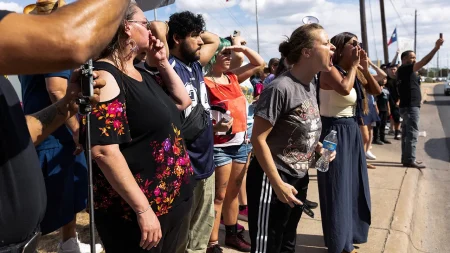
To fully understand the weight of Judge Burroughs’ decision, one must look past the dry legal terminology and focus on the deep human anxiety felt by the Somali community across the United States. Temporary Protected Status is not merely an administrative designation; for the thousands of Somalis who hold it, it is a precious shield that has protected them from being deported back to a homeland ravaged by decades of brutal civil war, violent extremism from groups like Al-Shabaab, devastating climate-induced droughts, and widespread famine. Many of these individuals arrived in America decades ago as refugees and asylum seekers, and over the years, they have woven themselves into the very fabric of American society—buying homes, launching successful small businesses, paying taxes, filling essential labor shortages, and raising children who are proud, birthright American citizens. For these families, the threat of losing their protected status represents an existential crisis of the highest order, promising to tear households apart, disrupt local communities, and force individuals who have known only peace and stability in America back into a dangerous zone of active conflict and humanitarian disaster. When the U.S. Supreme Court issued its landmark ruling in Mullin v. Doe last June, it sent shockwaves through immigrant advocacy networks by sharply limiting the power of lower federal courts to block TPS terminations on general administrative grounds, a decision that appeared to be a devastating, final blow that would leave Somali TPS holders entirely defenseless against the administration’s aggressive deportation agenda. Yet, driven by a deep sense of moral urgency and a refusal to let these families be quietly displaced, advocacy groups like African Communities Together and their legal teams mobilized in a matter of hours, completely rewriting their complaint to pivot away from standard administrative arguments and toward fundamental constitutional protections, transforming a complex regulatory dispute into a passionate defense of basic human dignity, equality, and the rule of law.
The heart of this newly revised legal battle lies in the powerful constitutional claims the plaintiffs have brought forward under the Fifth Amendment, specifically targeting the concepts of Due Process and Equal Protection. The plaintiffs argue that the Department of Homeland Security’s decision to terminate Somalia’s TPS designation was not the result of a fair, objective, and legally mandated evaluation of the country’s actual safety conditions, but was instead a predetermined political outcome dictated directly from the highest levels of government. To support this claim, the lawsuit points to a highly controversial social media post made by President Donald Trump on his platform, Truth Social, in November 2025, in which he publicly declared his absolute intention to end TPS protections for Somalia months before the official DHS administrative review process had even concluded. The plaintiffs argue that this early announcement turned the entire statutory review process into a hollow, performative sham, completely depriving Somali TPS holders of the fair and unbiased process guaranteed to them by the Due Process Clause of the Fifth Amendment. Furthermore, the lawsuit takes aim at what it describes as a pervasive undercurrent of racial and national-origin discrimination driving the administration’s immigration policies, invoking the Fifth Amendment’s Equal Protection guarantee. The complaint extensively documents a history of derogatory remarks made by the President regarding Somali immigrants—whom he has publicly labeled as “criminals,” “gang members,” and individuals of “low IQ”—while simultaneously highlighting his expressed preference for white immigrants from other nations, such as his administration’s efforts to create special protections for white Afrikaner refugees from South Africa. By contrasting these statements, the plaintiffs paint a vivid and disturbing picture of an immigration policy infected by racial animus, arguing that the decision to strip Somalis of their legal status was motivated not by legitimate national security or administrative concerns, but by a hostile desire to exclude Black, African, and Muslim people from the United States.
This creative and aggressive legal strategy has provoked an immediate and furious backlash from the federal government and conservative legal commentators, who view Judge Burroughs’ ruling as an egregious example of judicial activism and an unlawful obstruction of executive authority. Leading the charge against the decision was Department of Homeland Security General Counsel James Percival, who took to social media to deliver a blistering rebuke of the Massachusetts judge, accusing her of engaging in a deliberate pattern of “defiance, obstruction, and delay” designed to undermine the administration’s lawful policy goals and prevent the executive branch from exercising its rightful authority. Percival’s public comments reflect a deep-seated frustration within the executive branch, where officials argue that the judiciary is overstepping its constitutional boundaries by continuously micro-managing national immigration enforcement and blocking the implementation of policies that fall squarely within the President’s purview. Echoing these frustrations, Iowa Solicitor General Eric Wessan provided a detailed legal critique of the ruling, arguing that Judge Burroughs’ use of a “novel” administrative stay “turns the law upside down” by granting emergency relief based on claims that are legally deficient and destined to fail. Wessan pointed out that four of the five legal claims asserted in the plaintiffs’ amended complaint are completely foreclosed by the Supreme Court’s recent ruling in Mullin, while dismissing the remaining constitutional claim as entirely “frivolous” and incapable of meeting the exceptionally high legal bar required for interim judicial relief. From the perspective of the government and its supporters, the district court is essentially utilizing procedural loopholes to freeze federal policies indefinitely, creating a chaotic environment where individual, politically biased judges can unilaterally stall the enforcement of nationwide immigration laws based on personal disagreements or legally groundless arguments, thereby disrupting the uniform application of federal law and ignoring the clear directives of the nation’s highest court.
The conflict surrounding the Somalia TPS case is not an isolated incident, but rather the latest battleground in a much larger, systemic war over the use of “administrative stays” as a tool to block federal policies. Historically, an administrative stay was intended to be a minor, short-term procedural device—a temporary pause lasting only a few days to allow a judge to review legal briefs before deciding whether to grant a formal preliminary injunction. However, in the highly polarized and fast-paced arena of modern immigration litigation, these stays have increasingly been utilized by sympathetic district judges as a powerful mechanism to bypass the strict, rigorous legal standards required for standard injunctions, effectively freezing controversial executive actions for months at a time without having to immediately prove that the plaintiffs are likely to succeed on the merits of their case. This exact strategy was recently deployed by U.S. District Judges Brian Murphy and Patti Saris, who issued similar administrative stays to halt the deportation of immigrants from Ethiopia and South Sudan, only to have their orders swiftly and decisively overturned by the U.S. Court of Appeals for the First Circuit. The First Circuit’s reversal was a clear, stern message to lower courts that they must strictly adhere to the Supreme Court’s mandate in Mullin, which sought to strip district judges of their ability to interfere with executive immigration decisions based on non-constitutional administrative claims. By issuing a new administrative stay in the Somalia case immediately following these reversals, Judge Burroughs has set up a tense, high-stakes game of legal cat-and-mouse, demonstrating how trial judges can leverage the unique, open-ended nature of constitutional claims to carve out fresh exceptions to appellate rulings, keeping the status quo alive for vulnerable immigrant populations even as the higher courts attempt to shut those pathways down and reestablish a strict hierarchy of judicial authority.
As the legal machinery continues to grind forward, the ultimate resolution of this case remains highly uncertain, leaving the affected Somali families suspended in an agonizing state of perpetual limbo. While Judge Burroughs’ latest order provides a temporary sigh of relief and prevents immediate deportations, it offers no permanent security or long-term peace of mind, meaning that thousands of people must continue to live their lives week by week, never knowing if their right to work, stay, and remain with their loved ones will be abruptly stripped away by a sudden late-night appellate ruling. This agonizing uncertainty inflicts a profound, exhausting psychological toll on these communities, preventing individuals from making long-term decisions about their careers, their children’s educations, their mortgages, or their financial futures, and reducing their lives to a series of anxious waits for the next judicial decree or administrative update. Ultimately, the battle over Somalia’s TPS designation highlights a deep and unresolved philosophical tension at the very core of the American experiment: the ongoing struggle to balance the absolute, sovereign authority of the executive branch to govern the nation’s borders and enforce national security against the moral and constitutional imperative of the judiciary to protect human beings from discriminatory, biased, and arbitrary governmental overreach. As this case winds its way through the appellate process and heads toward an inevitable showdown in higher courts, it serves as a powerful and sobering reminder that behind the dense legal jargon, the strategic social media posts, and the fierce debates over judicial authority, there are real human lives hanging in the balance—people who have embraced America as their true home and who now must watch from the sidelines as the courts decide whether that home will continue to offer them shelter or cast them out into the cold.