


Paragraph 1
There is a peculiar kind of tension that settles over Washington in the weeks before a midterm election—a mixture of frantic packing, strategic positioning, and the quiet dread of an uncertain verdict from the voters back home. This time, however, the stage feels even more surreal. The Republican-led Senate, with its collective eye on the fast-approaching November 3rd, has been spending its precious final days in the Capitol not on the cost of groceries or the price of a gallon of gas, but on the intricate rules governing college football and basketball players. It is a spectacle that might be laughable if the stakes weren’t so high. For the men and women who have to face their constituents in a matter of days, the disconnect is palpable. They walk the marble hallways knowing full well that the families they represent are wrestling with real-world anxieties—skyrocketing utility bills, staggering health care premiums, and the gnawing feeling that the American Dream is slipping just out of reach. Yet here they are, knee-deep in debates about athlete compensation and academic integrity, as if the fate of the republic hinged on a star quarterback’s name, image, and likeness. The irony is almost too heavy to bear. It’s the kind of moment that makes even seasoned politicians pause, shake their heads, and wonder aloud if they’ve been transported into some bizarre alternate reality where the nation’s most pressing problems have been replaced by a particularly drawn-out episode of a sports drama.
Paragraph 2
Senator Josh Hawley of Missouri, never one to hide his frustration behind sterile political rhetoric, captured the mood with a perfectly timed quip. “I’m just hoping that this will be the best bill ever passed by the United States Senate,” he told reporters, a sardonic smile playing on his lips, “considering the ungodly amount of time we’ve spent on it.” He paused, letting the irony sink in. “So maybe this will be the most perfect and pristine piece of legislation ever.” The bill in question, the Protect College Sports Act, championed by Texas Republican Ted Cruz, was designed to rein in the so-called “wild west” of modern college athletics. It sounds noble in theory—creating uniform standards for player deals, academic requirements, and institutional oversight. But as Hawley’s tone suggested, the Senate was devoting its waning hours to a topic that, while beloved by millions of Americans on a Saturday afternoon, does not rank high on the list of dinner-table conversations for a family struggling to make ends meet. Hawley, rattling off a list of issues that actually merited attention—fuel costs, prescription drug prices, the energy demands of an exploding artificial intelligence sector—seemed almost exasperated. “There’s a lot of things we could be doing and should be doing,” he said, with a shrug that conveyed both resignation and a flicker of hope that perhaps, before the final gavel, his colleagues would snap back to reality. But the schedule told a different story. The days were ticking away, and the biggest legislative achievement on the horizon appeared to be a rulebook for student-athletes.
Paragraph 3
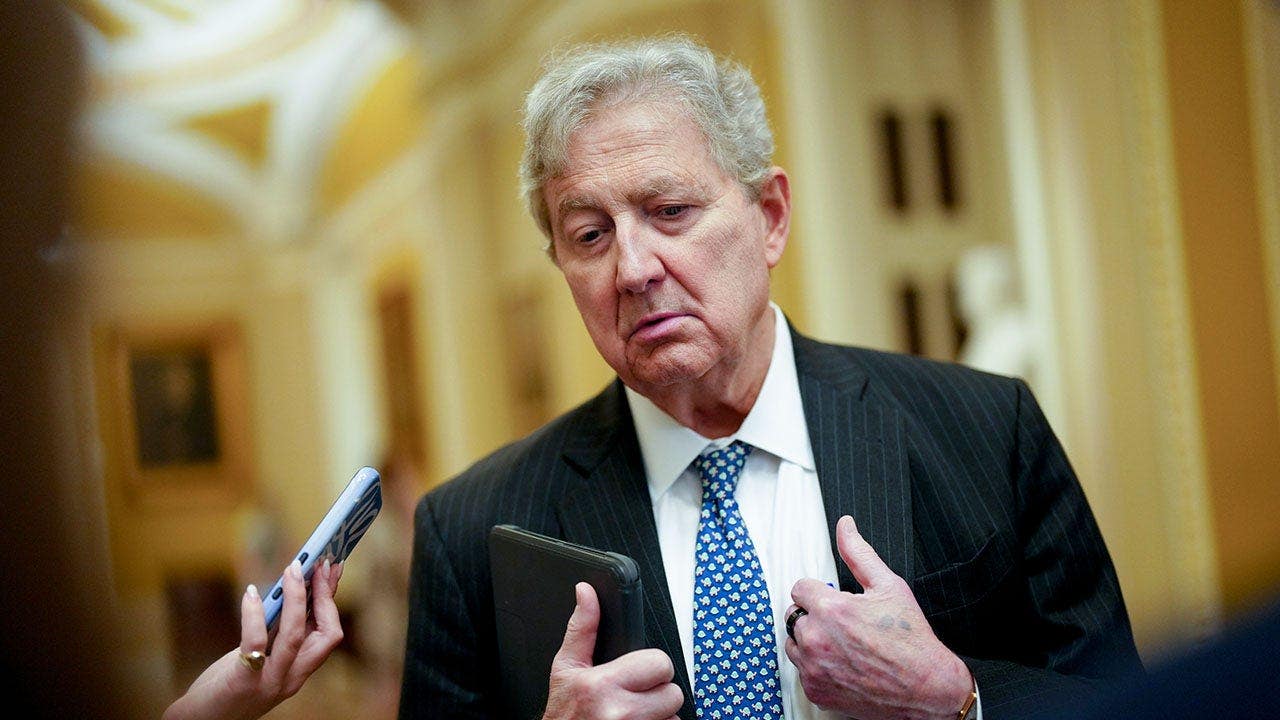
Nowhere was the growing frustration more raw than in the remarks of Senator John Kennedy of Louisiana, a man not known for mincing words even in the best of times. Kennedy, who would eventually vote for the college sports bill, allowed his true feelings to leak out with a mixture of wit and genuine alarm. “We’ve been spending all week on trying to make the football coaches happy,” he said dryly. Then, in a moment of unfiltered honesty, he insisted, “I’m voting for the bill, but I can assure that moms and dads out there across America, when they lie down to sleep at night… they’re not worried about the football coaches.” His point was simple and devastating. The people back home are worried about how they’re going to pay for next month’s electricity, how they’re going to afford the medication that keeps their hearts beating, and how they’re going to put food on the table without skipping something else. And yet, Congress was fixated on a realm that, while culturally significant, does nothing to ease those burdens. Kennedy’s frustration boiled over when he talked about the pressure he and others had been applying on Senate Majority Leader John Thune to take another crack at reconciliation—a legislative maneuver that could be used to pass a sweeping package tailored exclusively to affordability. At the very least, he argued, they should be voting on a bill to shield consumers from the skyrocketing electricity costs that the AI boom is already beginning to cause. But the response, or lack thereof, left him disheartened. “Because we haven’t done a damn thing,” he said, his voice carrying the unmistakable weight of a man who fears his party is missing the moment. “And it’s biting us in the ass right now.” That last phrase, blunt and visceral, summed up the anxiety that was quietly spreading through the Republican caucus.
Paragraph 4
To be fair, Senate Majority Leader John Thune did make one last-ditch effort to pivot the conversation. He teed up a vote for the final week on a bill that would require AI companies to shoulder the burden of the rapidly increasing utility costs associated with data centers—an issue that has real consequences for everyday consumers who see their rates climbing to accommodate the energy-hungry tech industry. It was an attempt, however modest, to show that Republicans were at least aware of the public’s pain. But the effort was almost certainly doomed. Democrats, eager to avoid handing any victory to the GOP or to former President Donald Trump so close to the election, were expected to block the measure without a second thought. For some Republicans, this was the final straw, the clearest evidence that the party’s leadership had misjudged the mood of the moment. Even if the bill would have passed, it would have been too little, too late to shift the narrative that Washington had abandoned the everyday concerns of working families. The whole scene—hours of debate on college sports, a rushed compromise on an AI-related bill, and the predictable wall of Democratic opposition—painted a portrait of a legislative body that was either out of touch, hamstrung by partisan games, or simply too paralyzed to act on the things that matter most. Voters, meanwhile, were left to wonder if anyone in the capital actually understood their lives.
Paragraph 5
Senator Thom Tillis of North Carolina, a man who has seen his share of political battles, offered a more philosophical take on the situation. He recalled a chapter from his own past, when he won the North Carolina House and assumed the role of speaker. He had run on a promise to fix the economy, and once he had the power to do so, he knew the responsibility fell squarely on his shoulders—and those of his fellow Republicans. “That’s how you actually show some leadership and get it done,” he said. “You can’t rationalize that we’re here because of a problem caused by the prior administration.” His message was clear: blaming the other side or pointing fingers at past failures is a weak excuse. If you make a promise, you keep it. “That’s how we got elected,” he added. “But you gotta fix it if you promise to. And that’s what we have to work on. I just think rationalizing away, that’s just not good politics.” His words were a quiet indictment of a party that, in his view, had spent too much time celebrating its accomplishments and not enough time delivering on the affordability agenda that had been the cornerstone of its pitch. That trend continued into the present, as Vice President JD Vance took to the airwaves to ask voters to “give us another chance” this fall. When asked about that plea, Tillis couldn’t resist a grim smile. “You know what? If it works, it’ll be a first,” he said. The remark was cutting, but it also revealed a deeper truth: even within the party, there are profound doubts about whether the current message is resonating with the people who will decide the election.
Paragraph 6
In the end, the story of these final weeks is not just about a college sports bill or a procedural vote. It is a story about the yawning gap between the world that politicians inhabit and the world where ordinary Americans live. In the rarefied air of the Senate, it is easy to get caught up in debates about athlete compensation, conference realignment, and the nuances of amateurism rules. But out in the real world, in the diners and living rooms and cramped apartments that define the national landscape, the conversations are about something far more elemental. They are about survival. They are about the fear of checking one’s bank account, the dread of an unexpected medical bill, the exhaustion of working two jobs just to stay afloat. The Republican Party, which has staked its identity on being the party of economic competence, now finds itself fighting for its life while its leaders appear to be playing a different game entirely. The voters, however, are not fooled. They are watching. They are remembering. And when they step into the ballot box, they will not be thinking about football coaches or NIL deals. They will be thinking about the price of eggs, the heating bill, and whether their children will ever be able to afford a home of their own. The senators, for all their lofty speeches and careful positioning, know this in their bones. Some, like Hawley, use humor to mask their anxiety. Others, like Kennedy, let their frustration spill out in unfiltered outbursts. And a few, like Tillis, offer somber reflections on the nature of leadership. But they all share a common dread: that the moment has passed, that the opportunity to act was squandered, and that the only thing left to do is ask for forgiveness from a public that is in no mood to grant it. The election, as always, will be the final judge. And for these Republicans, the verdict cannot come soon enough.