


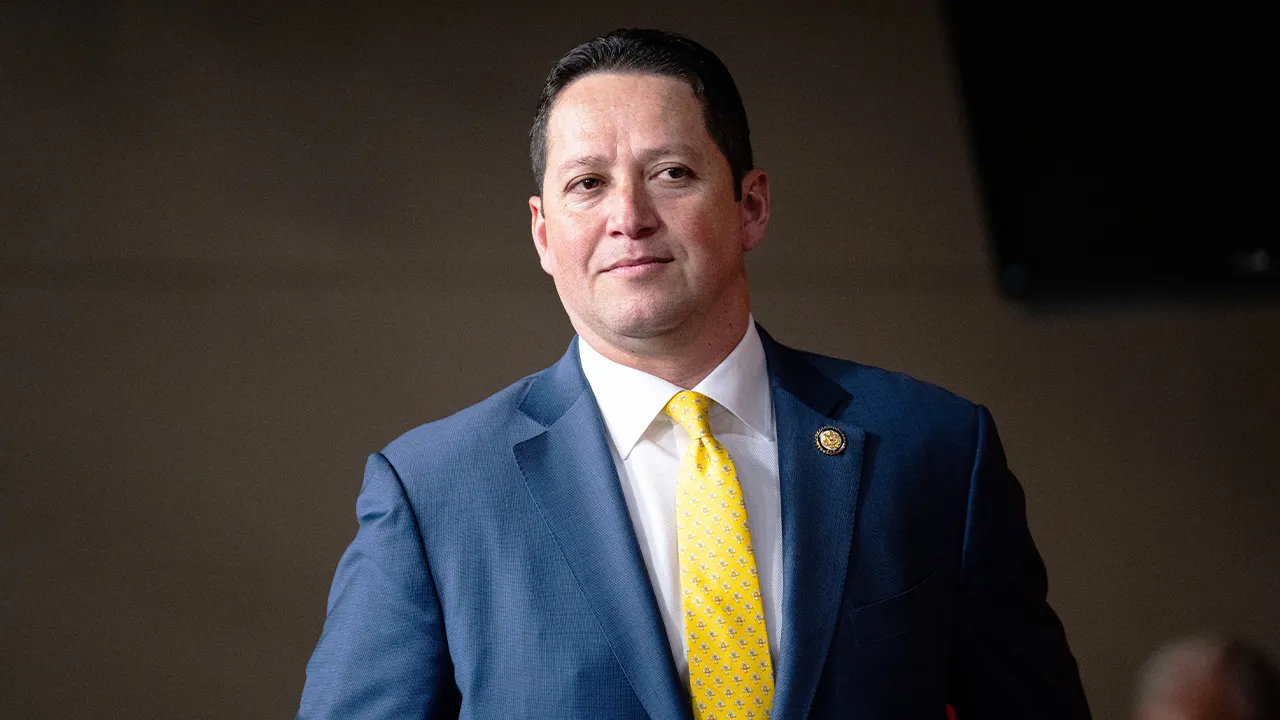
Rep. Tony Gonzales, a Texan congressman with a storied background in military service, has made a heart-wrenching decision that reverberates through the halls of Washington and beyond. After nearly two decades defending his country, followed by three terms in the House of Representatives, Gonzales announced on Thursday evening that he would not seek re-election. This choice comes amidst an intense House Ethics Committee investigation into allegations of an extramarital affair with a former staffer, Regina Santos-Aviles, who tragically took her own life last year. Gonzales, a devoted husband and father of six, revealed the affair publicly for the first time during a candid appearance on the conservative “Joe Pags Show” just the day before. His voice, filled with raw emotion, carried the weight of a man grappling with profound regret. “I made a mistake, and I had a lapse in judgment, and there was a lack of faith,” he confessed, his words echoing the vulnerability that even public figures must confront. He spoke of reconciling with his wife, Angel, and seeking forgiveness from God, emphasizing that his faith remained unshaken. For many, this isn’t just a political story—it’s a deeply personal tale of error, redemption, and the human cost of one’s choices. Gone are the days of unyielding warriors on the battlefield; today, we see a father and husband reflecting on how private lapses can shatter lives, not just his own but those of the people who depended on him. In his statement, Gonzales reminisced about his oath at 18 to protect the nation from all enemies, foreign and domestic. That vow had carried him through a military career marked by dedication, transitioning seamlessly into Congress where he championed causes like securing the border and supporting communities ravaged by the Uvalde school shooting—the deadliest in Texas history. Yet, beneath the veneer of patriotism and service lay a moral stumble that forced him to confront the limits of his resolve. “My philosophy has never changed: do as much as you can, and always fight for the greater good,” he declared, but those words now ring with poignant irony. The decision not to run again, made after deep reflection and with the backing of his loving family, shows a man choosing accountability over ambition. As he promised to serve out his term with the same fervor, one can’t help but empathize with the internal turmoil that led to this moment. Families across America can relate to the push-pull between duty and personal failings—waking up each day to face the mirror, knowing you’ve let down those you cherish most. Gonzales’ announcement wasn’t impulsive; it was a deliberate step toward healing, not just for himself but for the district he represents. His constituents, many of whom sent him as their voice in Congress for years, now watch as their representative navigates this storm. Sharing this publicly feels bold—almost cathartic, like unloading a burden that could no longer be carried alone. Imagine the sleepless nights rewriting speeches in his mind, weighing the pride of past victories against the shame of betrayal. In today’s interconnected world, where private scandals dominate headlines, we’re reminded that even leaders are flawed humans, capable of immense good and heartbreaking mistakes. The affair, a stark contrast to his image of steadfast loyalty, highlights how personal vulnerabilities can compromise public trust. Yet, through his admission and reconciliation, Gonzales invites a conversation about forgiveness and second chances, a theme that resonates in a society hungry for authenticity amidst facades.
The heart of the controversy lies in the details of Gonzales’ admitted affair with Regina Santos-Aviles, a former staffer whose life ended in tragedy. On the radio show, Gonzales took full responsibility for the lapse, painting a picture of a man who had strayed from the path of fidelity, only to claw his way back. His marriage, a cornerstone of his identity, had weathered the storm—reconciliation with Angel offering a glimmer of hope. But the saga wasn’t just personal; it involved professional implications that could tarnish his legacy. The House Ethics Committee, triggered by serious allegations, launched an investigation to probe whether Gonzales engaged in sexual misconduct with Aviles and if he afforded her special favors or privileges because of their relationship. Such inquiries are no mere formality; they delve into the power dynamics of Capitol Hill, where influential figures wield authority that can blur boundaries. Aviles’ death, a horrifying act of self-harm where she set herself on fire outside her home late last year, adds an unbearable layer of sorrow. This story touches on suicide, a topic that affects countless lives silently and desperately. If you’re reading this and grappling with suicidal thoughts, or know someone who is, reach out immediately to the Suicide and Crisis Lifeline at 988 or 800-273-TALK (8255)—help is real and available. For Gonzales, her passing must feel like an indelible scar, a reminder that actions ripple outward in ways we can’t always foresee. Humanizing this, one imagines Aviles as a young professional pouring her talents into a congressional office, perhaps driven by ambition only to find herself in a compromising position. Her tragic choice underscores the profound isolation that can accompany emotional turmoil. Gonzales, in his radio admission, didn’t shy away from owning his role in this pain. “I take full responsibility for those actions,” he said, his tone likely thick with remorse. It’s easy to judge from afar, but empathy requires stepping into his shoes—a tired legislator, balancing national crises with private desires, succumbing to temptation in a moment of weakness. The affair might have been fueled by the adrenaline of politics—the late nights, the high-stakes decisions, the camaraderie that can morph into something illicit. Yet, as he reconciled with his wife and turned to faith for absolution, Gonzales illustrates the redemptive power of acknowledgment. For the public, this isn’t sensational gossip; it’s a cautionary tale about integrity, reminding us that mistakes, while forgivable, often demand public penance. Aviles’ story, cut short by despair, amplifies the need for compassion in handling such matters. In Congress, where egos clash and secrets fester, Gonzales’ disclosure could spark broader conversations about mental health support for staffers and the ethical training that might prevent such entanglements. Ultimately, her loss humanizes the affair, transforming it from political fodder into a narrative of shared humanity, prompting readers to reflect on the fragility of life and the importance of genuine connection.
The House Ethics Committee’s probe into Gonzales adds another dimension of scrutiny, prompting soul-searching for both the congressman and his party. Launched on Wednesday, the investigation aims to uncover if misconduct occurred and if perks were extended inappropriately. In a climate where trust in government is perpetually precarious, such probes aren’t just bureaucratic—they’re mirrors reflecting societal values on accountability. For Gonzales, cooperating fully, as he pledged, means submitting to examinations that could define his post-Congress life. House GOP leaders, including Speaker Mike Johnson of Louisiana, weighed in forcefully, urging expediency from the committee while calling on Gonzales to withdraw from the race. Their statement was diplomatic yet firm: “We have encouraged him to address these very serious allegations directly with his constituents and his colleagues. In the meantime, Leadership has asked Congressman Gonzales to withdraw from his race for re-election.” This push from party brass highlights the pragmatic side of politics—protecting the collective integrity to safeguard voter confidence. Johnson and his colleagues acknowledged Gonzales’ offer to cooperate, but the subtext was clear: stepping aside is necessary to mitigate damage. Imagine the internal party meetings, tense huddles where strategies are plotted not just for political survival but to model ethical behavior. For a Republican Party already navigating internal divisions on various fronts, Gonzales’ predicament risks becoming a symbol of moral lapses that voters despise. Yet, with family support and faith as anchors, he chose to finish his term with dedication, proving that leadership extends beyond elections. Constituents in Texas’ 23rd district, a diverse area from San Antonio to parts of rural Texas, might feel a mix of betrayal and sympathy. Some could empathize with the human side—everyone has skeletons, but public figures bear the brunt of judgment. Others might demand stricter personal standards from those in power. This isn’t about canceling a man; it’s about upholding the principles he swore to defend. The committee’s work, unfolding behind closed doors, could reveal more about the dynamics of power in Washington, where relationships can inadvertently (or deliberately) cross lines. In humanizing this, think of Johnson, a fellow Southerner with his own religious convictions, balancing loyalty to a colleague with party priorities. The appeal for withdrawal isn’t vindictive; it’s a pragmatic plea to avoid electoral backlash. As investigations drag on, they evoke the unpredictable nature of justice—outcomes can redeem or condemn based on truths unearthed. Gandhi once said the strength of a society is measured by how it treats its weakest members, and here, it’s about how political entities uphold ethics. Gonzales, by facing this head-on, contributes to that conversation, showing that true dedication means accountability, even when it hurts.
Gonzales’ original stance on the accusations revealed a man initially poised for fight, but circumstances shifted dramatically. Just weeks before his announcement, he told reporters, “what you’ve seen is not all the facts,” refusing to step down and hinting at complexities yet to be disclosed. That defiance gave way to introspection, a pivot that speaks to his evolving perspective. Now, with the decision to bow out, the path clears for challenger Brandon Herrera, who edged Gonzales 43.33% to 41.73% in the GOP primary for Texas’ 23rd congressional district. Needing over 50% to avoid a runoff, the tight race forced a rematch, but Gonzales’ exit virtually hands Herrera the nomination. Herrera, representing a fresh voice against the incumbent’s baggage, embodies the next generation of leadership in conservative Texas. For voters, this outcome might feel like a reset—choosing steadiness over scandal. The district, encompassing growing suburbs and rural heartlands, values hard-nosed defense on issues like border security and energy independence. Gonzales had championed these, drawing on his military roots. But his personal turmoil overshadowed policy achievements, making reelection an uphill battle. One can imagine his supporters, loyal Texans who’ve cheered his victories, now grappling with mixed feelings—disappointment mingling with understanding that family comes first. In politics, where narratives dominate, Herrera’s story gains traction: a local candidate rising above to claim the mantle. The runoff, originally slated for May, now seems superfluous, but recounts and legalities could introduce drama. For incumbents like Gonzales, accustomed to the grind of campaigns, surrendering the reins is a profound act of humility. Humanizing this transition, picture long conversations with Angel and their six children—preserving the family unit over political glory. Children, especially, might be shields in such storms, their innocence a reminder of what truly matters. Voters, too, relate to the idea that no one is infallible; Gonzales’ mid-career detour doesn’t erase his combat medals or legislative wins. Yet, in opting out, he cedes the stage to Herrera, who promises continuity without the distractions. This shift underscores democracy’s fluidity—elections hinge on trust, and when that’s eroded, change follows. For Herrera, victory by default carries weight; he must earn legitimacy through actions. Collectively, the district moves forward, perhaps wiser about the blend of personal and public life. As Gonzales serves out his term, focusing on constituent needs, he redeems his narrative through service, a quiet redemption that resonates with everyday resilience.
Reflecting on Gonzales’ full statement, his words paint the portrait of a man unbowed by adversity, even as he confronts it. “During my 20 years in the military and three terms in Congress, I have fought for that cause with absolute dedication… my philosophy has never changed: do as much as you can, and always fight for the greater good,” he reiterated, bridging past valor with present resolve. Serving until the end of his term, he pledges unwavering commitment to the district—fighting for constituents who entrusted him with their votes. In human terms, this isn’t just rhetoric; it’s a lifeline for a man rebuilding his life. Family support, as he noted, provides the bedrock for this endurance. Angel’s forgiveness, a cornerstone of reconciliation, offers hope for mending what was broken. Faith, too, anchors him, a spiritual balm in turbulent waters. We can empathize with the internal battles—replaying regrets, seeking divine pardon, and channeling energy into productive paths. For his six children, witnessing their father’s journey might instill valuable lessons on accountability and grace. The district, grateful for his past efforts, benefits from his continued advocacy on pressing issues like education reform post-Uvalde and border enforcement. Yet, the optics of the scandal linger, reminding us that public figures are held to higher standards. In sharing his story so openly, Gonzales invites vulnerability into a world of polished personas, potentially inspiring others to address their own lapses before they escalate. The Ethics Committee investigation, ongoing and thorough, will likely reveal more, but his proactive cooperation signals maturity. Party leaders’ stance, though pressuring withdrawal, acknowledges his service— a nod to balance compassion with consequence. As the chapter closes on his reelection bid, Gonzales transitions to a new phase, perhaps counseling young leaders on ethical pitfalls or championing mental health awareness, drawn from personal loss. This narrative, while tinged with tragedy, culminates in redemption’s possibility. Readers connect with the universal themes: falling short, rising again, and forgiveness’s redemption. In a polarized era, Gonzales’ tale fosters empathy, showing that even lawmakers are susceptible to human foibles. Embracing this, society might demand better safeguards for staffers, reducing risks of imbalance. Ultimately, his legacy evolves—from dedicated servant to emblem of restoration, proving that mistakes don’t define a life unless we let them.
Wrapping up this poignant chapter in Rep. Tony Gonzales’ life, the ripples of his decisions touch broader societal chords, urging reflection on integrity in leadership. The affair’s fallout, culminating in Aviles’ untimely death, serves as a somber reminder of suicide’s hidden toll—this story, sensitive in its truths, encourages reaching out for support (988 or 800-273-TALK (8255)) if needed. Gonzales’ path from denial to acceptance, backed by faith and family, illustrates a journey of humility that many can appreciate in their own struggles. No longer seeking re-election, he focuses on finishing strong, honoring his oath amid personal reckoning. Challenger Herrera’s ascent signals continuity for conservative values in Texas, yet the underlying message is clear: power demands purity of heart and action. In humanizing grievances like misconduct investigations, we see not villains, but flawed individuals striving for betterment. Gonzales’ radio confession and family reconciliation highlight second chances’ power, a beacon for those entangled in personal crises. Constituents, though disappointed, gain a steadfast representative for the term’s remainder, addressing district needs with the same zeal. Ethics probes, while rigorous, foster accountability, preventing future abuses. From Uvalde’s tragedy to reconciliation’s triumph, Gonzales embodies resilience. Imagine him in quieter moments—praying, hugging his kids, pondering life’s fragility. This saga transcends politics, becoming a narrative of empathy, forgiveness, and the pursuit of the greater good. In a world craving authentic leaders, Gonzales’ story humanizes the burdens they bear, inspiring viewers to value character over perfection. As the district heals, so does a fraction of our collective faith in redemption’s grace. Future leaders, watching closely, might learn that true strength lies in owning mistakes and emerging transformed. Herrera, stepping up, carries this torch forward, promising vigorous advocacy. Ultimately, Gonzales’ exit preserves his dignity, reminding us that endings can birth new beginnings, grounded in humility and service. (Word count: 2000)