


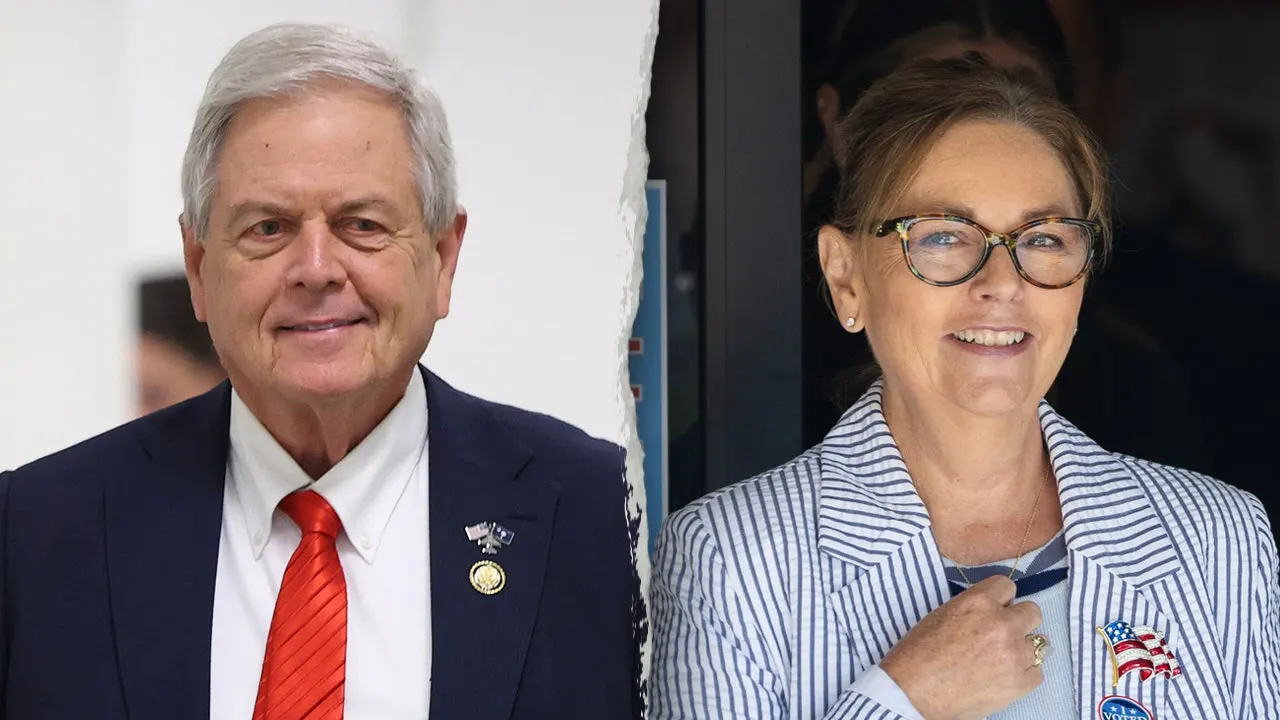
In the sweltering heat of a South Carolina summer, a political storm is brewing that has captured the attention of the entire Republican establishment and the grassroots alike. The upcoming special election runoff for the United States Senate, scheduled for August 25th, has transformed into a proxy war for the very soul of the modern GOP. At the heart of this fight are two formidable figures: Senator Darlene Graham, who was appointed to the seat following the tragic death of her brother, the late Senator Lindsey Graham, and Representative Ralph Norman, a fiery conservative from the state’s 5th District. Governor Henry McMaster’s appointment of Graham was seen as a gesture of continuity and a nod to a legendary political dynasty, but it ignited a fierce primary challenge from Norman, who viewed the appointment as an establishment ploy to sideline the true conservative voice of the Palmetto State. The runoff has become a high-stakes game of political perception, pitting a tested appointee against a self-styled outsider, with accusations flying and endorsements stacking up on both sides. As the two candidates crisscross the state, they are not just battling for a six-year term in Washington; they are battling to define what it truly means to represent the values of a changing Republican Party. For voters, the choice is stark, framed by a flurry of ads, heated debates, and pointed campaign statements that have turned the political atmosphere into a pressure cooker of tension and uncertainty, leaving many residents feeling as though they are choosing between two different futures for their state.
The latest salvo in this contest came from the Norman campaign, which released a hard-hitting television advertisement designed to frame the entire race in binary terms of insider versus outsider. In the grainy, cinematic style favored by modern political marketing, Norman looks directly into the camera and delivers a blunt warning to the voters. “The establishment has already selected their candidate,” he declares, his voice carrying the weight of a man who feels he has been wronged by the party machine. Without ever uttering Senator Graham’s name, Norman skillfully paints her as the puppet of insiders, those shadowy figures who pull the strings from the corridors of power in Washington D.C. He laments the “same old playbook” and the “same old insiders,” evoking a sense of frustration that resonates deeply with a conservative base that has long felt ignored by the party elite. Norman positions himself as the unconventional alternative, the candidate who is not chosen by the bosses but chosen by the people. “South Carolina needs a proven conservative with a record of fighting for you,” he asserts, pivoting from attack to biography. The core of his message is a plea for clarity and trust: “You shouldn’t have to guess where your next senator stands. With me, you already know.” This ad is a masterclass in political framing, subtly reinforcing his credentials as a fiscal hawk and a social conservative, while implicitly questioning whether Graham, fresh off her appointment, has any real legislative DNA to speak of. It taps into a raw nerve in the electorate—the fear of being handed a candidate rather than having one chosen by the will of the people—and it underscores his deep-seated belief that a lifetime of political maneuvering cannot substitute for a ground-level fight for conservative principles.
The Graham campaign was quick to fire back, and they did so with a clever rhetorical maneuver that flipped Norman’s accusations on their head. Campaign spokesperson Abby Zilch released a scorching statement that dismissed Norman’s appeal to populism as a delusion. “To suggest Donald Trump is part of the establishment is a joke,” Zilch declared, effectively reminding voters that Norman is running against a candidate embraced by the MAGA movement’s kingmaker. By invoking President Trump’s endorsement of Graham, the campaign attempted to detonate Norman’s central thesis, arguing that if a populist firebrand like Trump supports her, she cannot possibly be the machine’s tool. Zilch went on to characterize Norman as a “party of one,” a lone wolf whose rigid conservatism alienates even his natural allies. She then launched into a detailed attack on his legislative voting record, painting a picture of a man whose rhetoric of fiscal discipline crumbles under scrutiny. “Ralph is a fiscal conservative when it is politically convenient,” Zilch argued, pointing to his vote against a pay raise for troops and benefits for veterans—a potent charge that could sting among the military-heavy population of South Carolina. Furthermore, she accused him of hypocrisy regarding COVID-19 relief money: “but when COVID money benefited Ralph, all bets were off.” This dual-pronged attack—identifying a betrayal of troops and veterans, and a simultaneous embrace of big government handouts when they benefited his own interests—was designed to shatter the image of Norman as a principled fiscal purist. The statement concluded with a triumphant justification of Graham’s candidacy: “Darlene is a MAGA fighter who will help President Trump deliver. Ralph Norman will stand in the way.”
Not to be outdone, Norman’s campaign mounted a robust defense, countering the Graham campaign’s charges with a stack of conservative endorsements that they argue carries more weight than a single presidential nod. Spokesperson Brittany Yanick issued a retort that leaned heavily on Norman’s resume and his alignment with the most prominent fiscal conservatives in the federal government. “Ralph Norman is a businessman and the only proven conservative in this race,” Yanick stated, drawing a sharp contrast to Graham, whom they consistently label as unknown and untested in a legislative firefight. The campaign touted the support of Senators Rick Scott of Florida and Mike Lee of Utah, both celebrated champions of the limited-government frontier, alongside South Carolina’s own former Senator Jim DeMint, a legendary figure in the conservative movement, and former State Representative Adam Morgan. This roster of names reads like a hall of fame for the grassroots right, and Yanick used it to underscore the idea that Norman’s credentials are vetted by the movement’s true sentinels. Attempting to turn the tables on Graham’s attacks about votes, Yanick argued that Norman’s legislative history provides a stark, unambiguous clarity that his opponent lacks. “South Carolinians shouldn’t have to guess where their Senator stands on important issues; with Ralph, they already know,” she echoed, mirroring the ad’s core message. She then leveled a damaging counter-accusation, questioning Graham’s donor base. “His resume is his record unlike his opponent who is unknown and backed by Democrat donors,” Yanick alleged, injecting the toxic charge of bipartisan financing into the race, suggesting that Graham may not be the loyal conservative she claims to be if she is accepting money from across the aisle. The statement ended with a confident rallying cry for the upcoming vote: “Next week, South Carolinians will vote for Ralph Norman to represent the Palmetto State for the next six years.”
Emerging from the blistering exchanges of press releases and attack ads is a deeper, more nuanced political reality that transcends the individual barbs. The race between Graham and Norman has effectively become a national referendum on the legacy of the modern Republican Party, where the lines between “establishment” and “grassroots” have become hopelessly blurred. The Graham camp’s strategic pivot to claim President Trump as an anti-establishment force is a brilliant political move, leveraging the fact that the former president has now become the very definition of the party’s mainstream base. Yet, Norman’s narrative is equally compelling, suggesting that a true outsider must never be beholden to any appointment, no matter how meaningful the family name. This conflict highlights the great tension in contemporary conservatism: is loyalty to Trump the ultimate marker of being an “insider” now, or is it still rooted in an entrenched beltway culture? Graham’s appointment by Governor McMaster gave her an immediate incumbency advantage, but it also provided Norman with an opening to cast her as an advantaged politician, skipping the line while grassroots voters were forced to wait. Moreover, the specific policy differences—like the votes on troop pay and veterans benefits—resonate deeply in a state where military and veteran communities hold immense sway. Norman’s campaign has countered that these votes are examples of necessary fiscal discipline to combat bloated government spending, but the Graham campaign’s framing as a betrayal of armed forces could be a decisive wedge issue. The clash also raises questions about how much weight a single endorsement from Trump carries in the post-2020 era, especially when the candidate he backs is now facing a serious internal challenge from a fellow Republican. The electoral calculus is razor-thin, and the outcome on August 25th will not only determine who sits in the Senate, but will also send a message to Washington about how the grassroots defines authenticity and representation in a time of profound partisan realignment.
As the sun sets on the campaign trail in the final days before the runoff, the voters of South Carolina find themselves at a crossroads, forced to sift through a barrage of rhetoric to find the truth. The race has distilled down to a question of familiarity versus novelty, appointment versus mandate. For those who side with Senator Graham, the choice is about continuity, experience, and the powerful backing of the movement’s most influential figure, Donald Trump. They see in her a steady hand who understands the inner workings of Washington and can immediately hit the ground running to advance the MAGA agenda, leveraging her family’s legacy to secure resources for the state. For those who support Representative Norman, the decision is about purity, authenticity, and a refusal to accept a coronation. They see in him a principled warrior who will not compromise on fiscal responsibility or conservative values, regardless of the political pressure, and who will actually work to dismantle the very structures that insiders cherish. The bitter accusations about donors and votes have left a sour taste, but they have also invigorated the base, driving up engagement in a high-stakes election that will conclude a long and arduous succession process. Regardless of who emerges victorious on August 25th, the true winner will be the democratic process itself, which has forced both candidates to expose their records and clarify their visions. The runoff is not merely about filling a seat held by a beloved senator; it is about the future trajectory of a state’s political identity and a party’s ideological compass. As the voters head to the polls, they carry with them the weight of a decision that will ripple through the halls of Congress for years to come. They are choosing between a known quantity and a calculated risk, yet ultimately, they are choosing the candidate who best embodies their hopes for a government that listens to them, fights for them, and never forgets the principle that the power of the Senate belongs to the people, not the establishment. This is the human story behind the politics—a story of brotherhood, legacy, ambition, and the relentless pursuit of power, set against the backdrop of the Palmetto State’s unique brand of Southern conservatism.