


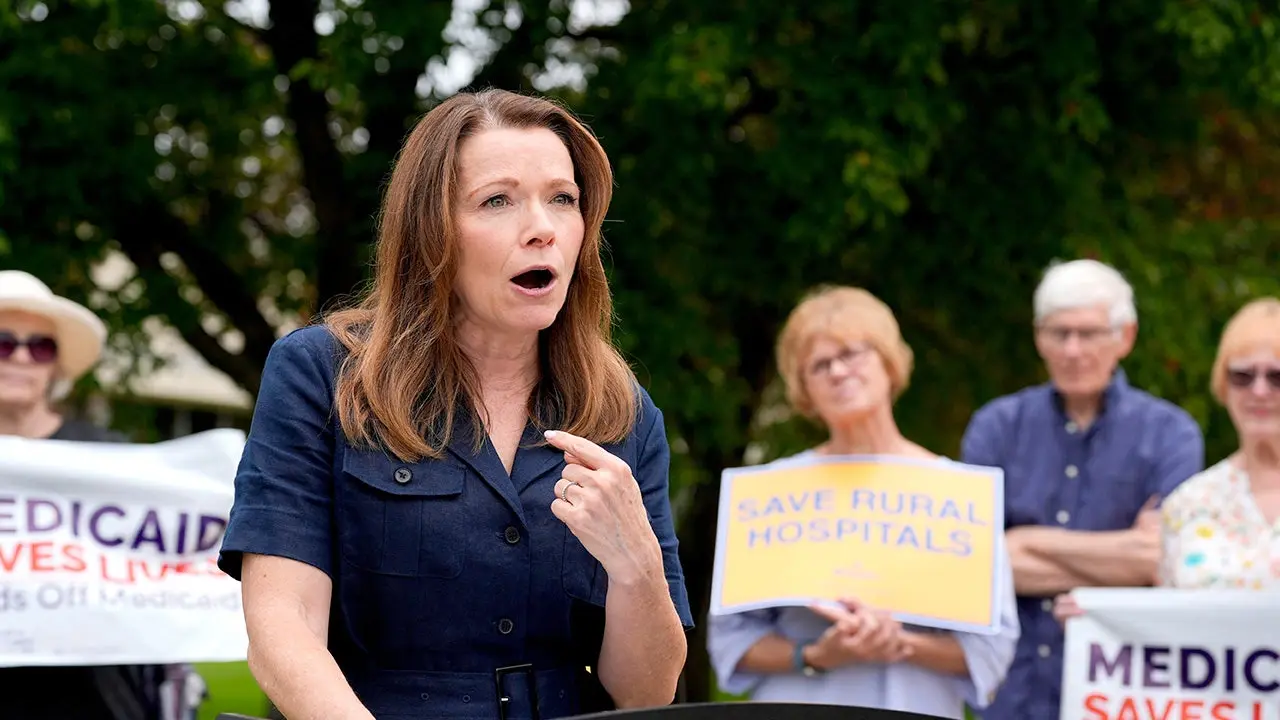
Christina Bohannan is an interesting figure in American politics right now. She’s a Democratic candidate, a law professor, and someone who’s been trying to crack into Congress for a while. If you’ve been following the news from battleground states like Iowa, you might remember her from her previous attempts to unseat Republican Rep. Mariannette Miller-Meeks in the state’s 1st Congressional District. In 2024, she lost by just a hair—less than a percentage point, which is the political equivalent of a cliffhanger in a thriller movie. That razor-thin defeat has everyone gearing up for round three this election cycle. Republicans are pulling out all the stops to defend this competitive seat, and they’re zeroing in on Bohannan’s past remarks like a spotlight on stage. It’s the kind of scrutiny that could make or break a campaign, and it’s got people talking. Picture this: Bohannan’s been in the public eye before as a state representative, and now she’s back, hoping to channel that “almost there” energy into a win. But her opponents aren’t letting her forget some controversial things she said in 2021 on a podcast called “Under the Dome.” It’s like revisiting an old diary entry you wish you could erase. Back then, she voiced concerns about a Republican-backed bill that would ban diversity training in public schools and universities—stuff like implicit bias training. She called it divisive, saying it would make Iowa look backward on issues like systemic racism. Implicit bias, she explained, is that subtle, often unconscious prejudice people might carry toward others based on race, and it’s something she insisted was very real and serious. Governor Kim Reynolds went ahead and signed that bill into law, which must have stung Bohannan at the time. It feels personal, you know? Politics isn’t just about policies; it’s about how those ideas resonate with everyday folks, and Bohannan’s stance here seems rooted in a belief that education should help level the playing field. But critics from the other side see it as overreach, like forcing schools to toe a line that disagrees with their worldviews. As a mom or teacher in Iowa, you might wonder how this affects your kids’ classrooms. Is diversity training essential for understanding our melting pot society, or is it indoctrination? Bohannan’s words echo that debate, making her a lightning rod. Republicans, led by figures like RNC spokesperson Zach Kraft, are calling her the “DEI Queen” and mocking her views, saying things like George Washington should be “canceled.” It’s harsh, but in politics, attacks like that stick. Bohannan has a history of advocating for these ideas, and it’s clear she’s not backing down now. In Iowa’s farm fields and small towns, where people might not cozy up to big-city liberal buzzwords, her positions could alienate voters yearning for straightforward solutions. Yet, she’s persistent, tapping into that third-try charm like a boxer coming back for more. The rematch isn’t just about her; it’s a microcosm of America’s culture wars, where education policy meets ideological showdowns. Bohannan’s journey reminds us that politicians aren’t monolithic—they’re shaped by experiences, losses, and comebacks. If she succeeds this time, it could signal a shift in Iowa’s landscape, where voices promoting inclusivity gain ground. For now, though, the spotlight’s on her past, and she’s got to navigate the minefield of public opinion with grace and strategy. It’s a story unfolding in real-time, full of ups, downs, and that human element of fighting for what you believe in, even when the odds are stacked.
Diving deeper into Bohannan’s podcast remarks, there’s this whole layer about American history that hit a nerve. During that 2021 chat, she expressed relief that a bill banning the teaching of the 1619 Project in schools didn’t pass. The 1619 Project, you know, is that New York Times thing that reframes the nation’s founding around slavery, highlighting how some Revolutionary leaders pushed for independence partly to protect the institution of slavery. Bohannan didn’t mince words—she said it’s “on the fact that there were some Revolutionary leaders who became supportive of that Revolution because they wanted to preserve the institution of slavery,” while acknowledging other motives like taxes without representation. It’s like peeling back the sanitized version of history we learn in school; she’s pointing out the messy, human side of our forefathers, warts and all. Not everyone agrees with that framing, though. Critics argue it’s divisive, potentially undermining heroes like George Washington, whom Bohannan’s been accused of wanting to “cancel” by highlighting such complexities. For me, it feels like Bohannan’s trying to foster a more honest conversation about race in America—admitting the ugly truths about our past so we can address inequities today. Imagine growing up in Iowa, where the Revolutionary War might feel like ancient history, and suddenly someone’s bringing up how slavery influenced independence. It can be jarring, right? Bohannan’s dealt with backlash for this, with Republicans painting her as anti-American, but she seems unwavering. She’s not saying the founders were all villains; she’s just adding nuance. In a world where trust in institutions is low, her approach might resonate with younger voters or minority communities who feel history textbooks whitewash the narrative. On the flip side, in conservative circles, this could come across as ungrateful or even treacherous. It’s the kind of debate that sparks family arguments at Thanksgiving—do we honor the founders despite their flaws, or do we reckon with them fully? Bohannan’s views tie into broader discussions on education, where teaching American history isn’t just dates and battles but interrogating how racism has threaded through our story. As someone with a legal background, she might see this through a lens of equity, pushing for curricula that prepare students for a diverse society. Fox News reached out to her for comment on these resurfaced remarks, and while I don’t have her response here, it’s clear she’s got explanations ready. The podcast moment shows her as someone who isn’t afraid to challenge comfortable narratives, which is both admirable and risky in modern politics. People like her bring energy to debates, forcing us to confront the past to build a better future. In Iowa’s close-knitty community, where stories of pioneers abound, her take might inspire change or fuel resistance—it’s all part of the democratic dialogue.
Christina Bohannan’s commitment to diversity, equity, and inclusion (DEI) isn’t just talk; it’s woven into her career and actions. As chairwoman of the University of Iowa law school’s DEI Committee, she encouraged students to support the Black Lives Matter movement after George Floyd’s tragic death in 2020. In a letter to her students, she highlighted ways to donate, directing them to funds like the Minnesota Freedom Fund and the National Bail Out Fund. These groups focus on bailing out folks involved in protests and pushing for alternatives to traditional policing, which has sparked controversy. It’s that classic political tightrope—advocacy for justice versus perceptions of undermining law enforcement. Bohannan listed George Floyd as a role model in her missive, sparking outrage from critics who see it as glorifying unrest over respect for authority. From a human perspective, she’s reacting to a moment of national reckoning, channeling the anger and grief into action. As a professor and mom—wait, is she a mom? Well, folks like her often draw from personal experiences in addressing inequality. Her letter wasn’t just an email; it was a call to action for the next generation of lawyers and leaders. In a university setting, where ideas ferment, this kind of guidance can shape minds. But in the court of public opinion, especially in Republican-leaning Iowa, it might alienate those who view law and order as paramount. I’m reminded of how vulnerable we all are to pain—Floyd’s death hit home for many, including Bohannan, apparently. By tying it to her professional role, she’s bridging academia and activism. Critics might say it’s biased, but she’s clear about her intentions: promoting equity in a system that’s historically favored some over others. At worker justice forums or migrant support groups, her voice has echoed for years. During a 2020 candidate forum, she talked about being active in Worker Justice of Eastern Iowa, an organization pushing to abolish ICE—the Immigration and Customs Enforcement agency. That’s a bold stance, linking labor rights with immigration reform. In conversations, Bohannan comes across as passionate, not extremist—someone who believes in fixing what’s broken, like a mechanic tinkering with an old car to make it run smoother. Her supporters see her as empathetic, standing up for the underserved. Yet, the GOP portrays this as extreme, potentially scaring off moderates. It’s that tension between progress and tradition that defines her campaign. Bohannan’s path mirrors societal shifts toward inclusivity, where DEI isn’t just a buzzword but a framework for fairness.
Venturing further into her activism, Bohannan’s been involved in police reform and migrant rights for a long time, showing a pattern of advocacy that goes beyond words. While in the Iowa legislature, she co-sponsored a bill mandating implicit bias training for health professionals—a practical step to reduce racial disparities in healthcare. The bill didn’t make it out of committee, which is politics for you: good ideas often get stuck in the legislative weeds. Implicit bias training, as she champions, aims to unearth those unconscious attitudes healthcare workers might have, potentially leading to better outcomes for patients from diverse backgrounds. Think about it— in a doctor’s office, subtle biases could affect diagnoses or treatments, so Bohannan’s push makes intuitive sense if you’re someone who’s felt overlooked in the system. Health equity isn’t theoretical; it’s life-saving. Her work here blends legal expertise with humanitarian concern, painting her as a candidate who’s walked the talk. Continuing her migrant rights efforts, Bohannan donated to the Prairieland Freedom Fund a year before her first congressional run. This fund helps bail out undocumented immigrants, aligning with groups that envision a “world without police.” It’s a provocative idea, right? Policing as we know it—cops on streets, enforcing laws—versus community-led alternatives. For Bohannan, it ties into broader justice themes, like defunding police initiatives she endorsed post-Floyd. From a personal angle, someone like Bohannan might have roots or stories of immigration in her family; politics often stems from lived experiences. Her donor history shows real money behind her beliefs, not just rhetoric. In Iowa, where farming relies on migrant labor, this could resonate with workers’ rights advocates but alienate those prioritizing border security. Vicki Owen, a Black Lives Matter activist, has noted how such funds empower communities, and Bohannan seems to echo that. Yet, Republicans slam her as out-of-touch with “real” Iowans. It’s nuanced—boiling down to whether you see these reforms as restorative or disruptive. Bohannan’s journey in politics is one of conviction, navigating scrutiny while championing causes that feel urgent. As she eyes Congress, her migrant work highlights immigration’s human face, beyond headlines of caravans or fences. We’re talking about families seeking safety, and Bohannan’s stance humanizes that narrative. In debates, she likely frames it as American values of opportunity, urging empathy over exclusion.
As we wrap our heads around Christina Bohannan’s story, it’s clear she’s a candidate shaped by her values, facing intense Republican scrutiny that threatens to derail her ambitions. In this heated Iowa race, her past remarks on diversity training and America’s founding fathers have been weaponized by opponents as evidence of radical leanings. The GOP’s narrative paints her as someone who wants to “cancel” icons like Washington while promoting figures like George Floyd as heroes—framing it as a rejection of traditional America. Bohannan, however, sees it differently: as necessary corrections to build a fairer society. Her support for DEI, police reform, and migrant rights groups stems from years of advocacy, from her legislative days to her time at the University of Iowa. It’s the kind of consistency that appeals to progressives seeking change, but it’s also fuel for conservatives who argue it’s divisive. Imagine the pressure—running in a district where every vote counts and personal history is fair game. Bohannan’s third shot at unseating Miller-Meeks feels pivotal, a testament to her resilience after narrow losses. In human terms, she’s not just a politician; she’s a professor, a former rep, a voice for equity. Her podcast rants from 2021 weren’t off-the-cuff—they were thoughtful critiques of bills she saw as regressive. Whether on implicit bias or the 1619 Project’s truths about slavery’s role in revolution, she’s pushing for uncomfortable conversations. Nationally, this mirrors debates in schools and workplaces about inclusion. Personally, folks might relate to Bohannan’s impulse to speak out against perceived injustices, even if it stirs controversy. Electors in Iowa will decide if her views are a bridge or a barrier. Republicans like Zach Kraft mock her as a “two-time loser,” but Bohannan’s supporters counter with her passion for justice. The election outcome could signal shifts in how America handles race and history. For Bohannan, this cycle is about redemption and relevance, turning past remarks into platforms for progress. It’s inspiring, yet risky—politics rewards bold voices but punishes missteps. As voters, we’re left pondering: does Bohannan’s advocacy humanize our nation’s flaws, or does it polarize further? Her story, in all its complexity, encapsulates the heart of democracy—imperfect people striving for a more perfect union. Echoing the election’s spirit, Iowans might just channel that 1776 resilience she referenced, either embracing her vision or urging her back to academia. It’s a reminder that in politics, human stories matter more than soundbites, and Bohannan’s journey is far from over.
Reflecting on this political saga, Christina Bohannan’s candidacy is a rollercoaster of idealism, backlash, and perseverance. Her Democratic challenge in Iowa’s 1st District encapsulates broader cultural fractures, where views on DEI and historical reckoning collide. From her worries about a “backwards” Iowa without diversity training to her defense of the 1619 Project’s insights on slavery’s influence, Bohannan’s narrative is one of unflinching honesty—or danger, depending on your lens. In a state known for open skies and simple living, her progressive stances on police reform and migrant rights stand out like a modern riff on tradition. Her donations to bailing funds and abolitionist groups signal a commitment to dismantling systemic biases, but they also draw fire for potentially undermining public safety. As a law professor, Bohannan’s approach to these issues is intellectual yet emotive, shaped by events like Floyd’s death and legislative pushes she co-led. Humans connect through empathy, and Bohannan’s voice resonates with those feeling marginalized, urging inclusivity in education and justice. Yet, in Republican-dominated forums, it’s spun as elitist or anti-American, fostering division. Her third try at Congress isn’t just a race; it’s a referendum on evolving values. Will Iowans reject her as Kraft suggests, or will they see her as a bridge to unity? Personally, Bohannan’s path reminds me of countless advocates who’ve faced scorn for truth-telling—from abolitionists to civil rights leaders. Politics tests character, and hers shines through in resilience. As a candidate forum participant and fund donor, she’s tangible, not abstract. Her history with Worker Justice speaks to grassroots roots, combating exploitation. In healthcare, her implicit bias bill aimed to heal inequities, humanizing medicine. Bohannan’s story invites us to question: what if embracing uncomfortable histories strengthens us? Her activism engenders hope for fairness, even amid attacks. In this election, she’s not a villain but a participant in America’s ongoing dialogue. Voters hold the key—will they vote for progress or protection? Bohannan’s journey, marked by losses and lessons, symbolizes grit. American politics thrives on such figures, pushing boundaries. From Iowa farms to national debates, her influence lingers. Electoral outcomes shape legacies, and Bohannan’s could redefine equity’s role. It’s hopeful, humanizing our collective striving. Amid scrutiny, her spirit endures, a beacon for change. Electors, ponder deeply—does her vision unite or divide? Bohannan’s tale, in essence, is America’s story told anew.