


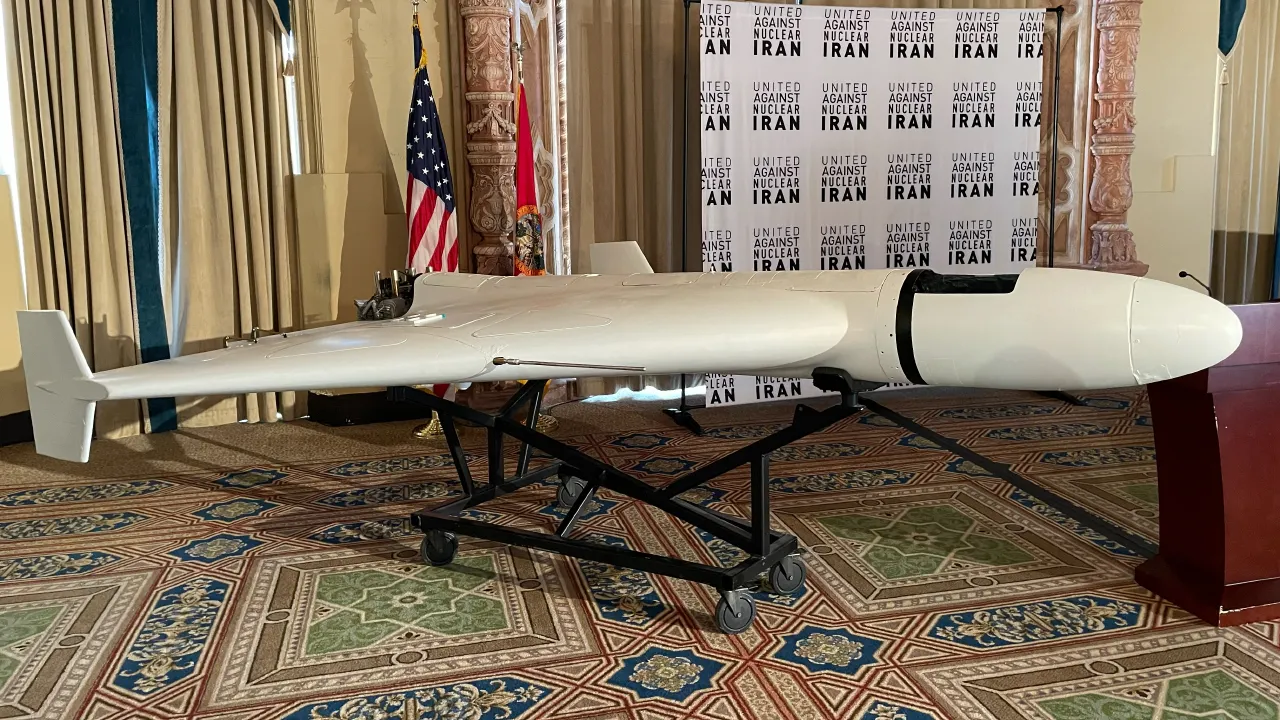
During a recent United Against Nuclear Iran (UANI) event, former Florida Governor Jeb Bush commended the Trump administration’s decisive actions that significantly weakened Iran’s capacity to incite conflict across the Middle East. Standing alongside an Iranian-made Shahed-136 drone—a notorious, cost-effective “kamikaze” weapon—Bush highlighted the success of past American foreign policy while simultaneously raising a sobering alarm about a fresh security concern much closer to home. He revealed that intelligence and media reports indicate Cuba is now harboring approximately 300 of these explosive Iranian drones. While Bush was quick to reassure the public that the United States possesses incredibly sophisticated defense capabilities designed to safeguard the homeland, he emphasized that the presence of such weaponry just ninety miles off the coast of Florida represents an undeniable, looming threat to national security.
The gathering also featured insights from Representative Carlos Gimenez of Florida, who urged the audience to look past the immediate geopolitical friction and recognize a shifting paradigm in global combat. Gimenez described the Shahed drone not merely as an instrument of isolated terror, but as the literal face of modern warfare. He pointed out that rapid advancements in artificial intelligence are drastically compounding the lethality and autonomy of these unmanned aerial systems, transforming how future conflicts will be strategically planned and executed. To illustrate his point, the congressman referenced the ongoing war in Ukraine, where both sides have relied heavily on millions of quickly manufactured, low-cost explosive drones to hold off conventional military forces, proving that small-scale technology has effectively leveled the playing field against traditional superpower arsenals.
Further underscoring the severity of the situation, Mark Wallace, the CEO of UANI and a former U.S. Ambassador to the United Nations, labeled the Shahed-136 as a ubiquitous weapon of mass destruction in the modern era. Wallace reminded attendees of the tragic human cost associated with these devices, noting they have repeatedly targeted American bases, claimed the lives of U.S. troops, and rained terror upon overseas allies. Seeking to provide crucial context regarding the timeline of the threat in the Caribbean, Wallace later clarified that the cache of drones currently sitting in Cuba was actually transferred several years ago, well before the latest escalation of hostilities between Washington and Tehran. This timeline suggests a long-term, quiet build-up of Iranian military influence in the Western Hemisphere, presenting a complex challenge that spans multiple presidential administrations.