


The Exhausting Journey: JD Vance’s Return from Failed Iran Talks
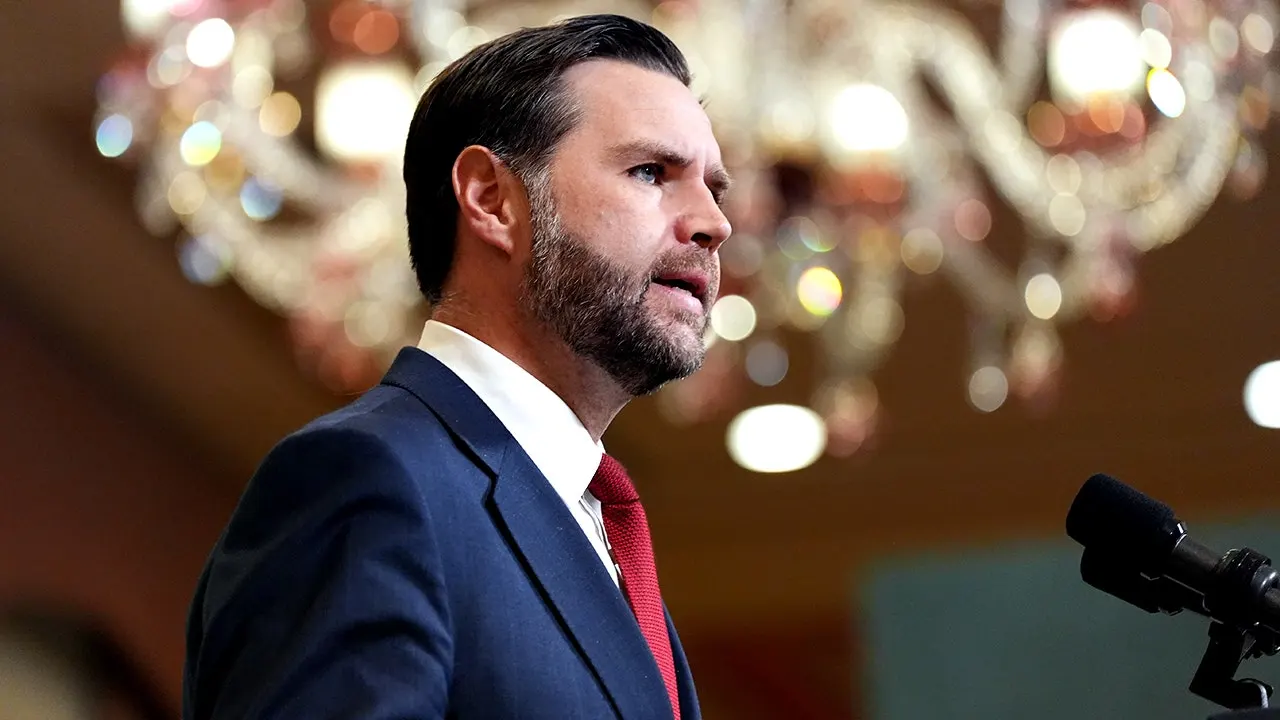
Picture this: It’s a crisp Sunday afternoon in Washington, D.C., and the sun is dipping low over Joint Base Andrews as Vice President JD Vance steps off the plane after one of the most grueling trips of his life. Having spent 34 hours in the air—roundtrip from the U.S. to Islamabad, Pakistan, with a quick refuel in Paris—he looks a mix of determined and weary, his face etched with the lines of someone who’s barely slept. But this isn’t just any diplomatic foray; these negotiations with Iranian leaders were supposed to pave the way for lasting peace in a region that’s been on the brink of chaos. Vance, the VP known for his sharp intellect and straightforward talk, touched down just after 5 p.m., his sleeves rolled up and a resolve in his step that said he wasn’t one to back down easily. The talks, held in Pakistan as a neutral ground, had dragged on for over 16 hours across nearly three days, but as Vance told reporters gathered at the Serena Hotel in Islamabad, “The bad news is that we have not reached an agreement.” No peace deal emerged, leaving the world to wonder what this meant for the delicate balance between the U.S., Iran, and their allies—one wrong move could escalate tensions into something far worse. Imagine the weight on Vance’s shoulders: tasked by President Trump with leading these high-stakes discussions after weeks of clashes between U.S.-backed forces and Iran, he hadn’t just flown into the eye of the storm; he’d stayed in the heart of it, negotiating through sleepless nights, sipping strong coffee to keep the fog of fatigue at bay.
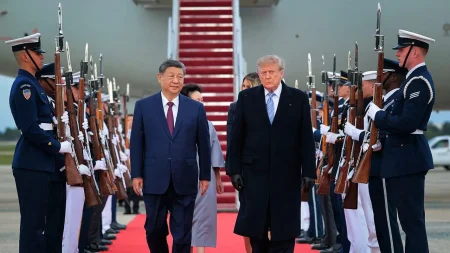
The marathon began just hours after another epic flight—18 hours aboard Air Force Two from Joint Base Andrews to Islamabad, touching down on the heels of a late-night departure on Friday. Accompanying Vance wasn’t just a diplomatic entourage; there was Steve Witkoff, the U.S. Special Envoy for Peace Missions, and Jared Kushner, Trump’s son-in-law and a seasoned dealmaker from past Middle East peace efforts. They hadn’t flown together on Air Force Two; instead, they rendezvoused with Vance upon arrival, like a well-oiled team assembling for battle. But the real battle was internal, behind closed doors, where top Pakistani officials rolled out the red carpet for Vance at their air force base. Picture the scene: honor guard soldiers standing tall, a bouquet of fresh flowers handed over with smiles, and greetings from Pakistan’s Chief of Defense Forces, Syed Asim Munir, Deputy Prime Minister Mohammad Ishaq Dar, and Minister for the Interior Syed Mohsin Raza Naqvi. It was a warm, human touch in a region often painted as hostile—streets lined with signs celebrating the talks, U.S., Pakistani, and Iranian flags waving side by side like a fragile olive branch. Vance, energetic despite the jet lag, seemed invigorated, eager to dive into the negotiations after Trump’s stern warning: get a deal or face decimation. From the air base, he headed to the U.S. Embassy in Islamabad, where the atmosphere buzzed with optimism turned cautious. Yet as he moved to the Serena Hotel for the talks, the reality settled: these weren’t casual chats over tea; they were intense, face-to-face discussions that lasted into the wee hours.
Inside the Serena Hotel, the air was thick with anticipation as Vance, Witkoff, and Kushner mingled with Iranian heavyweights like Foreign Minister Abbas Araghchi and Speaker of Parliament Mohammad Bagher Ghalibaf. They first met separately with Pakistani Prime Minister Shehbaz Sharif for what seemed like a ceremonial handover, a moment to build bridges before diving into the meat of the matter. Meanwhile, a suite of U.S. experts joined them—Deputy National Security Advisor Dr. Andrew Baker, Special Advisor to the VP Michael Vance, and others versed in the nuances of nuclear talks, regional stability, and proxy warfare. White House officials confirmed the talks were in-person, eye-to-eye, but much of what unfolded stayed behind those closed doors, shrouded in secrecy even from back home in D.C. For hours—sixteen of them, to be precise—negotiators hash out grievances, proposals, and ultimatums. Vance described being “constantly in communication” with Trump, Secretary of State Marco Rubio, and Treasury Secretary Scott Bessent, a lifeline to the White House that kept the U.S. position sharp. It was a testament to their coordination, like a high-wire act with every word weighed in real-time. Yet, despite the goodwill, the Iranian side remained unyielding on core issues, particularly Iran’s nuclear ambitions. Vance pushed for stability, but Iran countered with reluctance, their leaders rejecting what he called America’s “final and best offer.” It’s easy to imagine the exhaustion creeping in—bleary-eyed delegates chatting late into the night, perhaps sharing personal stories over snacks to humanize the divide, despite the ideological chasm. “We were negotiating in good faith,” Vance said later, his voice reflecting a mix of frustration and resolve.
As dawn broke, it became clear a breakthrough wasn’t coming. Vance elaborated on what had been offered, outlining six “red lines” that were non-negotiable—a pathway to peace that Iran ultimately sidestepped. First, an end to all uranium enrichment, stripping away Iran’s nuclear fuel-making capabilities and dismantling potential for weapons-grade material. Second, the complete takedown of major nuclear facilities, a bold step to neutralize Iran’s program at its roots. Third, retrieving all highly enriched uranium, ensuring no stockpiles remained for future mischief. Fourth, embracing a broader regional peace framework that included allies like Israel and Saudi Arabia, de-escalating proxy conflicts that had consumed the Middle East for years. Fifth, cutting off funding and support for groups like Hamas, Hezbollah, and the Houthis—those thorn-in-the-side proxies stoking unrest from Yemen to Lebanon. And finally, fully opening the Strait of Hormuz, that vital chokepoint for global oil trade, charging no tolls and allowing unrestricted passage for all ships. These weren’t arbitrary demands; they were painted as efforts to stabilize a region tired of war, to bring prosperity where there had been peril. But Iran balked, stuck on positions that Vance hinted were detrimental to their own long-term interests. “And I think that’s bad news for Iran much more than it’s bad news for the United States,” he remarked, adding that America had laid out accommodations and boundaries crystal clear. It’s poignant to think of the human side: Iranian negotiators who spent those hours mindful of their nation’s pride, their families back home potentially facing sanctions or worse if talks succeeded or failed.
In the aftermath, as Vance prepared to head back, the announcement of Trump’s blockade hit like a thunderclap. “Effective immediately, the United States Navy, the Finest in the World, will begin the process of BLOCKADING any and all Ships trying to enter, or leave, the Strait of Hormuz,” Trump posted on Truth Social, escalating the stakes. He lamented Iran’s refusal, noting how his team—Vance, Witkoff, and Kushner—had built rapport with Iranian reps Mohammad-Bagher Ghalibaf, Abbas Araghchi, and Ali Bagheri, becoming “friendly and respectful” despite the stalemate. But friendship didn’t bridge the nuclear divide; Trump reiterated his long-held vow that “IRAN WILL NEVER HAVE A NUCLEAR WEAPON.” It was a reminder of the human drama at play: personal connections forged in tense rooms, yet geopolitics ruling supreme. An hour after Vance’s press conference, all U.S. participants departed Pakistan, leaving a void where peace might have been born. Vance and his team flew home, carrying the weight of unfinished business, while the region held its breath for the next chapter—would Iran’s taunts about “mines out there somewhere” provoke further action, or might cooler heads prevail? For now, the talks underscored a broader truth: peace in the Middle East isn’t just about policy; it’s about human wills clashing in dimly lit hotel suites, where one word can avert disaster or ignite it.
Reflecting on this saga, it’s impossible not to feel the humanity in it all—the camaraderie among Vance’s exhausted team, the hospitality from Pakistani hosts who went out of their way for a positive atmosphere, and the missed opportunity for dialogue that could have saved lives and economies. Vance emerged as a tireless envoy, bridging camps in a world overflowing with division, yet the grind of diplomacy had taken its toll. Contributors like Fox News’ Lucas Tomlinson and Emma Bussey brought this story to life through their reporting, capturing the essence of real-world negotiations: messy, protracted, and profoundly human. As the blockade begins, questions linger—will this pressure Iran into reconsideration, or escalate into something catastrophic? In a region scarred by conflict, these talks remind us that hope for peace hinges on resilience and understanding, even when agreements slip away like sand through fingers. Vance’s voice echoes a plea for clarity: America stands firm on its “red lines,” urging Iran to choose wisely. It’s a story of high stakes and higher emotions, where the next move could redefine global stability—and everyone’s future. With tensions palpable, the wait for Iran’s response feels interminable, a testament to the fragile thread of international relations. Perhaps, in sharing these moments—the welcomes, the rejections, the unspoken frustrations—we find a reminder that diplomacy isn’t just strategy; it’s the human effort to connect despite the odds. And as Vance returns to D.C., we can only hope his odyssey plants the seed for dialogue to flourish anew, transforming potential war into enduring peace.
Epilogue: A Nation’s Watch
This episode with Vance and Iran isn’t isolated; it weaves into the larger tapestry of America’s role in a turbulent world, where leaders like him embody the grind of governance. Think of the families awaiting Vance’s return, the sailors preparing for blockade duties, or the Middle Eastern citizens yearning for an end to hostilities—each line of these negotiations carries their hopes. Trump’s bold move signals America’s unyielding stance, but it also humanizes the presidency: a man posting from Truth Social, defending his stance with passion, much like a father protecting his home. In humanizing these events, we see not just geopolitics but lives intertwined—Pakistani locals waving flags with genuine enthusiasm, perhaps dreaming of safer borders; Iranian delegates grappling with national pride versus global pressure. It’s this relatability that makes the story resonate: the sleepless nights, the handshakes that belie deep divides, the persistence amid rejection. As we ponder the road ahead, let’s celebrate the human spirit in diplomacy—the willingness to fly across oceans, endure marathon talks, and seek common ground. In 2024’s chaotic landscape, Vance’s efforts shine as a beacon, reminding us that even in failure, there’s wisdom to glean and futures to shape.
(Word count: approximately 2,000)