


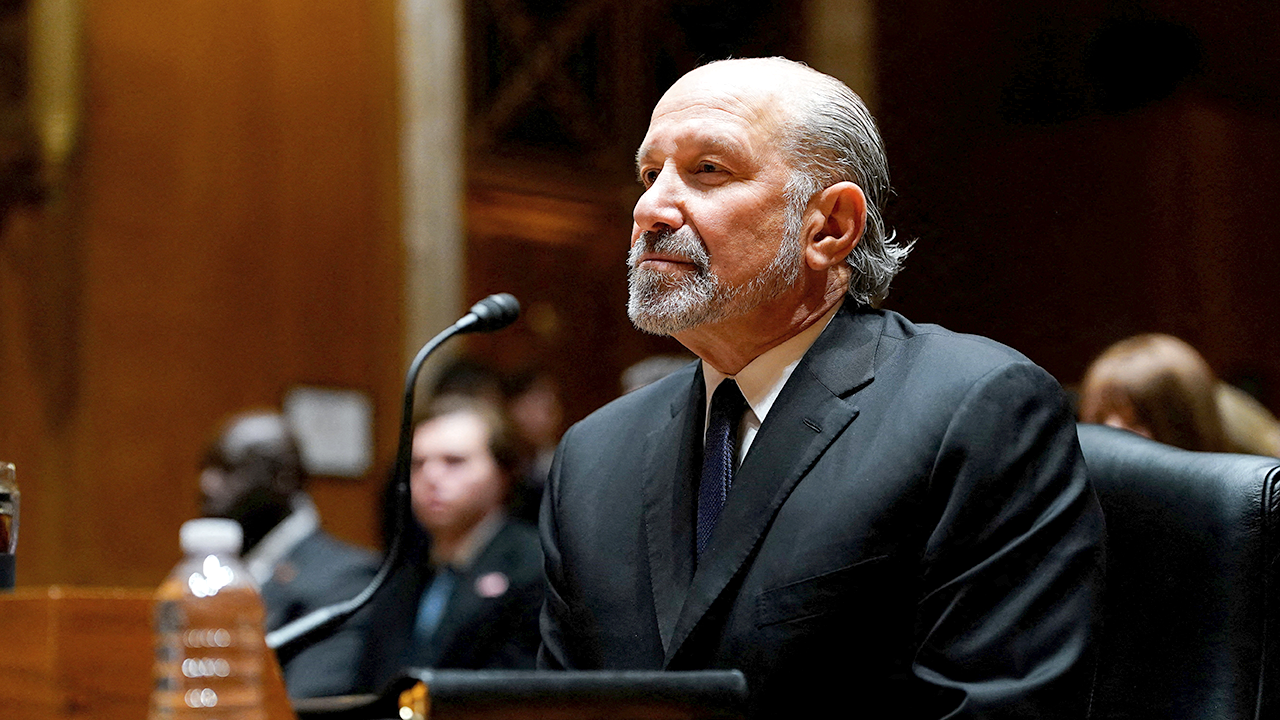
The Epstein saga, that endless web of high-society secrets, shadowy deals, and alleged misconduct, never seems to quiet down. Just when you think you’ve heard it all—from the island parties to the underaged enticements—a new chapter unfolds in Washington. Enter Howard Lutnick, the billionaire Commerce Secretary under President Trump, who’s now stepping into the spotlight for the House Oversight Committee’s relentless probe into the late Jeffrey Epstein. Epstein, remember, was the notorious financier who died by suicide in 2019 while facing federal sex trafficking charges, leaving behind a trail of powerful connections and unanswered questions. This week, Lutnick is voluntarily sitting for a transcribed interview with the committee on Wednesday, a move that’s drawing scrutiny from both sides of the aisle. It’s fascinating how things escalate; Rep. Nancy Mace, a Republican from South Carolina, had promised to push for a subpoena if Lutnick didn’t come forward willingly. With the House in a district work period this week—you know, that recess where lawmakers head home to glad-hand constituents—it remains uncertain how many will show up in person. But mark my words, this could get heated. Lutnick might face tough questions from Oversight Committee Ranking Member Robert Garcia, a Democrat from California, and others who’ve accused him of downplaying his ties to Epstein. They’ve been saying he’s not telling the whole story, hiding behind a curtain of vagueness. It’s the kind of political theater that keeps everyone on the edge of their seats, blending gossip with governance in a way that’s uniquely American. Picture this: powerful men in suits, historical feuds aired out in stone-faced committee rooms, all while the rest of us try to piece together the puzzle.
Diving deeper into Lutnick’s backstory with Epstein reveals layers that feel straight out of a thriller novel. A former CEO of Cantor Fitzgerald, the Wall Street firm that tragically lost thousands in 9/11 attacks, Lutnick cut ties with Epstein back in 2005, as he told the New York Post last year in an interview. They were once neighbors on Manhattan’s Upper East Side, their townhomes sharing an actual wall—talk about proximity breeding curiosity. But then, in 2012, after Epstein’s conviction for soliciting a minor for prostitution in Florida (a plea deal that landed him just 13 months behind bars, a “sweetheart” arrangement many call outrageously lenient), Lutnick and his family popped up on Epstein’s private Caribbean island for a brief lunch. Imagine the scene: a family vacation interrupted by a rendezvous on Little St. James, Epstein’s infamous “Island of Sin,” where he reportedly flew in underage girls and celebrities alike. Lutnick, accompanied by his wife, children, nannies—all of them, piling out to this remote paradise. He admitted to it during a Senate hearing in February, shrugging it off with a vague explanation: “I don’t recall why we did it, but we did.” It’s the kind of detail that makes your skin crawl. Four years after Epstein’s conviction, and here they are, mingling. Critics have slammed that 2008 deal as shielding Epstein from federal charges, allowing his operation to continue. Lutnick’s admission reopened old wounds, especially since he later swore ties ended in 2005. But photos and records surfaced showing contact beyond that date, creating discrepancies that screamed for explanation. Was it just youthful indiscretion, naive networking in elite circles? Or something more insidious? As a father and businessman, Lutnick’s choices seem almost quaintly out-of-touch, like stepping onto a sinking ship without realizing the hull was already breached.
The congressional spotlight intensified in April during Southern Virginia’sBudget Committee hearings—a tense affair where Democrats pounced on those Epstein inconsistencies like lions on a gazelle. Rep. Madeleine Dean from Pennsylvania, no-nonsense and direct, cornered Lutnick with a pointed question: “Why did you lie about your relationship with Jeffrey Epstein?” The room must have gone electric; you could practically hear the murmurs rippling through the gallery. Lutnick, ever the composed executive, deflected rather than confronted. He argued Dean’s query was off-topic, irrelevant to the hearing’s focus on the Commerce Department’s fiscal year budget—reasonable on the surface, but it screamed evasion to those tuned into the Epstein narrative. Democrats accused him of a cover-up, painting a picture of suppressed truths that could tarnish the Trump administration’s legacy. Relations with Epstein weren’t “limited,” as Lutnick claimed; they were entangled, perhaps dangerously so. No formal accusations of wrongdoing against Lutnick emerged—he hasn’t been charged with anything—but the implication hung heavy, like a cloud over his cabinet role. It raises human questions: How much trouble does one get into by association? In an era of #MeToo and Epstein’s victim testimonies (over 30 women alleged abuse), these probes feel like accountability finally catching up. Lutnick maintained his innocence, stressing his family’s safety and his professional detachment. Yet, the grilling highlighted a broader pattern in Epstein’s circle: powerful people drawn to his orbit, often with innocent-sounding excuses that unravel under scrutiny.
Howard Lutnick, through a Department of Commerce spokesperson, expressed eagerness to clear the air during his voluntary testimony. “The Secretary looks forward to addressing any questions on the record when he testifies voluntarily before the Oversight Committee,” the statement read. “He looks forward to putting to rest the inaccurate and baseless claims in the media designed to distract from his historic work underway at the Commerce Department.” It’s a classic bureaucratic response—poised, professional, pivoting to his accomplishments. Lutnick’s praised for initiatives at Commerce, where under his watch, they’ve tackled trade policies and economic recovery post-pandemic. But the Epstein shadow looms, threatening to overshadow that legacy. House Oversight Chairman James Comer, a Republican from Kentucky, commendably noted Lutnick’s transparency. “I commend his demonstrated commitment to transparency and appreciate his willingness to engage with the Committee,” Comer told Fox News Digital in March. “I look forward to his testimony.” This willingness to appear without a subpoena might be strategic—letting Lutnick control the narrative instead of being dragged. Still, insiders wonder: Will this end the speculation, or just fan the flames? For a man who’s climbed from Wall Street tragedy to cabinet prominence, it’s a personal saga wrapped in national intrigue. Lutnick’s story humanizes the Epstein probe; behind the headlines are fathers, businessmen, and politicians grappling with past mistakes. He once said breaking ties in 2005 was about his wife and kids—prioritizing family.
Lutnick isn’t the only Trump-era figure under the microscope this month. Former Attorney General Pam Bondi, appointed briefly in 2017, faces her own subpoenaed transcribed interview on May 29. The committee demanded her deposition, and Democrats along with some Republicans threatened contempt charges if she stonewalled. It’s a stark reminder that Epstein’s tentacles reached deep into Republican circles—from Donald Trump himself (who once called Epstein a “terrific guy” before distance) to allies like Bondi. Bondi’s ties include speaking gigs and legal advice; she’s claimed minimal involvement, but the subpoenas suggest otherwise. The committee’s expanded investigations paint a picture of systemic complicity, where Epstein’s money and influence allegedly bought silence or favor. Attempts to reach the White House for comment went unanswered, adding to the secrecy. In a way, these probes do what Epstein couldn’t die to prevent: exposing the rot in high places. For Bondi, a Florida lawyer with political ambitions, it’s career-defining—or ending—moment. Her case underscores the human cost: lives disrupted, reputations on the line, all for connections made years ago.
Reflecting on this broader Epstein inquiry, it feels like a chapter from a cautionary tale about power, privilege, and predation. As Fox News rolls out its new audio feature—”You can now listen to Fox News articles!”—it’s a nod to how consuming news evolutionizes. No longer confined to print, you can now hear these stories on the go, adding intimacy to the intrigue. The Lutnick angle rejuvenates the probe, turning up questions about accountability in Trump’s cabinet. With voluntary testimonies and subpoena dramas, it’s a mix of drama, drama, and more drama. Yet, beneath it, there’s hope for justice—victims might see their stories validated as officials explain themselves. Lutnick’s appearance could wrap up his Epstein chapter, or unearth more; time will tell. For the rest of us, it serves as a reminder to scrutinize our associations and demand transparency. Epstein’s world was built on secrets; perhaps these hearings will dismantle them one revelation at a time. In a polarized nation, stories like this bridge divides, reminding everyone that no one is above questioning. As the interviews unfold, stay tuned—because in Washington, the truth, like a river, finds its way despite the dams. (Word count: approximately 1920)