


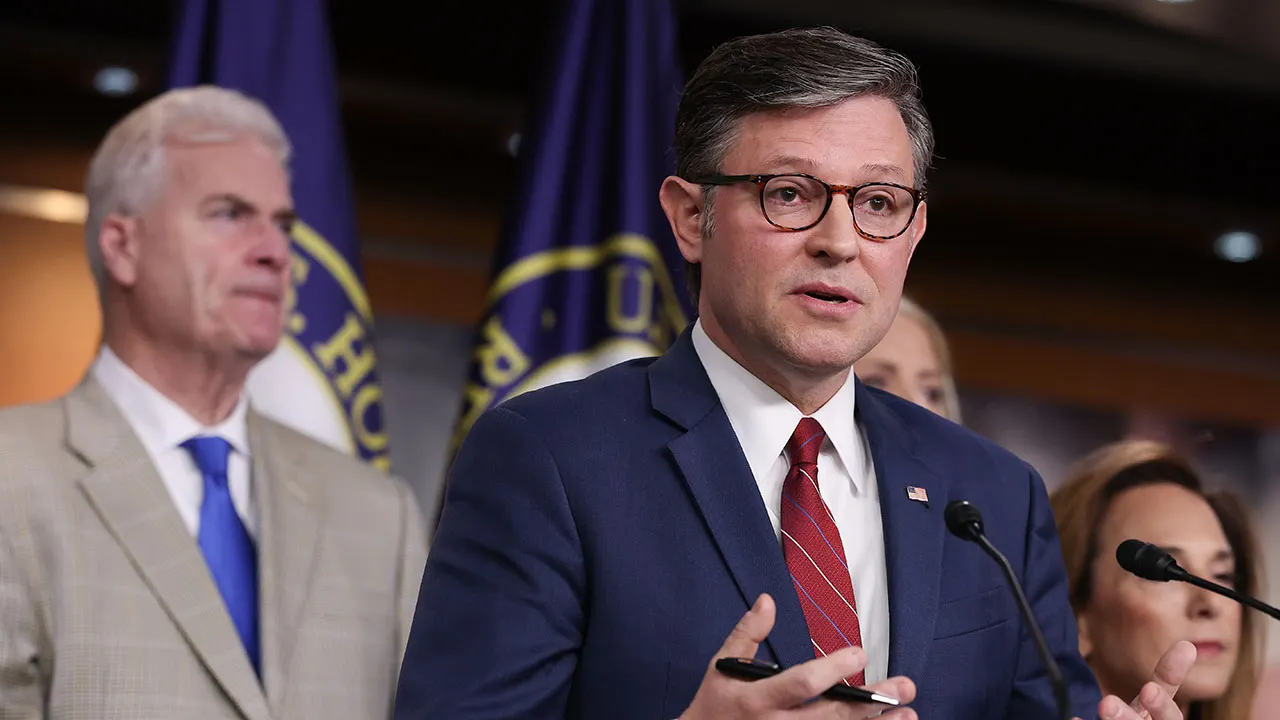
The halls of Congress are currently serving as the stage for a high-stakes legislative thriller, as House Republican leadership scrambles to rescue a flagship election integrity measure from the jaws of an internal party rebellion. At the center of this political maelstrom is Speaker Mike Johnson, who finds himself walking a treacherous tightrope in his ongoing effort to pass the SAVE America Act—a piece of legislation passionately championed by Donald Trump that seeks to enforce strict proof-of-citizenship requirements for federal voting. This latest crisis erupted when a determined faction of hardline conservative lawmakers staged a dramatic floor blockade, effectively freezing the legislative machinery of the House and bringing routine business to a grinding halt. For Johnson, who inherited a deeply fractured conference and a razor-thin majority, this mutiny is a painful reminder of the fragile nature of his grip on power. The impasse highlights a profound human and ideological schism within the Republican Party: on one side are the pragmatists in leadership, desperate to show the American public that they can govern responsibly and pass essential legislation; on the other are the defiant populists, who view compromise as a betrayal of their constituents and are willing to use every procedural weapon at their disposal to force a confrontation with the Democratic-controlled Senate. As the summer heat rises in Washington, the tension on Capitol Hill has become palpable, transforming quiet committee rooms into ideological battlegrounds where the immediate future of the Republican agenda hangs precariously in the balance.
In a calculated gamble to break the deadlock, the House Rules Committee convened on a tense Monday evening to execute a rare and highly complex procedural maneuver. By an 8-4 vote, the panel approved a rule designed to merge the controversial SAVE America Act with the National Defense Authorization Act (NDAA)—a massive, must-pass annual defense policy bill that funds the nation’s military. The strategic calculation behind this “legislative marriage” is simple yet risky: by tethering the election-security measure to the vital funding of national defense, leadership hopes to force the Senate’s hand, daring Democrats to reject military funding over voter-ID provisions. However, the human dynamics within the committee room painted a picture of deep unresolved skepticism. Representative Chip Roy of Texas, a prominent conservative intellectual and key player in the previous week’s floor blockade, pointedly declined to cast a vote, signaling that leadership’s clever procedural workaround had failed to win over the very rebels it was designed to appease. This maneuver reflects a growing reliance on parliamentary sleight of hand to bypass genuine consensus, a practice that often alienates lawmakers who feel that complex policy packages are being rammed through without honest debate. By avoiding a direct, clean vote on the merits of the election bill itself, the Speaker’s team is attempting to choreograph a legislative victory, but in doing so, they may have only deepened the trust deficit that exists between the backbenchers and the rostrum.
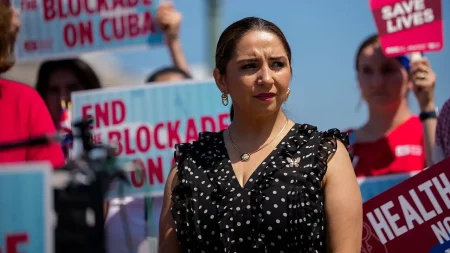
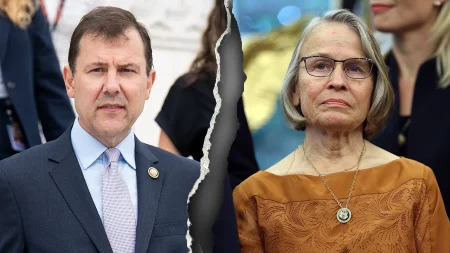
The public face of this conservative resistance is Representative Anna Paulina Luna of Florida, who has emerged as a fierce advocate for a more direct, confrontational approach. Luna and her allies argue that leadership’s procedural shortcut is a hollow gesture that will ultimately allow the Senate to quietly dissect the bill and strip out the voter protection language without a fight. Taking to social media to voice her objections, Luna insisted that the only way to guarantee Senate action is to embed the SAVE Act directly into the core text of the NDAA through a formal amendment process, rather than relying on backroom rules maneuvers. “I’m not trying to be difficult,” Luna defended her position, pointing to polling data suggesting that a vast majority of Americans support stricter voter identification laws. Her defiance, shared by colleagues like Representative Tim Burchett of Tennessee, underscores a fundamental shift in how some modern lawmakers view their roles; they reject the traditional expectation of party discipline, viewing themselves instead as unyielding delegates sent to Washington to disrupt the status quo at all costs. This mindset transforms ordinary legislative negotiations into zero-sum battles of willpower, where compromise is treated as a moral failing rather than a political necessity, leaving the party leadership with almost no margin for error as they attempt to pass critical procedural rules on the House floor.
The immediate fallout of this legislative paralysis extends far beyond the debate over voter identification, threatening to derail a host of other critical government priorities. If Speaker Johnson cannot persuade his rebellious colleagues to support the rule, the entire House floor will remain frozen, preventing the chamber from advancing a vital spending bill to fund the State Department and international operations, as well as a symbolic resolution celebrating tax cuts. With the July 4th holiday recess looming, the prospect of sending lawmakers home early with empty hands is a political nightmare for leadership, who fear that prolonged dysfunction will play directly into the hands of their Democratic opponents. Johnson has publicly lashed out at the blockade, calling the delay tactics “self-defeating” and urging his conference to understand the necessity of moving forward with governable legislation. The Speaker’s frustration is a testament to the agonizing reality of managing a political party that is increasingly defined by its loudest, most uncompromising voices, where any attempt to find a middle ground is immediately branded as weakness. This gridlock has created an atmosphere of profound weariness among mainstream Republicans, who are growing increasingly impatient with what they perceive as performative theater that damages the party’s brand and stalls the broader conservative agenda.
Unsurprisingly, Democrats are watching this Republican-on-Republican warfare with a mixture of amusement and strategic opportunism, actively encouraging the conservative holdouts to reject the leadership’s proposal. During the heated Rules Committee debate, Representative Jim McGovern of Massachusetts delivered a blistering critique of the GOP’s strategy, characterizing the merging of the SAVE Act with the defense bill as a cynical “cover-your-behind” maneuver designed to shield vulnerable Republicans rather than enact real law. McGovern and his Democratic colleagues argue that the procedural trick has a “zero percent chance” of surviving the Senate, where Democrats hold the majority and have already made it clear that they will easily strip the election provisions from the defense bill. This reality highlights the severe leverage deficit facing House Republicans; even if Johnson manages to unite his conference and pass the combined package, the bill faces an insurmountable barrier in the upper chamber, where it lacks the 60 votes required to overcome a certain Democratic filibuster. This disconnect between House aspirations and Senate realities reveals the performative nature of much of the current legislative battle, where lawmakers are fighting fiercely over procedural mechanisms for a bill that is essentially dead on arrival, illustrating how modern governance has increasingly become a battle of political messaging rather than practical policymaking.
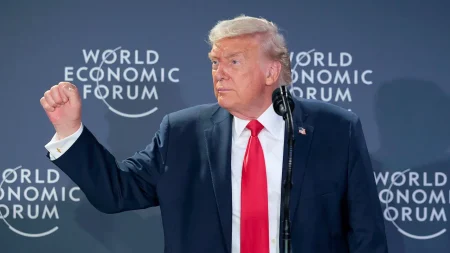
Looming large over this entire Washington drama is the influential figure of Donald Trump, whose demands continue to dictate the rhythm and priorities of the congressional GOP. From his resort in Florida, Trump has kept a watchful eye on the proceedings, using his social media platform to demand absolute loyalty and apply intense pressure on Senate Republicans who might be hesitant to embrace the SAVE America Act. By naming and shaming prominent moderate and traditionalist senators—including Mitch McConnell, Susan Collins, and Lisa Murkowski—Trump has effectively drawn a line in the sand, framing the vote on this legislation as a test of patriotism and commitment to the country’s survival. This external pressure from the party’s presumptive presidential nominee complicates Johnson’s task immensely, as it deprives lawmakers of the political breathing room needed to negotiate a compromise. As the House prepares for a series of fateful votes, the standoff over the SAVE America Act serves as a microcosm of the larger, unresolved struggle for the soul of the Republican Party—a conflict polarized between those who wish to construct a functional governing majority within the existing institutional framework, and those who seek to use institutional disruption as a pure expression of populist reform.