

The High-Drama Showdown: Hillary Clinton Takes the Stand
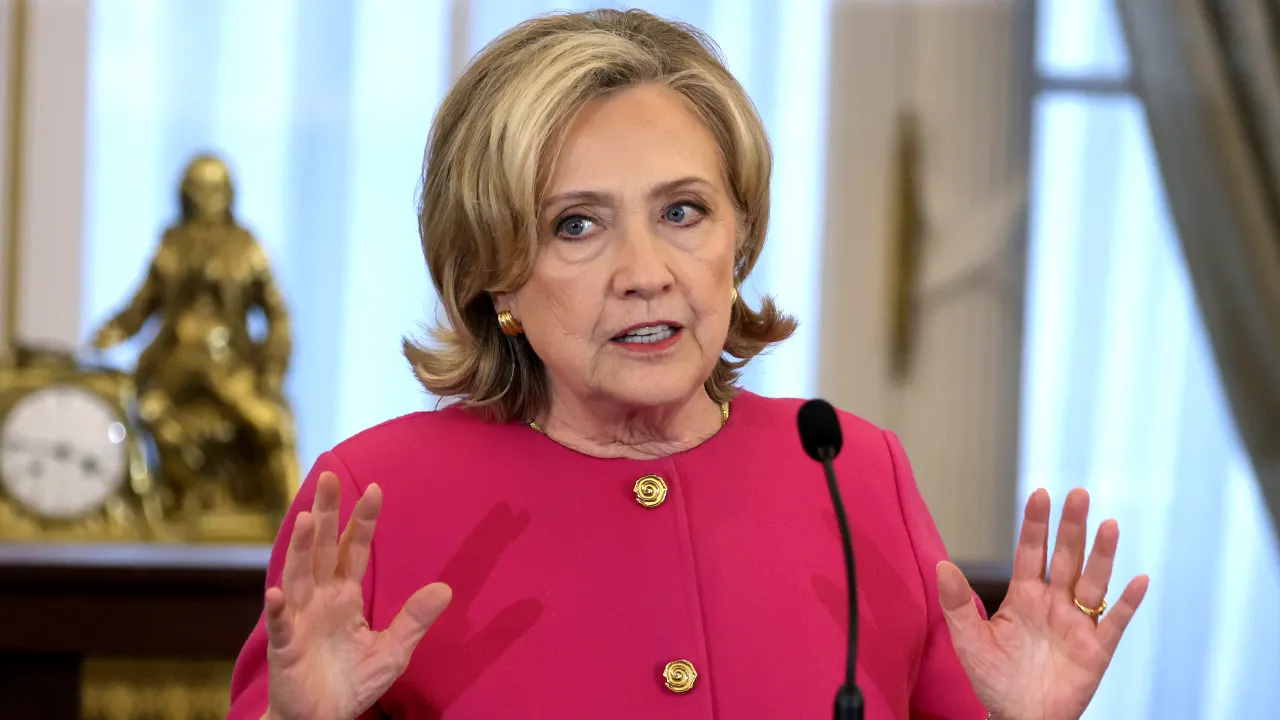
In the quaint, secluded suburb of Chappaqua, New York, where the Clintons have called home for decades, a tense political spectacle unfolded on a chilly Thursday morning. Former Secretary of State Hillary Clinton, a figure whose life has been inextricably woven into the fabric of American politics, sat poised for what promised to be a marathon deposition before the House Oversight Committee. Led by Republicans eager to dig deep into the murky world of Jeffrey Epstein’s sex trafficking empire, this hearing wasn’t just about seeking answers—it was a charged confrontation between adversaries. Clinton, resolute and armed with prepared remarks, didn’t mince words: she lambasted the committee as a distraction tactic, aimed at shielding President Donald Trump from scrutiny. Imagine the atmosphere—a cozy town hall transformed into a courtroom stage, with reporters huddling outside and lawmakers arriving from Washington, all under the shadow of Epstein’s ghost. For Clinton, this wasn’t merely a deposition; it was a battle to reclaim her narrative, to push back against what she saw as a witch hunt fueled by political vendettas rather than genuine pursuit of justice. The air was thick with anticipation, as both sides knew millions of eyes were watching, turning this into more than testimony—it was theater for the nation’s divided soul.
Deepening the personal stakes, Clinton’s opening statement cut like a knife, accusing her interrogators of exploiting her appearance to obscure Trump’s name cropping up time and again in Epstein files. “A committee truly committed to thwarting human trafficking would focus on fixing the broken system that let Epstein evade punishment in 2008,” she asserted, her voice steady but laced with indignation. Picture Clinton, no stranger to high-stakes grillings—from Benghazi hearings that reshaped her career to the relentless email investigations—now channeling her frustration into pointed critique. She painted a picture of a body politic gone astray, where legitimate demands for transparency were drowned out by partisan noise. Clinton wasn’t shouting accusations; she was delivering a narrative of disillusionment, humanizing the ordeal by reminding listeners that Epstein’s victims were real people, not just pawns in a political game. Her words echoed the weariness of someone who’s fought countless battles, questioning why she, with no direct ties, was summoned while others, like Trump with thousands of file mentions, dodged direct oaths. It was a moment of raw honesty, making Clinton seem not just a politician but a guardian of truth, appalled by how Epstein’s leniency prolonged a decade of horror.
On a personal note, Clinton emphasized her detachment from Epstein’s dark orbit, declaring unequivocally that she had no knowledge of his crimes. “I had no idea about their activities,” she stated flatly, a phrase that carried the weight of relief and sorrow. Describing never crossing paths with Epstein—no flights on his infamous jet, no visits to his secluded islands or opulent offices—she painted herself as an outsider looking in, sharing the universal horror that gripped decent folks learning of his deeds. It’s easy to humanize this: think of Clinton, once the most powerful woman in the world, now reflecting on the unfathomable twists of fate that brushed such evil near her circle without touching her directly. Her remarks weren’t defensive; they were a heartfelt plea for perspective, acknowledging the revulsion that comes from imagining the lives ruined by a predator who got off with a slap on the wrist. This wasn’t just politics; it was a mother’s voice, a former first lady envisioning the families shattered, and it added layers of empathy to a woman often caricatured as icy. By sharing her own bewilderment, Clinton bridged the gap between elite power and everyday outrage, making her testimony resonate with anyone who’s ever felt powerless against systemic injustice.
Meanwhile, the committee’s leaders insisted they were on a mission to illuminate Epstein’s broad web, not to slander the Clintons. Chairman James Comer, a Kentucky Republican with a no-nonsense drawl, assured reporters that no accusations of wrongdoing were flying—at least not yet. “We’re giving them due process,” he said, emphasizing the investigation’s aim to unravel the connections, from financier’s ties to luminaries like Gates and Wexner. The scene in Chappaqua was part negotiation, part necessity: both parties’ lawyers had brokered an in-person setup to avoid virtual frustrations, turning the suburban tranquility into a hive of activity. Imagine the logistical dance—Democrats and Republicans descending on the Clintons’ hometown, staffs in tow, all committed to their roles in this forensic drama. Rep. Nancy Mace, a feisty South Carolinian who’s pushed boundaries before, was slated to lead the questioning, her list including probing Clinton’s connections to figures like Howard Lutnick and Ghislaine Maxwell, Epstein’s alleged accomplice. Mace, eyeing a gubernatorial run, framed it as digging for truth, while Comer hinted at scrutinizing Maxwell’s presence at Chelsea Clinton’s 2010 wedding—a stark reminder of how interwoven these elite circles were, even post-scandal whispers. Humanizing this, it’s not just Republicans playing detective; it’s a collective yearning for clarity in a case that has haunted society, prompting outreach like pleas for justice from victims’ families.
The deposition kicked off amid ripples of related intrigue, including news of Norway’s Crown Princess Mette-Marit’s son facing rape charges, his name surfacing hundreds of times in fresh Epstein files—a sobering echo of how the financier’s reach stretched continents and royalty. Clinton’s session was set for Thursday, with Bill Clinton slated for an even lengthier Friday grilling, painting a picture of two former presidents’ orbits intersecting the Epstein saga without blame, yet under relentless question. Comer predicted long days, not as endurance tests but as unyielding quests for understanding, from Epstein’s network to why systemic failures persisted. For the Clintons, culturally iconic figures who’ve donated books, parks, and policies to the world, this felt invasive yet inevitable. Picture Bill, the charismatic Arkansan, preparing notes while Hillary held court; their partnership, forged in shared trials, now weathering public dissection. The human element here is palpable: officials, once untouchable, facing vulnerability, their reputations dissected like open books. It underscored how Epstein’s legacy wasn’t just about crimes but about the fragility of power, making everyday Americans ponder their own exposures to unseen networks.
Ultimately, Clinton dismissed it all as a “fishing expedition,” a waste of time when direct interrogations of Trump could yield real breakthroughs. “If you’re serious about the truth, ask the current president under oath about the tens of thousands of mentions,” she challenged, her remarks a rallying cry against what she perceived as performative politics. No one was accused—neither Clintons nor Trump—but the files’ mentions loomed large, demanding answers in an era of accountability. This testimony humanizes the broader Epstein probe: it’s not cold facts but a tapestry of human failings, where survivors seek closure and investigators grapple with elite entanglements. As the day unfolded in Chappaqua, it symbolized a nation’s reckoning, turning a quiet town into a crossroads of revelation and resilience. For Clinton, it was vindication; for the committee, persistence. In the end, this wasn’t just news—it was a reminder that justice thrives on direct confrontation, not shadows. The Clintons’ chapter in this saga, while contentious, spotlighted how personal fortitude meets public scrutiny, urging us all to demand transparency in our interconnected world. Whether distraction or discovery, the echoes of that day will ripple through politics and personal lives for years, proving that true human stories are built on unflinching dialogue.