



The bedrock of the American experiment rests upon an unshakeable promise: that the law is a blind, impartial arbiter, indifferent to the political winds of the day and immune to the personal biases of those who sit in judgment. Yet, in an era defined by deep partisan divides and escalating distrust in public institutions, that foundational promise is facing an unprecedented crisis of confidence. For years, everyday citizens and seasoned legal analysts alike have watched with growing cynicism as high-stakes policy battles are funneled through a polarizing strategy known as “judge shopping.” This tactical maneuver allows clever litigants and powerful interest groups to carefully select specific venues where a sympathetic judge, whose ideological leanings are well-known, is nearly guaranteed to oversee the case. This system of predictable outcomes has transformed federal courtrooms from sanctuaries of objective justice into highly predictable political chessboards, leaving the public to wonder whether the rule of law has been replaced by the rule of venue. Seizing on this widespread frustration, Senator Eric Schmitt, a Republican from Missouri, is launching a major legislative crusade aimed at dismantling these cozy arrangements and restoring structural integrity to the federal bench. By targeting what he sees as an run-away judicial class, Schmitt’s aggressive new push highlights a larger, deeply human struggle over who truly controls the levers of American democracy: the elected representatives of the people, or the lifetime-appointed magistrates who hold the power to dismantle entire presidential agendas with the stroke of a pen.
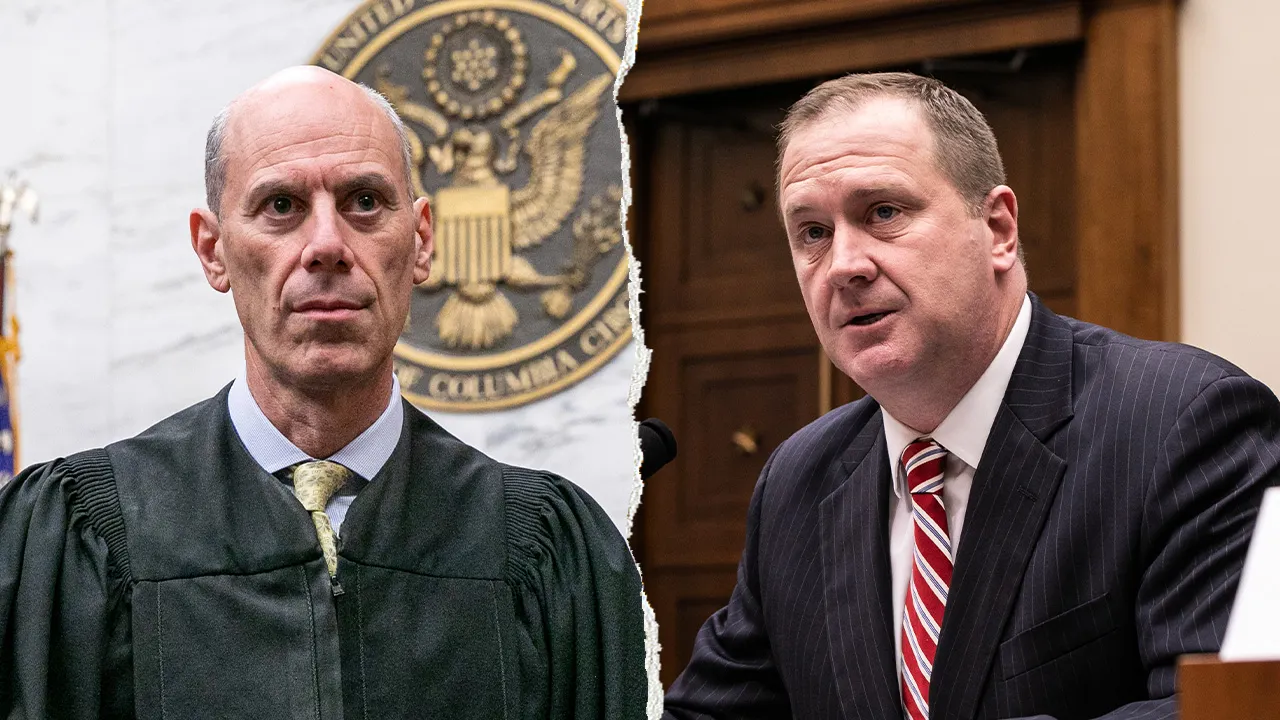
At the very heart of this legislative battle is a piece of legislation boldly titled the Blocking Overt Attempts at Shopping By Enforcing Randomization Guidelines Act, or the “BOASBERG Act.” The acronym is far from a coincidence; it is a direct, public challenge to U.S. District Judge James Boasberg, a prominent judge appointed by President Barack Obama in 2010 who has long served as a lightning rod for conservative anger and a frequent foil to Donald Trump’s political machine. By naming the bill after a sitting federal judge, Senator Schmitt has personalised a complex procedural issue, turning a technical debate about judicial assignment protocols into an accessible narrative of executive-judicial warfare. Schmitt argues that Boasberg represents the very archetype of a “rogue” judge—an activist jurist who allegedly seeks out or manipulates the system to preside over politically charged cases and impose a personal ideology onto the nation. This battle is not just about legislative text; it is about the profound human frustration of a lawmaker who believes that the democratic will of millions of voters is being quietly vetoed by an insulated elite. By seeking to strip away the human element from case assignments, the BOASBERG Act hopes to replace backroom judicial scheduling with a cold, blind lottery, ensuring that no individual judge can ever again become the predictable champion for one side of the political aisle.
To achieve this ambitious reorganization of the federal judiciary, the proposed legislation outlines several strict structural guardrails designed to eliminate human bias from the court docketing process, giving federal district courts a tight 120-day deadline after enactment to fully implement these changes. First and foremost, the bill mandates the absolute, randomized assignment of all federal civil cases, stripping chief judges of their historical, often opaque authority to influence or manually direct which judges receive high-profile, politically sensitive files. Furthermore, the act demands absolute transparency, forcing federal courts to publicly disclose their exact assignment practices so that the American public, legal watchdogs, and independent journalists can verify that cases are indeed being distributed by chance rather than design. To ensure these rules are not treated as mere suggestions, the bill establishes severe, unprecedented penalties for any court official or litigant who attempts to tamper with, influence, or manipulate this assignment pipeline. Perhaps most radically, the legislation requires that if the United States Supreme Court is forced to intervene in a lower-court ruling, the case must be immediately and randomly reassigned to an entirely different judge upon its return to the district level. This specific clause prevents a single, headstrong judge from repeatedly litigating the same ideological crusade after being corrected by the nation’s highest court, establishing a systemic check against judicial stubbornness.
To understand why Judge Boasberg became the namesake for such a disruptive piece of legislation, one must look at his turbulent history with Donald Trump’s administration across two non-consecutive presidencies, a relationship that has often resembled a high-stakes constitutional street fight. Since his appointment to the federal bench over a decade ago, Boasberg has repeatedly found himself at the epicenter of some of the country’s most explosive legal dramas, consistently ruling against the implementation of conservative policies and triggering intense fury from the White House and the Department of Justice. The animosity between the two camps grew so fierce during Trump’s first term that the president publicly called for Boasberg’s impeachment, while the Justice Department took the extraordinary step of filing formal misconduct claims against him. For conservative lawmakers like Schmitt, Boasberg represents an unchecked judicial aristocracy that uses the shield of lifetime appointment to wage a relentless, unelected opposition campaign against the political mandates of the winning party. This human drama of power and pushback illustrates how easily the lines between constitutional oversight and partisan obstruction can blur when the same judge repeatedly stands in the way of a president’s signature initiatives, turning routine legal challenges into historic battles for institutional dominance.
The tension has only intensified in recent months, fueled by a series of highly controversial, front-page rulings by Boasberg that have directly blocked the administration’s key policies on national security, immigration, and border enforcement. In one major clash, Boasberg blocked the State Department from restricting visas for foreign officials and nationals whom the administration accused of actively helping to suppress the free speech rights of American citizens abroad. Shortly after, the judge inserted himself into a highly charge national security crisis by temporarily halting the rapid deportation of Venezuelan migrants, individuals whom the White House asserted were active members of the notorious and violent Tren de Aragua transnational gang. Boasberg did not just halt the deportations; he later ordered the administration to return the deported men to American soil, ruling that the government had violated their fundamental rights to due process in its rush to secure the border. If these policy clashes were not enough, Boasberg also presided over the bizarre “Signalgate” scandal, which erupted when Cabinet members—including Vice President JD Vance, War Secretary Pete Hegseth, Secretary of State Marco Rubio, and National Security Advisor Michael Waltz—accidental added a journalist to an encrypted group chat discussing planned military strikes in Yemen. Boasberg issued an order forcing the administration to preserve every single message from the compromised group chat, cementing his status as a persistent thorn in the side of the administration’s inner circle.
Ultimately, the fight over the BOASBERG Act is about much more than a single senator’s frustration with a single judge; it is a profound philosophical debate about the future of American democracy and the separation of powers in the twenty-first century. Senator Schmitt’s ultimate goal is to restore the average citizen’s faith in a legal system that currently feels rigged, predictable, and deeply alienating to those who do not possess political power. By replacing human discretion with a secure, randomized lottery system, the bill seeks to neutralize the perception that justice can be bought, shopped for, or pre-arranged by powerful interest groups on either side of the political spectrum. Critics of the bill will undoubtedly argue that it represents an unconstitutional infringement by the legislative branch upon the internal administration of the judiciary, threatening the very independence that allows judges to protect individual rights against the tyranny of the majority. Yet, as the bill moves forward, it forces a critical conversation about the human element of our courts, asking whether a modern nation can truly sustain a fair legal system when its citizens no longer believe the referee is impartial. In a world where trust in institutions is rapidly eroding, the quest to build a more transparent, randomized, and fair court system is not just a political maneuver—it is a vital, urgent step toward ensuring that the promise of equal justice under the law remains a living reality for all Americans.