


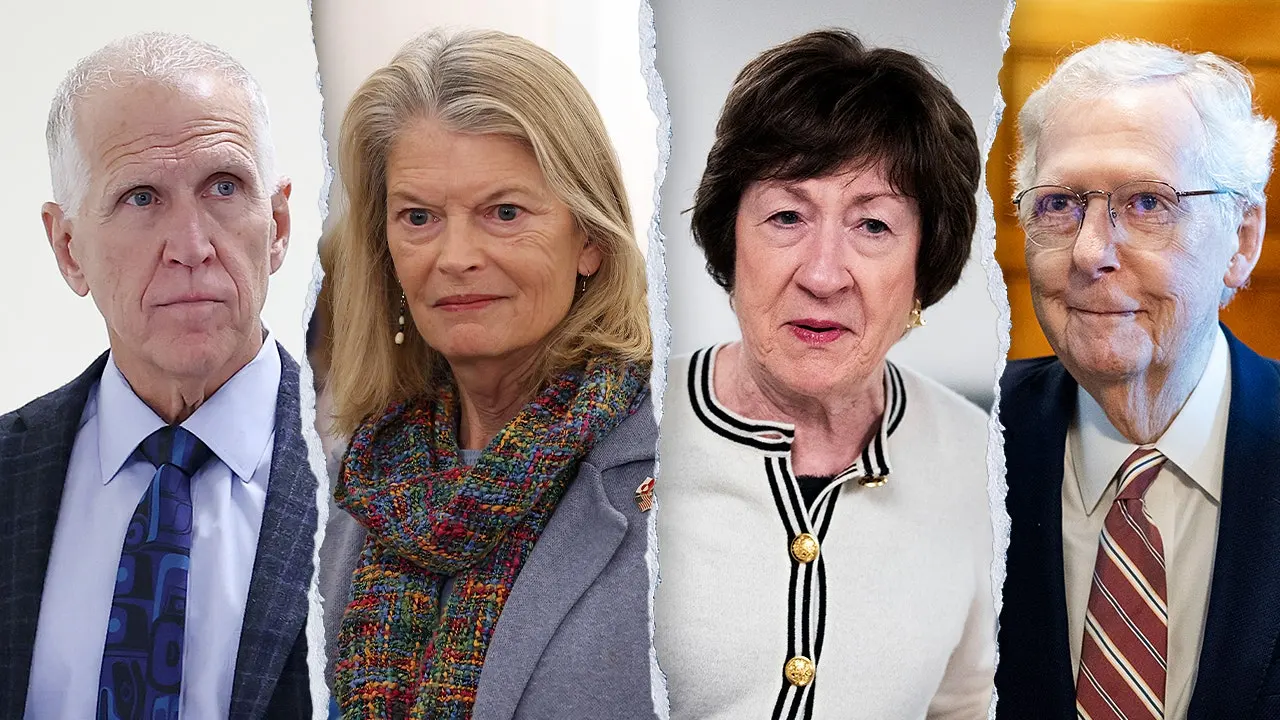
Under the grand, vaulted ceilings of the United States Capitol, where history is etched into every stone and the weight of a divided nation constantly hangs in the air, a late-night drama unfolded that highlighted the deep ideological fractures of modern American politics. The chamber, usually a place of rigid decorum, became a crucible of intense human negotiation and political theater as Senate Republicans launched yet another bid to pass President Donald Trump’s signature voter identification and election integrity legislation, the Safeguarding American Voter Eligibility (SAVE) America Act. The stakes were incredibly high, not just for the politicians seeking to solidify their platforms before an eager electorate, but for the millions of everyday citizens whose fundamental rights and sense of security are directly impacted by these decisions. In a tense and dramatic roll call, the effort was ultimately thwarted when four distinct Republican senators—Susan Collins of Maine, Lisa Murkowski of Alaska, Mitch McConnell of Kentucky, and Thom Tillis of North Carolina—chose to break party ranks. Joining hands with a united Democratic caucus, these four lawmakers delivered a decisive blow to the amendment, which had been tied to a massive, $70 billion immigration enforcement budget reconciliation package aimed at funding Immigration and Customs Enforcement (ICE) and the Border Patrol. For the second time in recent months, a coalition of moderate institutionalists and opposition lawmakers prevented the passage of this highly controversial measure. The defeat underscored a profound reality within the upper chamber: despite intensive efforts by conservative leadership to rally the troops and utilize procedural maneuvers like the talking filibuster, the path forward for the SAVE America Act remains virtually impassable. The vote was not merely a procedural tally; it was a deeply symbolic clash reflecting two diametrically opposed visions of American democracy, trust, and the rule of law, leaving lawmakers on both sides of the aisle to grapple with the human costs of their legislative standoffs.
The driving force behind this latest legislative push was Senator Lindsey Graham, a veteran South Carolina Republican who has increasingly positioned himself as an ardent defender of the populist conservative movement. To Graham and his supporters, the battle over the SAVE America Act is not a matter of voter suppression, but rather a necessary defense of the sanctity of the American ballot box. Standing on the Senate floor, Graham delivered a passionate, emotionally charged speech that sought to frame the issue in terms of common sense and moral clarity, directly challenging his Democratic colleagues to justify their resistance. He argued that requiring photo identification to vote is a universally accepted standard in almost every other aspect of modern life, from boarding an airplane to purchasing certain goods, and that opposing such security measures only serves to invite skepticism regarding election outcomes. In his raw and direct rhetoric, Graham accused opponents of facilitating electoral fraud, asserting that the only logical reason to oppose voter ID is to make cheating easier. However, Graham’s arguments did not stop at election integrity; he deliberately expanded his critique to encompass broader cultural anxieties that resonate deeply with conservative voters across the country. He passionately pivoted to debates surrounding gender identity, claiming that biological males competing in female sports undermines fairness, and arguing vehemently that minors should be legally barred from undergoing gender-transition procedures. By framing these diverse social issues as part of a singular struggle to protect traditional American values, Graham sought to mobilize his base, portraying the Republican agenda as a protective shield for families, children, and the integrity of national institutions against what conservatives view as an onslaught of progressive excesses. For families who believe their local communities are changing too quickly and that foundational values are under threat, Graham’s words provided comfort and a sense of representation. He gave expression to a segment of the population that feels alienated by rapid cultural shifts, transforming a technical debate over election administration into a broader, highly personal battle for the defense of traditional American life and common-sense norms.
Across the political aisle, the perspective could not have been more different, as Democrats viewed the Republican amendment as an egregious and malicious attack on America’s most vulnerable populations. Leading the opposition on the floor was Senator Alex Padilla, a California Democrat whose career has been defined by his advocacy for voting rights and immigrant communities. Padilla responded to Graham’s assertions with a mixture of stern indignation and data-driven defense, reminding the chamber that a nearly identical proposal had been soundly defeated on a bipartisan basis just a month prior. Rather than accepting the premise that American elections are rife with fraud, Padilla argued that the current safeguards are already fully functional and that it is already strictly unlawful under federal law for non-citizens to cast ballots in federal elections. From the Democratic viewpoint, the SAVE America Act is a wolf in sheep’s clothing—a thinly veiled voter suppression tactic designed to create unnecessary bureaucratic obstacles that disproportionately harm low-income families, students, elderly citizens, and minorities who may lack the resources to easily obtain specific government-issued IDs. Padilla passionately argued that the true intention of the legislation was to dismantle progressive voting reforms, such as mail-in voting, which have successfully expanded democratic participation to millions of busy, working-class Americans. Furthermore, Padilla expressed profound anger at the inclusion of anti-transgender rhetoric in the debate, especially since it occurred during Pride Month, a time meant for celebrating diversity and inclusion. For LGBTQ+ individuals and their allies watching from home, Padilla’s defense was a crucial validation of their humanity, painting the conservative culture-war arguments not as policy proposals but as deeply offensive and harmful distractions that target marginalized youth who are already struggling for simple acceptance and basic survival in a continuously hostile political climate.
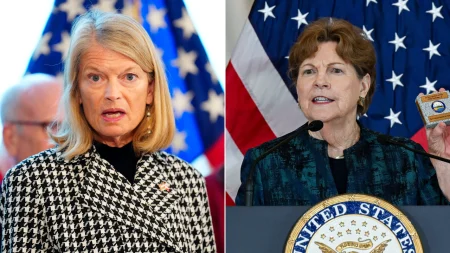
The true political intrigue of this legislative battle, however, lies in the human stories of the four Senate Republicans who chose to cross the aisle and vote with the Democrats, demonstrating the complex, often agonizing calculations that define political life in a highly polarized Washington. Senators Susan Collins, Lisa Murkowski, Mitch McConnell, and Thom Tillis represent a diverse spectrum within the Republican Party, and their decisions to break ranks were rooted in unique combinations of constitutional philosophy, regional pragmatism, and institutional defense. For Susan Collins of Maine and Lisa Murkowski of Alaska, independent-mindedness is not just a political strategy but a survival mechanism in states with independent-minded electorates who value moderation, careful deliberation, and a focus on local needs over rigid party orthodoxy. Their votes reflected a deep-seated belief that voting accessibility and state-level control over elections must be preserved, avoiding heavy-handed federal mandates that could inadvertently disenfranchise their own constituents who live in remote or rural areas. Meanwhile, the vote of Mitch McConnell, the veteran former party leader, carried a different kind of institutional weight. McConnell, a legendary defender of the Senate’s traditions and rules, has long cautioned against using vital budget reconciliation packages—which are designed for fiscal and economic policy—as vehicles for highly polarizing social and electoral amendments that risk shutting down the government or stalling crucial funding. Thom Tillis of North Carolina, navigating the complex purple political landscape of his home state, similarly chose pragmatism and legislative functionality over performative conflict. These four individuals had to weigh the intense backlash they would inevitably face from the vocal populist base of their own party, including direct criticism from President Trump, against their personal convictions and their duty to govern effectively, demonstrating that behind the voting board are human beings who must live with the consequences of their choices.
The decision to attach the SAVE America Act to a critical $70 billion immigration enforcement funding package also highlights the complex, interconnected nature of federal policy and its direct impact on real, human lives at the nation’s borders. This immense funding bill was not just another line item on a spreadsheet; it represented essential resources destined for the men and women serving in Immigration and Customs Enforcement (ICE) and the Border Patrol, who face unprecedented challenges on the ground every single day. For border communities, law enforcement agents, and migrants seeking shelter or asylum, the timely passage of this funding is a matter of immediate safety, human dignity, and operational survival. By tying an ideological and highly controversial voting reform bill to this vital budget, proponents of the amendment essentially risked stalling the necessary resources needed to address a humanitarian and security crisis at the southern border. For the agents working exhausted hours in difficult conditions, and for the local towns grappling with the logistical realities of high migration flows, the political maneuvering in Washington can feel incredibly detached from their painful physical realities. The failure of the amendment, while a disappointment to those who prioritize voter ID legislation, ultimately cleared a pathway for the underlying immigration funding to move forward without being weighed down by dead-end culture war riders. This legislative intersection reminds us that national security and humanitarian aid should not be held hostage by partisan debates over unrelated domestic issues, emphasizing the human cost when critical national defense and safety funding is used as a bargaining chip in political poker. It illustrates the frustration of public servants who wait for resources while politicians argue over national identity, showing that procedural votes in cozy congressional offices have immense trickle-down effects on the physical safety and daily operations of personnel stationed thousands of miles away along the rugged borders of the American Southwest.
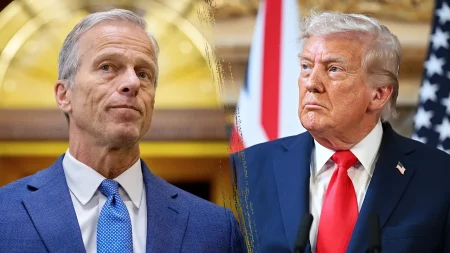
In the final analysis, this legislative struggle represents far more than just a routine legislative defeat; it is an ongoing, passionate debate about the very soul and identity of American democracy. Under the leadership of Senate Majority Leader John Thune, the modern Senate remains a crucial battleground where competing visions of freedom, security, representational fairness, and moral truth collide in real-time. As the dust settles from this latest floor vote, the fundamental questions raised by both sides continue to echo across the nation, challenging us to think deeply about what kind of society we wish to build. For some, the path forward must prioritize strict rules, national security, and traditional moral boundaries to protect the integrity of our sacred institutions. For others, the priority must be empathy, inclusivity, and the systemic dismantling of barriers that keep marginalized communities from fully participating in American civic and social life. While the politicians inside the Capitol dome will quickly pivot to the next procedural battle, the ordinary citizens of the country—the trans teenager seeking legal recognition and parental support, the elderly citizen struggling to obtain a certified birth certificate, the border agent seeking adequate resources, and the citizen wanting absolute faith in their vote—are the ones who must live with the consequences of these decisions. The failure of the SAVE America Act ultimately highlights the delicate and complex balance of power in our representative democracy, where national progress is often slow and measured, and where the human elements of conscience, consensus-building, and procedural integrity still hold the immense power to shape the long-term future of our federal laws and our shared national character.