


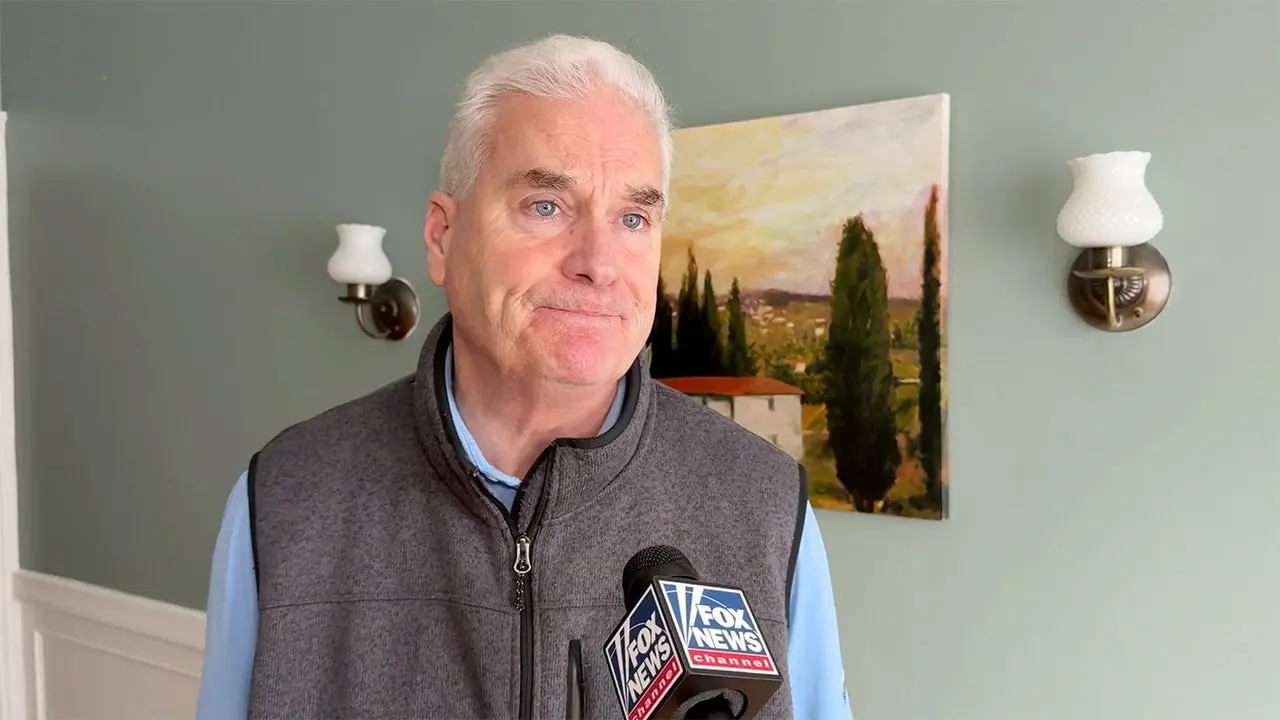
On a crisp early-autumn evening in Lewiston, Maine, with the midterm elections just a month away, the conversation in a modest campaign gathering wasn’t about the usual red-meat culture-war topics. It was about something more personal, more visceral: the feeling that hard-earned money is being stolen from ordinary working families. Rep. Tom Emmer, the House Majority Whip from Minnesota, sat down with former Maine governor Paul LePage, now a Republican candidate for Congress, and listened as voters voiced their frustrations. Emmer didn’t sugarcoat it. For him, the issue of government fraud isn’t a partisan talking point; it’s a moral test of whether democracy can still deliver fairness to the people who pay for it. “Fraud is a lot more important to the U.S. taxpayers than being a Republican or a Democrat,” Emmer told Fox News Digital. His words hung in the room like a challenge. He spoke about taxpayers who work double shifts, who budget for groceries, who pay their taxes on time and then watch as their money disappears into a bureaucratic black hole. “People want good government,” he said. “They want to know that they’re paying for good government, that they are not having their hard-earned taxpayer dollars being siphoned off and stolen and sent out of the country. They’re also asking, why hasn’t anyone called this out and held these people accountable?” In that room in Lewiston, you could feel the quiet anger of people who believe they’ve been treated as an afterthought by the very institutions they fund.
Emmer’s visit to Maine was only the beginning. As House Majority Whip, he has a nearly impossible job: rallying Republicans across 56 districts in a furious blitz to defend a razor-thin majority in the House. It’s the kind of grind that tests a person’s endurance, with early flights, endless handshakes, and small-town diners where the coffee is hot and the questions are sharper. But Emmer seemed energized by the work, not weary. This is what the midterms are really about, he suggested: not just holding power, but proving to millions of Americans that someone in Washington is finally paying attention to the ways their money is wasted, stolen, or shipped abroad. He called fraud “the number one issue” in his home state, and he predicted that Minnesota could produce “surprises” at the ballot box. Michigan, too, he said. And other places all across the country. What Emmer was describing wasn’t a policy memo; it was the mood of the electorate. People are tired of asking questions and receiving silence. They are tired of watching elected officials look the other way while criminals drain public resources. They want an “honest system that actually works for the people,” not a system that works for the criminals. And in that demand, Emmer sees an opportunity for Republicans to break through decades of political headwinds in states where they’ve lost again and again.
Minnesota, in Emmer’s telling, has become the epicenter of the fraud explosion that pushed the issue into the national conversation. He described a state governed by people he called “completely incompetent” and, in some instances, “corrupt.” He didn’t hold back when talking about the governor and attorney general, accusing them of taking campaign funds from Somali fraudsters while allegedly shielding those same individuals from accountability. These are explosive claims, and Emmer knows it. But he believes the voters are ready to render a verdict. “Fraud in Minnesota is the number one issue,” he said. The political landscape there has been stubbornly resistant to Republican victories; no Republican has won a statewide election since 2006. Yet Emmer pointed to a wave of candidates who are making fraud and accountability the centerpiece of their campaigns. He mentioned Michelle Tafoya as a potential U.S. senator, Lisa Demuth as a gubernatorial contender, Ron Schutz as the attorney general candidate, and Scott Jensen for state auditor. “The polling showing that they are leading,” Emmer said. Whether those leads hold remains to be seen, but Emmer’s optimism felt less like spin and more like the confidence of someone who has watched a sleeping political giant finally wake up. The human side of this is hard to ignore: voters who once felt powerless are now hearing candidates speak their language. They aren’t asking for miracles. They just want a government that doesn’t treat them like ATMs. They want someone to ask the uncomfortable questions, to follow the money, to demand that public officials be held to the same standards as ordinary citizens. Emmer’s message is that the outrage is real, and it will show up in the ballot box.
The roundtable discussion in Maine with LePage gave Emmer a chance to go deeper, to speak not as a party leader but as a citizen disgusted by a pattern of impunity. LePage, a blunt-spoken former governor known for telling uncomfortable truths, was a fitting partner for this conversation. The room was filled with people who had come to hear what the candidates would do about the theft of public money, and they weren’t disappointed. Emmer hammered home a point that he said has been missing from too many investigations: accountability. In Minnesota, he noted, fraudsters have been charged and convicted, but not one public official has been charged. That fact angers him more than almost anything else. “They need to be held accountable, and that’s the one thing that’s missing,” he said. “You’ve got all of these fraudsters being charged and convicted, not one public official has been charged at all, and that’s got to change.” The human weight of his words was unmistakable. It’s easy to write off fraud as a faceless crime, but behind the statistics are real victims: families who depend on public assistance, veterans who need health care, children who rely on school nutrition programs. Every dollar stolen is a dollar that could have fed someone, healed someone, educated someone. Emmer’s tone was not one of vengeance but of resolve. He called it “high time that people be held accountable for ripping off the generous American people.” For the people in that room in Maine, it was exactly what they needed to hear. They didn’t want abstract promises. They wanted a fight. And Emmer seemed ready to give them one.
This national push against fraud isn’t just coming from candidates on the trail. The Trump administration has made combating fraud a central focus of its agenda, creating a Justice Department Fraud Division and a White House task force led by Vice President JD Vance. According to the White House, the task force has uncovered roughly $245.7 billion in fraud since its creation, stopped an additional $62.9 billion in annual losses, and enforced $59.1 billion through criminal charges, settlements, and penalties. Those numbers are staggering, almost too large to process. But humanizing them makes them vivid: that’s enough money to fix crumbling bridges, to fund rural hospitals, to lower the cost of prescription drugs, to keep classrooms stocked with supplies. Instead, it was stolen. Emmer’s argument is that the fight against fraud must be personal, not just institutional. Voters aren’t moved by spreadsheets; they are moved by stories. They are moved by the small business owner who couldn’t get a pandemic loan because someone else fraudulently claimed it. They are moved by the senior citizen whose Medicaid benefits were delayed because a criminal enterprise was draining the system. They are moved by the sense that the government has been protecting its own while abandoning the people it was built to serve. That is why Emmer believes the issue transcends party. A conservative taxpayer and a working-class Democrat can both agree that politicians who look the other way deserve to lose their jobs. The task force’s work, in Emmer’s view, is beginning to restore a basic sense of justice, but it’s only the beginning. The real test is whether elected leaders and law enforcement officials will finally have the courage to follow the evidence wherever it leads, even if it ends at their own doorstep.
As Election Day approaches, Emmer is making a risky bet: that voters will reward the party that speaks most clearly about fraud and accountability. In Minnesota, he says, the results could shock the political establishment. “You easily could have Michelle Tafoya being the next U.S. Senator from the state of Minnesota, a Republican,” he said. A Republican governor, too, and a Republican attorney general and auditor. That would be a seismic shift in a state that hasn’t elected a Republican statewide in nearly two decades. But Emmer believes the old rules no longer apply. The people are angry. They are paying attention. They are connecting dots that political insiders assumed they would never notice. And they are preparing to cast ballots not just against a party, but against a culture of corruption and impunity. Emmer’s message is simple: an honest system that works for the people is not a Democratic value or a Republican value; it is an American value. Whether that message will translate into victories on November 3rd remains to be seen. The historical odds are against the majority party. The political climate is volatile. But Emmer is convinced that the issue of fraud has the power to upend the conventional wisdom Scot, as he put it, “surprises” could come out of Minnesota, Michigan, and places where people have been ignored for too long. At the end of the day, this is about trust. Can a government that has failed to protect the public purse earn back the confidence of its citizens? Emmer thinks it can, but only if those responsible for the theft are finally held accountable. The voters, he says, will be the ones to decide. And if they do, November could be the beginning of a long-overdue reckoning.