


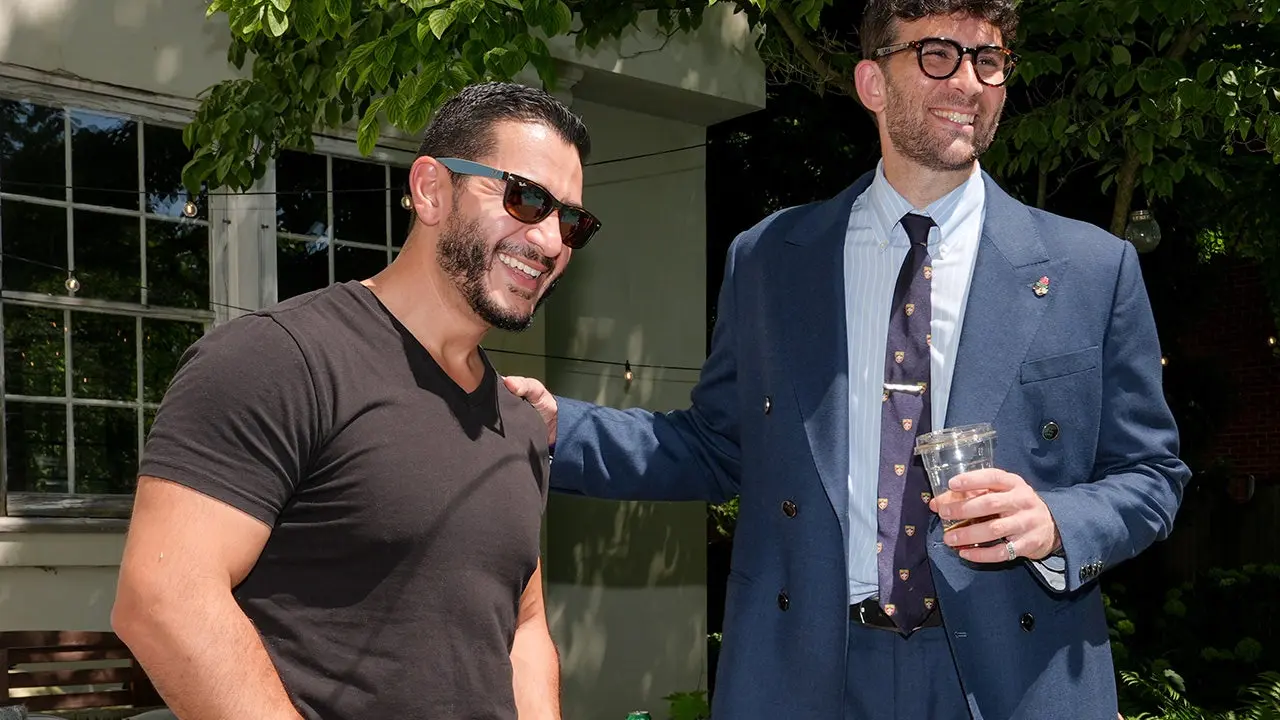
On the humid, high-stakes eve of a pivotal Michigan Democratic primary election, when most political candidates were making their final, exhausted rounds of phone banks or shaking hands outside local grocery stores in the quiet suburbs of Detroit, progressive Senate hopeful Abdul El-Sayed chose a strikingly different and highly unconventional backdrop to close out his campaign. He was spotted at a late-night pool party in Detroit, laughing and mingling alongside one of the internet’s most polarizing and influential figures, the left-wing streaming sensation Hasan Piker. The event, hosted by a local content creator, was not just a casual dip in the water on a warm summer night, but a vivid, highly intentional intersection of modern digital culture and high-stakes representative democracy. Among the floating pool noodles, ambient party lighting, and flashing smartphone cameras were other notable figures of the progressive movement, including state Representative Donavan McKinney and Democratic Socialists of America-backed House candidates Melat Kiros and Chris Rabb. For El-Sayed’s young supporters, the gathering felt like a vibrant, youth-centric celebration of a grassroots campaign that had successfully bypassed traditional, stuffy political institutions to connect with a younger, disaffected electorate that feels alienated by mainstream politics. However, to his critics, the optics of a prospective United States Senator partying on the brink of an election with an internet firebrand was a jarring departure from serious governance. This late-night gathering instantly ignited a political firestorm, exposing the deep, simmering tensions within the Democratic Party and providing an immediate, potent weapon for his Republican opponents. It highlighted a fascinating, deeply human question at the heart of modern American politics: can a candidate successfully bridge the gap between the chaotic, highly ideological world of online internet stardom and the pragmatic, compromise-driven reality of representing a diverse, working-class swing state?
To understand why this pool party reverberated so loudly through the halls of Michigan politics, one must look closely at the mercurial figure of Hasan Piker himself. Boasting an empire of roughly ten million loyal followers across platforms like Twitch, YouTube, and TikTok, Piker is a towering giant of the “breadtube” left, a digital space where socialist theory is blended with pop culture commentary, video game streams, and unfiltered political rants. For his young, passionately loyal audience, Piker is a rare voice of unvarnished truth who challenges corporate power, militarism, and American imperialism; to his detractors, he is a dangerous demagogue whose rhetoric frequently crosses the line into extremism and anti-American sentiment. Piker’s presence on the campaign trail with El-Sayed brought his controversial history back into the harsh spotlight, particularly his recent appearance at a college campus wearing an outfit resembling that of the brutal Chinese communist dictator Mao Zedong, whom Piker defended online as “one of the great leaders of this world.” Over the years, Piker has accumulated a portfolio of statements that make mainstream political consultants shudder, including his infamous, resurfaced assertion that “America deserved 9/11″—a comment he argued was taken out of context but which remains deeply offensive to millions—as well as highly controversial takes regarding Hamas’s right to resist militarily and his highly publicized reactions to the killing of a prominent healthcare executive. By aligning himself so closely with a figure who actively relishes provoking the political establishment, El-Sayed made a deliberate and risky gamble. He wagered that the raw enthusiasm and voter turnout Piker could generate among Gen Z and millennial voters would outweigh the inevitable backlash from moderate suburbanites and older, more traditional Democrats who view Piker’s brand of politics as toxic, unpatriotic, and deeply alienating to the average voter.
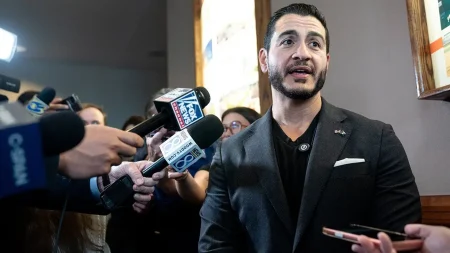
The immediate pushback from within El-Sayed’s own party was swift, sharp, and deeply personal, led by his primary opponent, Representative Haley Stevens. In the final hours before the polls closed, a visibly frustrated Stevens stood before reporters in a press gaggle and drew a sharp contrast between her traditional, community-focused campaigning and El-Sayed’s late-night social media festivities. While El-Sayed was poolside with out-of-state internet celebrities, Stevens pointed out that she spent her evening alongside seasoned Michigan leaders like Congresswoman Hillary Scholten and retiring Senator Debbie Stabenow, visiting local diners, listening to constituents, and discussing kitchen-table economic issues with small business owners who form the backbone of the state’s economy. Stevens did not hold back in her assessment of Piker, publicly urging El-Sayed to distance himself from the streamer and calling for Piker’s divisive rhetoric to be roundly denounced by anyone seeking high office. Her comments captured the genuine anxiety of the Democratic establishment, which fears that embracing far-left, internet-famous radicals will alienate the moderate swing voters crucial to winning statewide elections in Michigan. “Frankly, it makes me uncomfortable,” Stevens admitted, expressing a sentiment shared by many older, more conservative Democrats who find the casual rehabilitation of authoritarian figures like Mao Zedong or the defense of anti-American rhetoric deeply disturbing. By framing the choice as one between serious, localized public service and superficial, performative digital clout, Stevens sought to convince voters that Michigan needs a senator focused on the tangible, everyday needs of the state’s working families, rather than a candidate who prioritizes the approval of coastal influencers who do not understand or live in the communities they seek to represent. She emphasized that a true representative of Michigan must understand the delicate economic ecosystem of the Rust Belt, where automotive manufacturing, small-scale farming, and local entrepreneurship require pragmatic policy solutions rather than sweeping ideological dogmas. For Stevens, the pool party symbolized a broader disconnect: a trend where national ideological battles are imported into local races, overshadowing the actual, quiet work of governance that keeps communities functioning.
Predictably, the Republican opposition watched the drama unfold with absolute glee, recognizing a golden opportunity to define El-Sayed as a radical, unserious candidate long before the general election even began. Samantha Cantrell, the regional press secretary for the National Republican Senatorial Committee (NRSC), released a scathing statement that wasted no time in labeling Piker an “antisemite and terrorist sympathizer,” lambasting El-Sayed for choosing to spend his final campaign hours with someone who believes America deserved the horrors of September 11th. This line of attack was echoed and amplified by the campaign of Mike Rogers, the presumptive Republican nominee and a seasoned former congressman with deep roots in the national security establishment as a former FBI agent and House Intelligence Chairman. Rogers’ campaign communications director, Alyssa Brouillet, dismissed the pool party as “giving fraud, not serious,” cleverly utilizing modern internet slang to mock what they viewed as a superficial, influencer-driven campaign style that is entirely out of touch with the grueling economic realities facing everyday Michiganders. For Republicans, the pool party was not just a minor optical blunder; it was a perfect encapsulation of their broader campaign narrative: that modern progressives are more interested in performing for wealthy, radical elites in Los Angeles and New York than solving the inflation, job loss, and security concerns of ordinary families in the Rust Belt. They are already preparing a massive, well-funded media campaign to ensure that every voter in Michigan associates El-Sayed with Piker’s most controversial statements, hoping to paint the Democratic ticket as dangerously extreme and unfit to hold a seat in a Senate currently balanced on a razor’s edge. In a state that often decides presidential and senatorial elections by paper-thin margins, the GOP plans to weaponize this association to appeal to working-class Democrats and independent voters who are fiercely patriotic and deeply skeptical of radical left-wing ideology.
This controversy highlights the immense, agonizing pressure of the modern political campaign trail, where candidates must constantly walk an ideological tightrope under the unforgiving glare of 24-hour media coverage and social media scrutiny. Abdul El-Sayed is a highly accomplished public health doctor, an eloquent speaker, a Rhodes Scholar, and a dedicated public servant who has spent years advocating for healthcare access, environmental justice, and economic equity. Yet, to build a winning coalition in a polarized era, he must somehow appeal to both the passionate, younger activists who demand systemic revolution and the older, pragmatic voters who want steady, predictable leadership. When pressed on his relationship with Piker, El-Sayed has attempted to strike a delicate, human balance, explaining that while he does not endorse or agree with every controversial statement Piker has ever made, he respects Piker’s unique ability to engage and energize a demographic that has long felt ignored by the political establishment. It is a deeply human dilemma of association: in the digital age, can a politician separate a creator’s valuable platform from their most objectionable opinions, or does standing next to someone on a stage—or by a pool—constitute a silent endorsement of everything they represent? The exhaustion of the final campaign sprint only magnifies these tensions, leaving staff members and candidates to make split-second decisions about appearances, endorsements, and associations that can either ignite a viral wave of youthful enthusiasm or doom a campaign to a devastating defeat under a barrage of negative attack ads. For El-Sayed, the decision to embrace Piker is a calculation that the energy of the modern progressive movement is worth the political scars that come with it, reflecting a broader shift in how a new generation of leaders seeks to build power outside traditional party structures.
Ultimately, the pool party in Detroit serves as a fascinating and somewhat cautionary microcosm of the profound shift currently reshaping American democracy, where the traditional boundaries of political campaigning are rapidly dissolving into the infinite stream of internet culture. We are living in an era where a Twitch streamer with a webcam and a microphone can command more influence over young voters through parasocial relationships than a dozen traditional political action committees or newspaper endorsements combined. As voters in Michigan head to the polls to decide who will represent them in a race that could dictate the legislative future of the entire nation, they are being asked to choose between two vastly different visions of political engagement and representation. One vision relies on the time-tested, institutional pathways of local coalitions, business roundtables, and moderate, incremental progress; the other embraces the chaotic, disruptive, and highly online world of grassroots progressivism, where digital reach is seen as the ultimate tool for democratic mobilization. Whether El-Sayed’s embrace of Hasan Piker is viewed as a brilliant, forward-thinking strategy to mobilize the next generation of voters or a fatal, self-inflicted optical wound remains to be seen in the coming days and months. What is certain, however, is that the intersection of digital celebrity and electoral politics is here to stay, and the candidates who learn to navigate this volatile, deeply human landscape will be the ones who write the next chapter of American history. As the physical and digital worlds continue to collide, the ultimate challenge for average American voters will be discerning the actual substance of governance beneath the distracting glitz of online influence, deciding whether they want leaders who swim in the waters of digital counter-culture or those who stick to the traditional, predictable pathways of public service.