

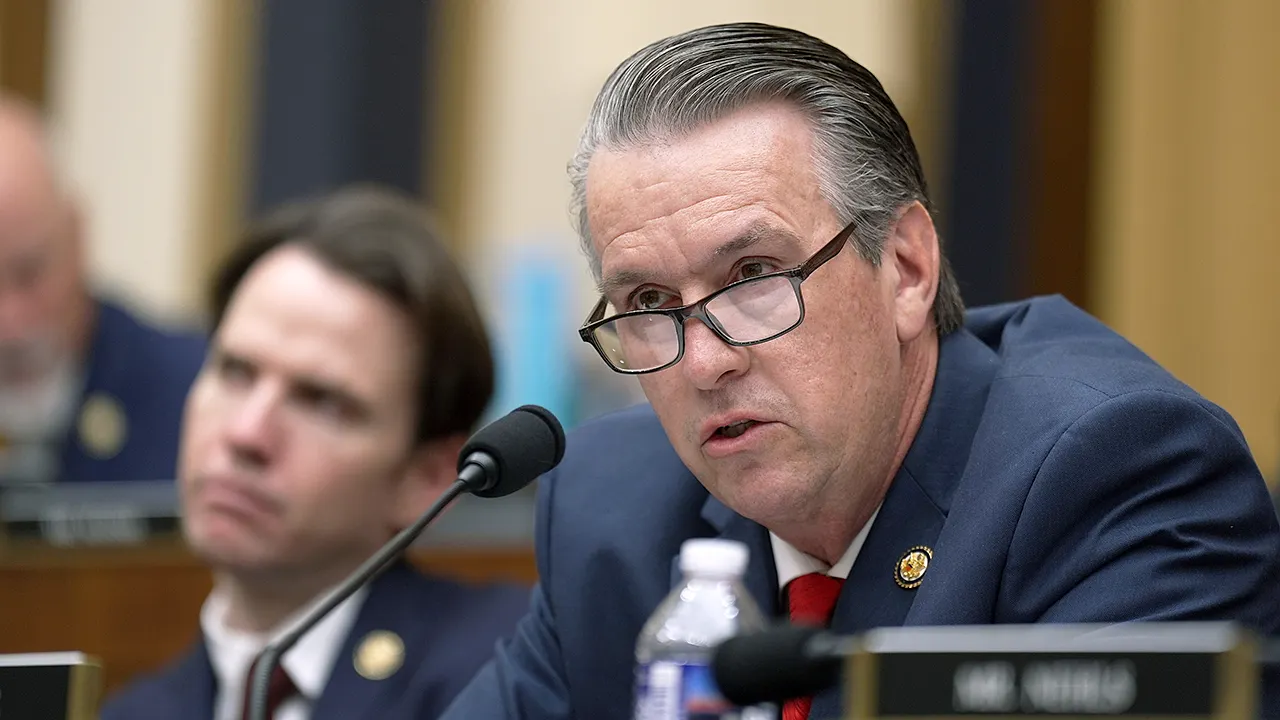
In a political landscape where the crimson tide of conservative dominance often sweeps away dissenting voices long before election day, former Judge Everett Wess has carved out a deeply personal and hard-fought milestone on his journey toward the United States Senate. Securing the Democratic nomination in Alabama’s high-stakes primary runoff, Wess emerged victorious after a grueling, multi-month campaign that tested his resilience, his message, and his vision for a state often written off by national progressive strategists. His victory over Dakarai Larriett, a dedicated and passionate small business owner who campaigned on grassroots economic revitalization, youth mentorship, and local community empowerment, followed a highly competitive initial four-candidate primary last month. Because Alabama election laws mandate that a candidate must surpass the elusive fifty-percent threshold to claim outright victory, neither Wess nor Larriett could pop the celebratory champagne during the first round of voting, setting up a high-stakes, face-to-face runoff that galvanized the state’s Democratic base. When the Associated Press final tally confirmed his victory late Tuesday evening, it marked the culmination of countless miles traveled along Alabama’s rural highways, hundreds of candid conversations in community centers, and a determined effort by Wess to present a judicial, measured, and deeply empathetic alternative to the status quo. For Wess, the nomination is far more than a political trophy; it represents a profound, solemn responsibility to stand up for the diverse, often overlooked segments of the Alabamian electorate who feel forgotten by the national discourse. His background on the judicial bench has shaped a campaign narrative rooted in fairness, equal opportunity, systemic reform, and the constitutional promise of justice for all—themes that resonated deeply with the working-class primary voters who turned out to propel him into the general election arena, where a historic and monumental climb now awaits.
To understand the sheer magnitude of the challenge Everett Wess now faces, one must look at the deeply entrenched political history of modern Alabama, a state where the color red runs as deep as its rich soil. Other than a brief, lightning-in-a-bottle moment in 2017 when former Democratic Senator Doug Jones captured a victory during a highly unusual and intensely scrutinized special election against a deeply controversial opponent, it has been more than three decades since a Democrat has successfully won a regular Senate election in the Heart of Dixie. This enduring historical reality casts a long shadow over any Democratic campaign, transforming what would ordinarily be a standard political bid into a test of pure endurance and idealistic conviction. For decades, the national Democratic Party has largely diverted its financial resources and organizational power to more competitive swing states, leaving local Alabamian candidates to build their operations from the ground up with local donations, passionate volunteers, and a sheer refusal to let the opposition run unchallenged. This lack of national investment means that running as a Democrat in Alabama is an act of profound courage and personal sacrifice, requiring candidates to face skepticism not just from political rivals, but from voters who have grown accustomed to a one-party dominant system. Wess enters the general election cycle fully aware of these daunting historical headwinds, but his campaign is built on the belief that the political landscape is never truly static. By focusing on the lived experiences of everyday Alabamians—ranging from rural hospital closures to underfunded public schools—Wess aims to transcend traditional partisan divides, offering a human-centric message that speaks directly to the struggles of families who feel that the current political establishment in Montgomery and Washington has prioritized partisan ideological warfare over tangible, kitchen-table progress.
The vacancy that Wess seeks to fill is itself a source of immense political theater, created by the decision of current Republican Senator Tommy Tuberville to vacate his Washington seat and run for governor of Alabama. Tuberville, whose name is etched into the cultural fabric of the state due to his highly successful tenure as the head football coach at Auburn University, has chosen to pivot his political ambitions back toward the state capital of Montgomery. In Alabama, where college football is not merely a sport but a secular religion, Tuberville’s transition from the gridiron to the halls of Congress was fueled by a powerful combination of name recognition, conservative populism, and an unshakeable connection to the state’s cultural identity. By launching a gubernatorial bid rather than seeking re-election to the Senate, Tuberville has sent shockwaves through the Alabamian political ecosystem, leaving an open Senate seat that has triggered an ideological feeding frenzy within the Republican Party. His departure from federal office serves as a stark reminder of how deeply personal politics can be in a state where a legendary coach can capture the hearts—and the votes—of hundreds of thousands of citizens without possessing a traditional political background. For the candidates vying to replace him, Tuberville’s legacy presents both a blueprint and a challenge; he demonstrated that a candidate can bypass traditional political norms by leaning heavily into cultural alignment and absolute loyalty to the conservative movement. As Tuberville shifts his focus to the governor’s mansion, the race to succeed him in the United States Senate has become a battleground for the soul of the state’s dominant political party, leaving voters to decide what kind of leadership they want to represent them on the national stage.
On the Republican side of the ledger, the battle to claim the party’s nomination has been nothing short of a high-octane ideological duel, pitting two distinct visions of modern conservatism against one another in a fierce runoff election. Fighting for the chance to secure what is widely considered a golden ticket to Washington is Representative Barry Moore, an experienced lawmaker who secured the coveted and powerful endorsement of former President Donald Trump. Moore’s campaign has heavily leaned into this endorsement, positioning him as a proven champion of the “America First” movement and a reliable soldier in the congressional fight against the federal bureaucracy. Standing in his way is Jared Hudson, a former Navy SEAL sniper whose campaign has captured the imagination of voters looking for an ultimate outsider—a warrior-turned-statesman who promises to bring military discipline, rugged determination, and an uncompromising constitutionalist perspective to the Senate chamber. The primary battle between Moore and Hudson represents a fascinating microcosm of the broader national Republican Party, illustrating the tension between established political figures who have demonstrated their loyalty to the party’s leadership, and grassroots populists who believe that only a battle-tested outsider can truly disrupt the status quo in Washington. The intensity of this Republican primary has drawn millions of dollars in campaign spending, filling the airwaves with dramatic advertisements and fiery rhetoric that reflect the high stakes of a race where the winner of the GOP nomination is almost universally expected to cruise to victory in November. This fierce competition highlights the reality that in solidly red Alabama, the primary is often the real event, leaving the eventual nominee battle-scarred but highly energized for the general election matchup against Wess.
Beneath the high-dollar television advertisements, strategic social media campaigns, and polarizing national headlines, the true heart of this election beats along the dusty dirt roads, high school football stadiums, and small-town diners that define the everyday lived experience of Alabamians. Campaigning in a state where political divisions run deep is an intensely human endeavor, requiring candidates to step out of their comfortable bubbles and look their fellow citizens in the eye. For a candidate like Everett Wess, this means walking into spaces where a Democratic sign is a rare sight, seeking out common ground in shared human challenges rather than divisive political talking points. It involves sitting down at a local diner over sweet tea to listen to a farming family express their anxieties about rising costs and unpredictable weather, or standing on a street corner in a struggling urban neighborhood to discuss the urgent need for living-wage jobs and safer streets. On the Republican side, whether it is Barry Moore sharing stories of his legislative battles in Washington or Jared Hudson drawing upon the harrowing lessons of his military service to inspire patriotic pride, the drive to connect on a deeply personal level remains the most powerful tool in any candidate’s arsenal. These raw, unscripted moments of human connection serve as a powerful reminder that politics, at its very core, is not just about policy papers, campaign finance reports, or partisan warfare; it is about the real lives, hopes, and anxieties of ordinary people who simply want a better future for their children. As the candidates traverse the state from the Tennessee Valley to the Gulf Coast, they are forced to confront the diverse realities of a state that is far more complex and multifaceted than any national political narrative would ever suggest.
As Alabama looks ahead to the general election, the stage is set for a political contest that, while statistically lopsided on paper, carries immense psychological, physical, and democratic weight for the future of the state and the nation. Everett Wess enters the general election arena as a self-acknowledged underdog of historic proportions, facing a mountain of historical precedent, massive financial disparities, and a deeply entrenched conservative electorate that is highly motivated to keep this vital Senate seat in Republican hands. Yet, the very presence of his spirited and principled campaign ensures that the democratic process in Alabama remains active, vital, and representative of all its citizens, offering a clear, stark choice and a public platform for those whose voices might otherwise be completely overshadowed or ignored in the halls of power. No matter who emerges victorious from the high-stakes Republican runoff to face Wess in the chilly days of November, the upcoming election will serve as a critical, national barometer of the state’s political climate as the nation navigates the complex, shifting dynamics of the 2026 electoral landscape. For the people of Alabama, this vote is an opportunity to define their collective identity, deciding whether they will continue down a path of deep-seated partisan alignment or open the door to a new, constructive conversation about representation, modern justice, and the common good. In the end, democracy is not merely about the final score on election night, nor is it solely defined by the victories of those with the most resources; it is about the courage to stand up, the willingness to listen to differing perspectives, and the enduring belief that every single citizen deserves to have their voice heard in the halls of power, ensuring that the Heart of Dixie continues to beat with the promise of progress, dignity, and a brighter tomorrow for all who call this beautiful state home.