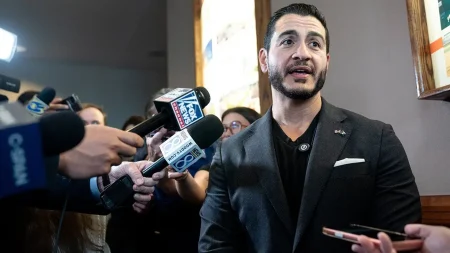



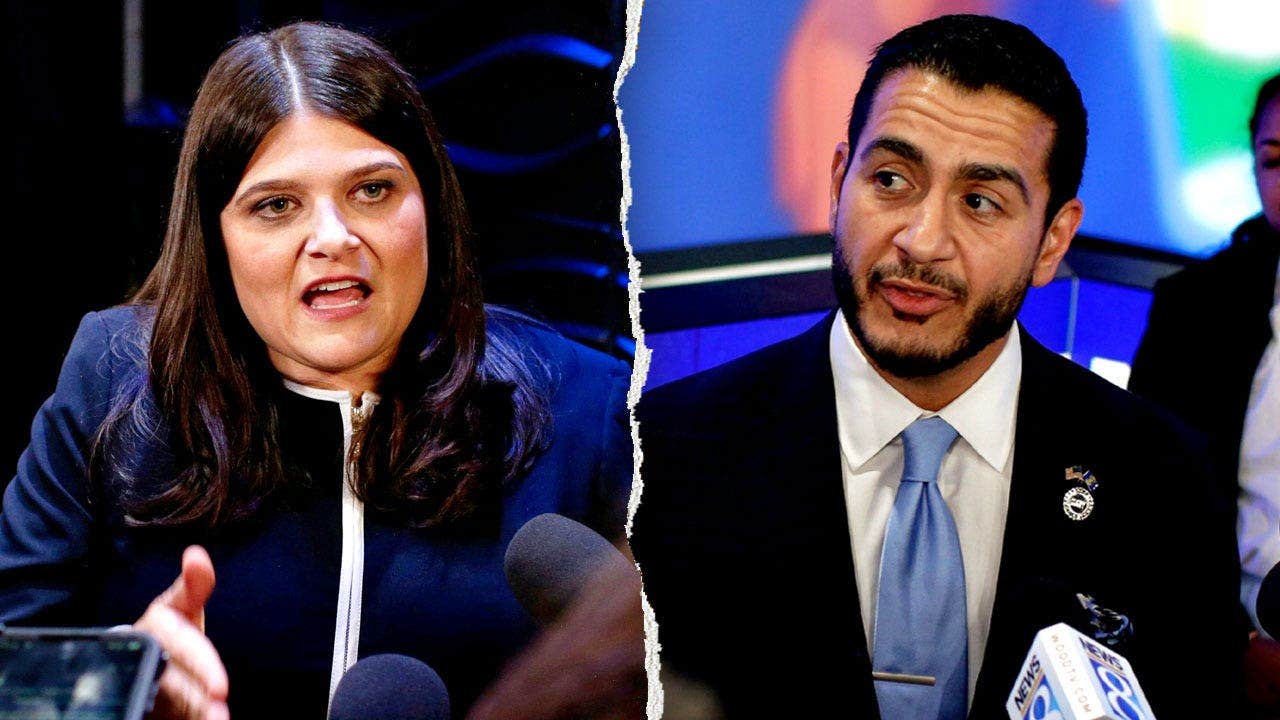
Deep in the heart of Michigan, a state long defined by its industrial grit, diverse communities, and unpredictable political currents, the battle for the future of the Democratic Party reached a dramatic, unresolved crescendo on a warm Tuesday evening. As the dust settled over primary voting booths from Detroit to Grand Rapids, the highly anticipated showdown between the progressive wing’s shining star, Abdul El-Sayed, and the center-left establishment’s favored champion, Representative Haley Stevens, refused to yield a swift or easy conclusion. El-Sayed, a charismatic epidemiologist, former Wayne County health director, and dynamic public speaker who had previously captured the imaginations of young voters during a spirited but unsuccessful 2018 gubernatorial bid, stood on the precipice of a historic achievement. If victorious, he would make history as the nation’s very first Muslim senator, representing a major milestone for representation in American governance. Backed by the formidable ideological weight of Senator Bernie Sanders and Representative Alexandria Ocasio-Cortez, El-Sayed campaigned on a bold, transformative platform anchored by a federal “Medicare for All” single-payer healthcare system, the complete abolition of Immigration and Customs Enforcement (ICE), and a staunchly critical stance on Israel’s military actions in Gaza, which he repeatedly and passionately characterized as a genocide against the Palestinian people. Across this deep ideological divide stood Haley Stevens, a pragmatic, battle-tested congresswoman who had earned her political stripes by flipping a historically conservative, Republican-held suburban district during the blue wave of 2018. Supported by the heavy machinery of the Democratic establishment, including Senate Majority Leader Chuck Schumer and retiring Senator Gary Peters, Stevens championed a message of practical, coalition-building electability. As midnight came and went, both candidates addressed exhausted but fiercely loyal crowds of supporters in Detroit, acknowledging a razor-thin margin that perfectly epitomized a national party deeply divided over its fundamental identity, its policy priorities, and its strategy for retaining power in a crucial swing state.
The sheer financial scale of this Michigan Senate primary illuminated a dizzying and highly controversial reality of modern American political campaigns: the unprecedented influence of outside money in shaping local democratic choices. This particular primary contest shattered previous historical records, ballooning into an astronomical $80 million battlefield and earning the title of the most expensive Democratic Senate primary nomination fight in United States history. A staggering portion of this immense cash flow originated from national super PACs and independent expenditure groups, most notably the United Democracy Project, a political action committee closely aligned with the American Israel Public Affairs Committee (AIPAC). This organization alone poured tens of millions of dollars into television screens, digital ads, and physical mailboxes, launching a dual campaign designed to boost Stevens’ moderate profile while aggressively dismantling El-Sayed’s progressive platform, particularly targeting his outspoken criticisms of foreign policy. Addressing his supporters in a Detroit venue thick with nervous energy and defiance, El-Sayed did not shy away from the lopsided financial warfare, marveling at the fact that despite his grassroots campaign being outspent by an astonishing eleven-to-one margin, his volunteer-driven movement remained standing on equal footing with the establishment machine. For her part, Stevens utilized her primary night address to pivot away from internal party squabbles and focus on the looming general election battle against the presumptive Republican nominee, former Representative Mike Rogers. Both Democrats, despite their profound differences on healthcare, immigration, and foreign policy, recognized the existential stakes of the general election: keeping this retiring Senate seat blue is absolutely vital if the Democratic Party hopes to prevent Rogers from flipping the seat and acting as a rubber stamp for Donald Trump’s conservative agenda in Washington.
The ideological earthquake centering on the Senate race sent powerful seismic waves down-ballot, shaking up several key congressional districts across Michigan and demonstrating that the progressive-moderate divide is a systemic struggle rather than an isolated phenomenon. In Michigan’s 7th Congressional District—a critical, highly competitive swing seat currently held by Republicans and viewed as a must-win for any party hoping to control the House of Representatives—the progressive movement secured a tangible victory that sent shockwaves through the party’s moderate wing. William Lawrence, an energetic community organizer and co-founder of the Sunrise Movement climate advocacy group, narrowly defeated two centrist opponents in a hard-fought race. Powered by endorsements from Bernie Sanders and a network of passionate environmental activists, Lawrence’s victory proved that an unapologetically progressive message centered on green jobs and climate justice could mobilize voters even in suburban and rural swing territories, setting up a high-contrast general election matchup against Republican Representative Tom Barrett. Meanwhile, in the heavily Democratic 13th Congressional District, a similarly fierce battle unfolded between incumbent Representative Shri Thanedar, a self-funded businessman who enjoyed the backing of the House Democratic leadership, and state Representative Donovan McKinney, a progressive challenger championed by the high-profile “Squad” members Ilhan Omar, Ayanna Pressley, and Summer Lee. Thanedar, who has faced criticism from local activists for his wealthy background and unconventional political journey, fought to maintain his coalition of moderate Black and progressive voters in Detroit. This continuous push by progressive insurgents to unseat entrenched, moderate incumbents reflects a persistent grassroots belief that the Democratic Party must abandon its cautious, middle-of-the-road instincts to truly address systemic economic inequality and racial injustice, transforming ordinary congressional primaries into proxy wars for the very soul of American liberalism.
While Michigan’s progressive wing waited in anxious limbo, their counterparts in Missouri suffered a devastating and highly symbolic blow that reverberated across the national political landscape. In Missouri’s 1st Congressional District, centering on St. Louis, Representative Cori Bush—a pioneer of the progressive “Squad” and a former nurse, pastor, and Black Lives Matter activist who rose to national prominence during the Ferguson protests—was decisively ousted from her seat by progressive-turned-moderate challenger Wesley Bell. Bell, a prosecuting attorney who first gained prominence as a reform-minded candidate in the wake of Ferguson, received significant backing from House Democratic Leader Hakeem Jeffries and a massive influx of funding from the AIPAC-backed United Democracy Project. He successfully framed Bush as an ineffective legislator who prioritized performative activism, national media attention, and ideological purity over the tangible, day-to-day needs of her constituents. The defeat was a bitter pill for the progressive left, representing the second time in a single election cycle that an incumbent Squad member was unseated by an establishment challenger backed by millions of dollars in pro-Israel outside spending. In her raw and emotional concession speech, a visibly angry Bush did not mince words, fiercely condemning Bell for refusing to engage in public candidate forums and accusing him of selling out the community to conservative-leaning billionaires who want to silence progressive voices. Bell, conversely, celebrated his victory as a triumph of practical, accountable governance, promising to deliver federal resources and stand up for working-class families without the divisive rhetoric that has increasingly characterized the party’s far-left flank, highlighting a growing appetite among some Democratic voters for reliable pragmatism over revolutionary zeal.
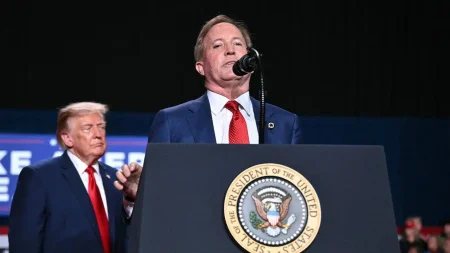
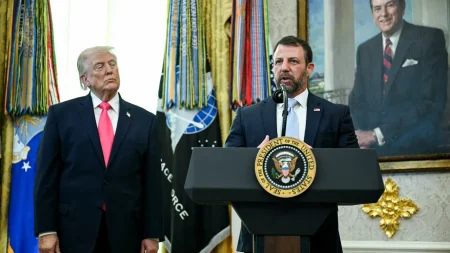
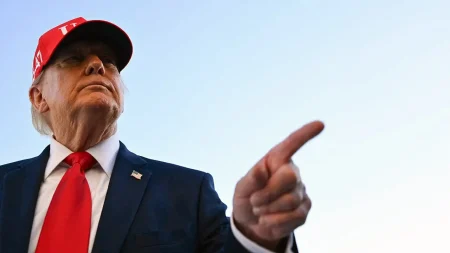
Despite the loud and chaotic clashes defining the congressional and senatorial primaries, mainstream Democrats found solace in statewide contests where moderate, established figures demonstrated their enduring grip on the party’s broader electorate. In Michigan, Secretary of State Jocelyn Benson comfortably secured the Democratic gubernatorial nomination in her bid to succeed the highly popular, term-limited Governor Gretchen Whitmer, while Attorney General Dana Nessel was easily renominated, signaling that when it comes to statewide executive roles, Democratic voters still prefer seasoned, recognizable faces who can appeal to independent voters. Benson, who has earned a national profile as a staunch defender of voting rights and election integrity, presents a formidable opponent for any Republican challenger. Political analysts noted that while the party’s base is undoubtedly angry and eager to combat the conservative movement, this anger does not always translate into a desire to burn down the party establishment; rather, many voters view establishment figures as the most reliable shield against the return of Donald Trump. Meanwhile, on the Republican side of the aisle, the former president continued to demonstrate an ironclad grip on his party’s base, effortlessly playing the role of kingmaker in key primary contests. In Michigan’s Republican gubernatorial primary, Trump-endorsed Representative John James, a charismatic West Point graduate, combat veteran, and prominent Black conservative, easily defeated multimillionaire Perry Johnson to secure the nomination, setting up a blockbuster general election clash against Benson. In Kansas, Trump’s endorsement proved similarly decisive, propelling state Senate President Ty Masterson through a crowded field of Republican contenders in a bid to flip the governor’s mansion in a state where Democratic Governor Laura Kelly is term-limited, reaffirming that the modern GOP remains firmly aligned with Trump’s populist vision.
Ultimately, this frantic and expensive primary night offered a vivid snapshot of a nation in deep political transition, caught between the gravity of established norms and the volatile pull of insurgent movements on both the left and the right. For Democrats, the ongoing division reveals a party grappling with a profound generational and ideological identity crisis: one side fears that moving too far left will alienate the moderate suburban voters crucial to winning national elections, while the other believes that only a bold, transformative agenda can inspire the marginalized communities and young voters needed to defeat a resurgent Republican Party. On the Republican side, the consolidation of power under the banner of Donald Trump suggests a party that has largely resolved its internal identity crisis, fully embracing a populist, America-First agenda that will test its limits in critical swing states like Michigan. For the average American voter, who is increasingly overwhelmed by an endless stream of negative campaign advertisements, ideological purity tests, and partisan bickering, these primaries highlight a political landscape that feels both exhausting and hyper-charged. As the primary season transitions into the grueling general election marathon, candidates from both parties must now attempt to heal their self-inflicted primary wounds, unify their exhausted bases, and convince a deeply polarized electorate that they possess the vision and stability to lead. The upcoming elections will not merely determine which party controls the House and Senate, but will serve as a profound referendum on the competing visions of progressivism, moderate pragmatism, and conservative populism that are actively redefining the landscape of American democracy for generations to come.