





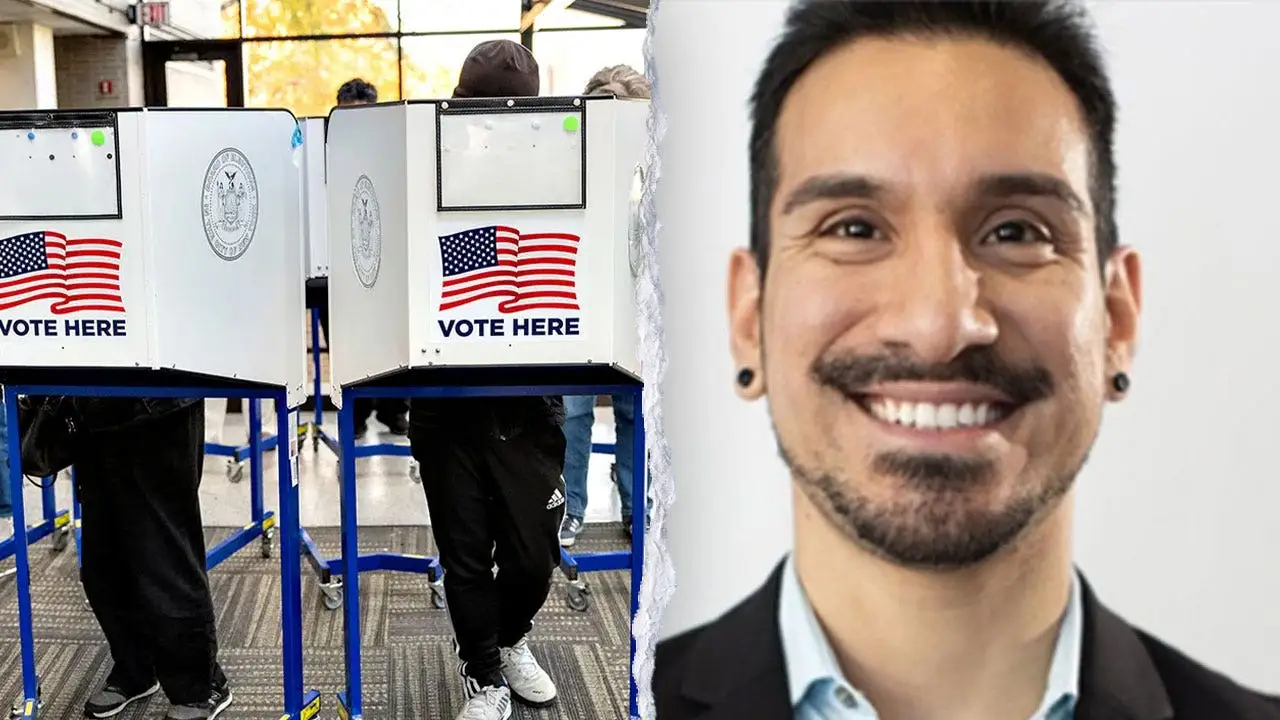
The journey into modern public office is often romanticized as a noble, triumphant crusade fueled by high ideals, community town halls, and grassroots enthusiasm, but behind the scenes lies a grueling economic reality that candidates of modest means must navigate with immense difficulty. This tension became glaringly apparent in the bustling, culturally diverse neighborhoods of Queens, New York, where Brian Romero, a prominent Democratic Socialist, found himself in a peculiar, stressful limbo between securing a virtual guarantee of legislative power and struggling to pay his immediate monthly bills. Romero, the Democratic nominee for New York’s 34th Assembly District, handily won his June primary and, with no Republican challenger on the horizon for the November general election, is all but guaranteed to claim a seat in Albany. Yet, despite his imminent transition to a position that commands significant legislative influence and a comfortable six-figure public salary, Romero’s personal finances collapsed under the weight of the grueling campaign trail. His predicament highlights a deeply human paradox: the very democratic system that champions working-class representation often demands a level of personal financial sacrifice that working-class candidates simply cannot sustain without elite backing. This gap between Romero’s elite political prospects and his everyday material vulnerability was thrust into the public spotlight when he briefly turned to the internet to crowdfund his basic living expenses. The narrative of a future lawmaker asking the public for rent money quickly transformed from a private, anxious cry for help into a heated flashpoint of political debate, exposing the raw, uncomfortable intersection of personal finance, political optics, and the systemic barriers that govern who can realistically run for office in one of America’s most expensive metropolitan areas. By seeking digital mutual aid to bridge his transition, Romero inadvertently highlighted the silent, financial gatekeeping of American democracy.
To fully understand how a future state lawmaker ended up in such a precarious financial bind, one must look at the strict, often unforgiving regulations that govern campaign ethics and employment for legislative staff. Before launching his bid for the Assembly, Romero worked as a dedicated senior adviser to New York State Senator Kristen Gonzalez, a role that provided him with both a steady income and a direct platform to advocate for progressive policy. According to state payroll records, Romero earned an honorable salary of $106,469 last year in this capacity, a respectable wage that allowed him to live with his partner in a Jackson Heights apartment where rent hovers around $2,600 a month. However, once he officially entered the race as a candidate for the Assembly, Romero sought ethical guidance regarding his dual status as a state employee and an active political candidate. To prevent conflicts of interest and maintain strict compliance with legislative ethics rules, he made the difficult decision to resign from his full-time position earlier this year. This ethical choice, while commendable and legally prudent, effectively cut off his primary source of livelihood and thrust him into a state of financial precarity. Romero spent months pouring his energy into grassroots organizing, knocking on doors, and connecting with voters, all while watching his personal savings slowly but surely evaporate. Because he voluntarily left his job to run for office, he found himself unable to collect standard unemployment benefits, leaving him entirely without a state-sponsored financial safety net. As the months dragged on and the consulting gigs he pursued to keep himself afloat failed to materialize in time, the stark reality of New York’s high cost of living caught up with him, leaving him with depleted bank accounts, looming household bills, and the immense psychological pressure of maintaining a public campaign while facing personal financial ruin.
Desperate to bridge the gap and keep a roof over his head, Romero turned to a modern digital tool and launched a GoFundMe campaign, setting a modest goal of $2,000 to assist with his immediate rent and grocery bills. On the fundraising page, he wrote a candid, vulnerable message to his supporters, explaining that while he was incredibly excited about his primary victory, the financial reality of his political transition was taking a severe toll on his household. He noted that he had saved diligently for months to get by but had finally depleted his reserves while waiting to close on pending freelance consulting contracts. In many ways, his online appeal was a direct reflection of the “mutual aid” ethos central to Democratic Socialist circles, where community members frequently crowdsource funds to help one another survive systemic economic hardships in a capitalist society. Almost immediately, his supporters responded, with thirteen donors quickly chipping in over $1,000 to help him navigate his dry spell. However, the fundraiser did not remain a private, localized act of grassroots solidarity for long. Journalists at the New York Post caught wind of the page, immediately recognizing the controversial optics of an incoming lawmaker publicly begging for cash on the internet. To critics, the fundraiser appeared highly questionable, if not outright hypocritical, given that Romero is poised to take a seat in the state Assembly that pays a substantial annual salary of $142,000, supplemented by legislative per diem payments when the Legislature is in session. The stark contrast between his temporary cash-strapped state and his lucrative, guaranteed political future became an instant target for conservative commentators and political opponents, who seized on the opportunity to frame the incident as an example of poor financial planning and progressive entitlement.
The swift backlash to Romero’s digital appeal raised serious questions about the broader ethical, legal, and systemic boundaries of modern political campaigning. Jordan Libowitz, the vice president for communications at the nonpartisan watchdog group Citizens for Responsibility and Ethics in Washington, pointed out the sheer anomaly of the situation, telling reporters that he could not recall another instance where a lawmaker-elect publicly solicited personal financial assistance from the public while awaiting office. This unprecedented situation sparked a fierce debate about the rules of engagement for political candidates in New York and beyond. On one hand, political watchdogs worry that crowdfunding personal living expenses could open a dangerous door to ethical violations, potentially allowing special interests, lobbyists, or wealthy donors to buy direct access and influence by quietly paying off a future lawmaker’s personal bills under the guise of charitable mutual aid. On the other hand, the incident shed light on a profound structural flaw in the American democratic apparatus that disproportionately penalizes candidates of average means. The current political system is historically built for the wealthy—those who can afford to take months off work without a paycheck to run full-time campaigns. For a grassroots candidate without generational wealth, corporate backing, or a high-paying law practice to fall back on, the long, grueling period between winning a primary in June and actually taking office in January represents a financial desert. By forcing candidates to choose between strict ethical compliance and basic material survival, the system effectively discourages ordinary, working-class citizens from ever running for office, thereby perpetuating a legislative body dominated by the affluent and well-connected. This structural barrier is especially pronounced in New York, where campaign seasons are long, expensive, and require a candidate’s full-time attention to secure a victory.
Sensing the growing political storm and recognizing how easily his digital appeal could be weaponized by critics against his progressive platform, Romero acted quickly to mitigate the damage and regain control of the narrative. Following the sharp inquiry from the New York Post, he made the immediate decision to permanently delete the GoFundMe campaign on Friday afternoon. In subsequent discussions, Romero candidly admitted that launching the online fundraiser was a mistake born out of acute financial anxiety and executed far too quickly without fully considering how it would be perceived by the broader public. To demonstrate his commitment to ethical transparency and put any concerns about improper influence to rest, he made sure that he did not keep a single cent of the money that had been raised, ordering all the digital contributions to be returned to the thirteen well-meaning donors who had tried to help him. Instead of relying on a public crowdfunding platform that invited intense ethical scrutiny and negative press, Romero turned to his immediate personal network of close friends, who stepped in to offer private, informal assistance to help him pay his Jackson Heights rent and buy groceries during his transition. He explained to reporters that these were dear, long-time friends who intimately understood the grueling, unpaid reality of local campaign politics and recognized that these long, awkward transition periods can be financially devastating for candidates of modest means. “I have friends I just reached out to directly who said, ‘We’ll take care of it,'” Romero shared, emphasizing that their generosity was born out of genuine, long-term relationships rather than political transactions. This sudden pivot from public crowdsourcing to private community support successfully resolved Romero’s immediate material crisis, but it also highlighted the incredibly messy, deeply human reality of progressive political life, where candidates must frequently rely on the informal safety nets of their personal circles to survive the arduous journey of seeking public office.
At its core, the saga of Brian Romero’s deleted GoFundMe campaign serves as a powerful, cautionary case study in the modern American political landscape, particularly for progressive and democratic socialist candidates who attempt to bridge the gap between working-class advocacy and elite political institutions. It underscores a harsh, systemic truth: while voters increasingly demand authentic, working-class representatives who understand the daily struggles of paying high rent and buying groceries, the actual machinery of running for and securing public office remains deeply hostile to those who do not possess independent financial security. As Romero prepares to take his seat in the New York State Assembly this coming winter and collect a salary that will place him well above the median income of his Queens constituents, this brief, embarrassing controversy will likely follow him as a stark reminder of the system’s glaring contradictions. It forces a necessary, long-overdue national conversation about campaign finance reform, candidate compensation, and the ethical rules that govern the transition to public office. If the democratic arena is to truly reflect the diverse, working-class demographics of the communities it represents, reformers argue that the systemic financial barriers preventing ordinary citizens from running must be dismantled. Ultimately, Romero’s brief, desperate appeal for financial help was not just an individual public relations misstep, but a vivid symptom of a larger, systemic dysfunction that forces non-wealthy candidates to choose between personal financial ruin and public service. It proves that the road to Albany is often paved with private economic hardships that are rarely seen on the glossy brochures of the campaign trail, reminding us that behind every political figure is a human being trying to survive the very economic pressures they are fighting to change. In a world where politics is often dominated by millionaires and career politicians, Romero’s struggles, though controversial in their execution, offer a rare and deeply human glimpse into the real costs of trying to represent the people.