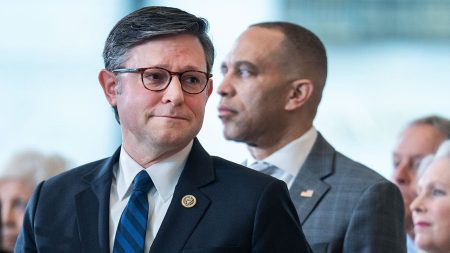



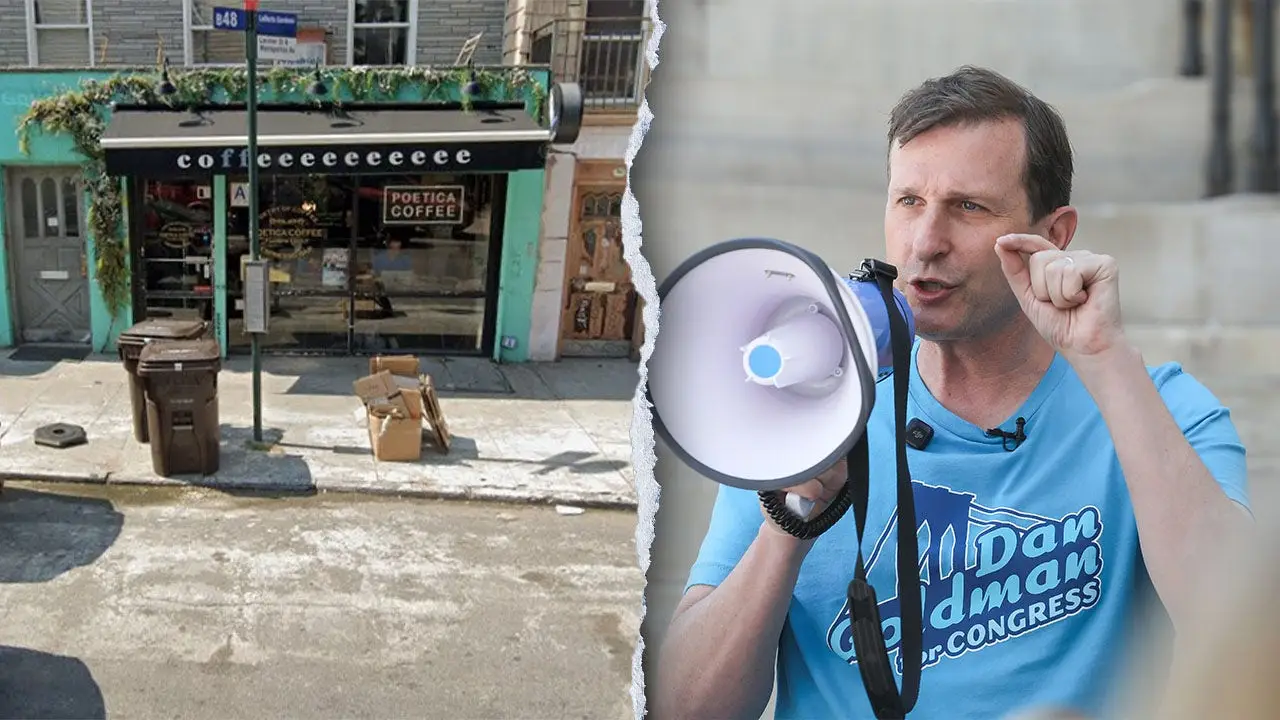
In the bustling and culturally diverse borough of Brooklyn, New York, a local coffee shop named Poetica Coffee recently found itself at the epicenter of an absolute firestorm after its owner launched a highly aggressive, politically charged attack on a customer. That customer was none other than United States Representative Dan Goldman, a prominent Democratic lawmaker who is Jewish and has been an outspoken supporter of Israel. After discovering that Goldman had visited the establishment to purchase a simple cup of coffee, Poetica Coffee’s social media account posted a scathing, now-deleted message directly tagging the congressman. The hostile post mocked Goldman, asking if his beverage tasted like “genocide juice” or if he was still unable to tell the difference. Furthermore, the establishment proudly declared that it does not serve “racists, fascists, homophobes, genocide enablers, or anyone in between,” bragging that they had issued Goldman a refund because they did not need his money—which they alleged probably originated from the American Israel Public Affairs Committee (AIPAC). The hostile post concluded with a blunt warning for Goldman never to return to the shop, celebrating his political setbacks and telling him to enjoy his upcoming losses. As the public reaction to this hostile digital confrontation intensified, the coffee shop faced immediate and severe backlash, prompting the owners to completely delete their entire Instagram account in an attempt to quiet the rising digital storm.
This aggressive refusal of service and public targeting did not just spark outrage on social media; it quickly caught the attention of federal authorities, transforming a local neighborhood dispute into a matter of national significance. The United States Department of Justice (DOJ) officially opened a civil rights probe into Poetica Coffee to determine whether the establishment’s actions violated federal public accommodation laws, which prohibit businesses from denying services to individuals based on their race, religion, or national origin. The situation became highly polarized, with many community members expressing deep concern over the normalization of hostility toward Jewish public figures. The silence of some local progressive politicians, such as New York State Assemblyman Zohran Mamdani, who has close political ties to the shop’s owner, further fueled the controversy, triggering intense debates online about antisemitism and the boundaries of political protest. What began as a routine stop for a morning coffee erupted into a complex legal and social battleground, raising critical questions about how personal political beliefs are weaponized in the public square and the real-world legal consequences that follow such actions.
Behind the scenes of this passionate political posturing, however, lay a much darker and more chaotic reality for Poetica Coffee and its founder, Parviz Mukhamadkulov, an Uzbek immigrant who built the local brand. Investigative reports quickly surfaced revealing that while the business was loudly championing progressive geopolitical causes online, it was struggling immensely to meet its most basic civic obligations at home. According to financial records uncovered by the Washington Free Beacon, as of mid-2026, both Poetica Coffee and Mukhamadkulov himself were facing severe financial distress, owing the New York State Department of Taxation and Finance hundreds of thousands of dollars in unpaid taxes. This massive tax debt painted a picture of a business on the brink of financial ruin, casting a shadow of hypocrisy over its loud claims of ethical business practices and its casual rejection of paying customers’ money. State tax authorities were contacted for confirmation, exposing how a brand that claimed to stand on high moral ground was simultaneously failing to contribute its fair share to the local government services and infrastructure that its neighborhood relies upon daily.
In addition to crushing financial debts, Poetica Coffee’s physical locations were harboring deeply troubling operational and sanitary issues that stood in stark contrast to the clean, aesthetic image normally projected by Brooklyn cafes. Public health records paint a stomach-churning picture of the shop’s daily operations, with one Brooklyn location racked by consecutive health code violations year after year since 2023. Recent inspections conducted in mid-2026 revealed a horrifying array of safety hazards, including the presence of “filth flies”—a category that includes houseflies, blowflies, and flesh flies associated with decaying matter, refuse, and sewage—buzzing through both food preparation and customer seating areas. To make matters worse, inspectors noted that the establishment’s sewage disposal system was either entirely unapproved, inadequate, or failing completely, alongside a noted lack of basic personal hygiene and cleanliness among the staff members handling food. These violations were not isolated incidents; previous inspections dating back to late 2023 had cited the business for similar hygiene failures, along with active evidence of rat infestations and the improper storage of highly toxic pesticides and cleaning chemicals near food products, illustrating a pattern of systemic neglect.
A closer look at Mukhamadkulov’s personal details and political associations reveals a history of radical activism and deeply controversial affiliations. Federal Election Commission records show that Mukhamadkulov was a financial supporter of Graham Platner, a highly controversial Democratic Senate candidate from Maine whose campaign has been mired in scandal, including public outrage over a Nazi-linked tattoo visibly displayed on Platner’s chest. Mukhamadkulov’s own digital footprint, which he hastily tried to erase by deleting his X (formerly Twitter) account, was filled with aggressive, profanity-laced tirades and conspiracy theories. In his archived posts, the coffee shop owner openly boasted about voting for democratic socialist mayoral candidate Zohran Mamdani, while hurling vulgar insults at critics and asserting that Mamdani would take over City Hall regardless of opposition. His posts went far beyond mainstream political discourse; he actively celebrated the tragic death of an Israel Defense Forces combat engineer in 2025, calling the deceased soldier “one less baby killer.” Furthermore, Mukhamadkulov’s timeline revealed extreme antisemitic conspiracy theories, including posts where he blamed Israel for the September 11 terrorist attacks, characterized Israel as a “Nazi nation,” and accused the country of outright genocide.
Ultimately, the sudden collision of global geopolitics, local commerce, and extreme personal ideology has left Poetica Coffee’s future hanging in a precarious balance of legal and public relations ruins. Following the explosion of the scandal, both the business and its owner went entirely silent, refusing to respond to repeated phone calls and media inquiries seeking clarity or apologies for their statements. Representative Dan Goldman’s office also declined to comment on the matter, choosing not to elevate the toxic rhetoric of a local merchant. This dramatic fallout serves as a stark, cautionary tale in our highly polarized modern society, showing how easily the workplace can be poisoned when business owners prioritize aggressive culture-war posturing over basic decency, cleanliness, and the law. For the residents of Brooklyn, the situation serves as an uncomfortable reminder of the deep divisions that exist right in their backyards, where even a simple, daily ritual like getting a morning cup of coffee can quickly dissolve into a battleground over civil rights, public health, and international conflict.