

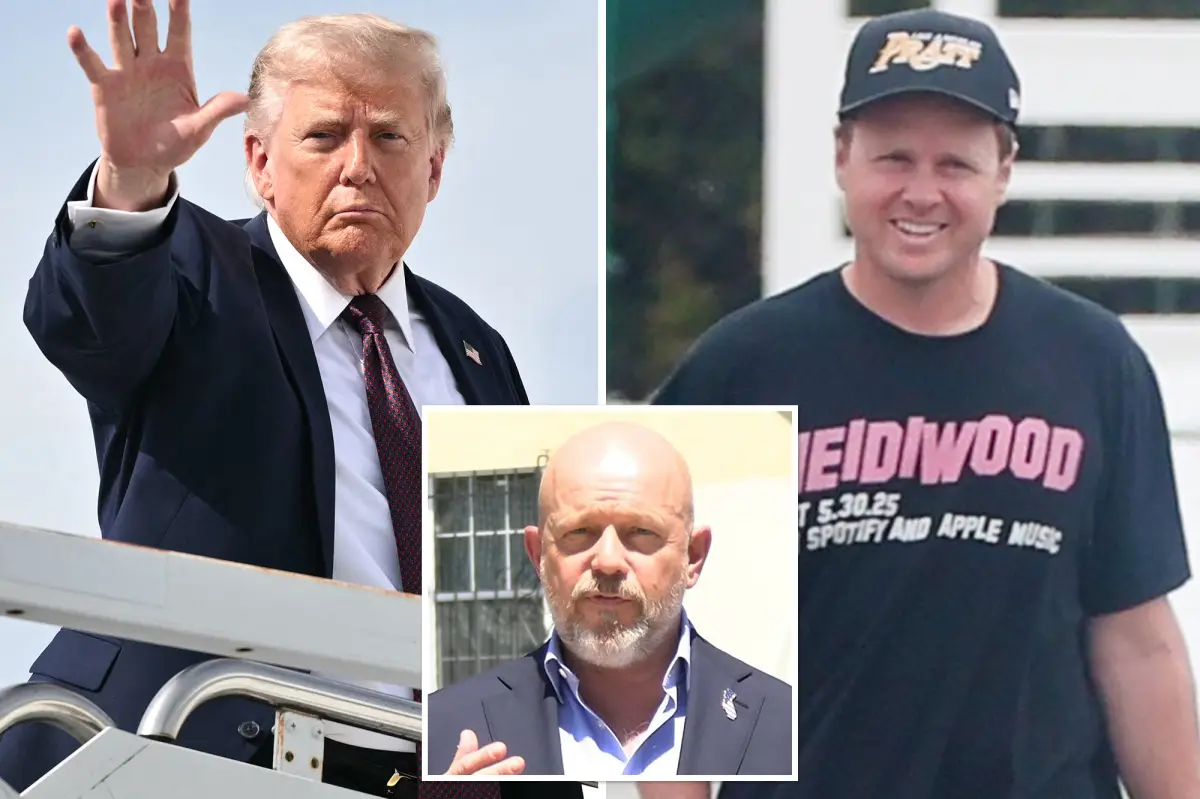
The crisp autumn air of Pennsylvania played host to a familiar display of political theater as former President Donald Trump took to the rally stage on Tuesday. For the thousands of supporters packed into the venue, the speech offered the characteristic blend of grievances, populist policy proposals, and raw, unfiltered anecdotes that have defined his political brand. However, the narrative took a surprising and highly localized turn when Trump pivoted away from the Rust Belt to focus his attention on the sunny, distant political battlegrounds of California. He chose to spotlight the recent, highly controversial municipal election in Los Angeles, zeroing in on the mayoral run of Spencer Pratt, a reality television personality whose unexpected, viral campaign had briefly captured the imagination of a diverse coalition of local Republicans, independents, and disaffected residents. Trump masterfully tapped into the emotional rollercoaster of that race, recalling how Pratt secured an incredibly promising second-place lead on Election Night itself, pointing to a potential historic runoff against the incumbent mayor, Karen Bass. He painted a vivid picture of the psychological toll such a race takes on candidates and voters alike: a night of euphoric hope and celebration that gradually turned to ash as the days dragged on, the votes trickled in, and Pratt’s lead slowly, agonizingly dissolved. By focusing on the human drama of a candidate who seemed to have victory within his grasp only to watch it slip away in slow motion, Trump sought to validate the deep-seated suspicions of a crowd that has grown deeply cynical of modern electoral machinery.
To understand why this narrative resonates so deeply with voters, one must examine the unique, agonizingly slow machinery of California’s election laws, which has increasingly become a psychological pressure cooker for the electorate. Unlike states that deliver definitive, black-and-white results within hours of the polls closing, California has embraced a system designed to maximize voter access, which includes universal mail-in ballots that can be postmarked up until Election Day and signature verification procedures that require painstaking manual review. The noble intent behind these policies is to ensure that every voice, from the busy shift worker to the homebound senior, is counted, but the practical side effect is a prolonged administrative lag that can stretch on for several weeks. During this extended period of silence and incremental updates, a phenomenon often referred to as the “blue shift” frequently occurs, where early, physically cast ballots favor more conservative or populist candidates, while the late-arriving mail-in envelopes skew overwhelmingly progressive. For an anxious public accustomed to the instant gratification of the digital age, this multi-week fluctuation does not feel like the meticulous, careful execution of democratic oversight; instead, it feels like an opaque, shifting landscape where the ground is constantly moving beneath their feet. It is precisely in this informational vacuum that doubt festered among Pratt’s passionate supporters, transforming what the state views as a triumph of voter inclusivity into a deeply distressing experience that left ordinary citizens feeling disoriented, skeptical, and ultimately alienated from the democratic process.
Trump seized upon this growing sense of disillusionment at the podium, using his unique rhetorical style to transform a local municipal loss into a grand, systemic conspiracy. He mimicked the escalating anxiety of the post-election period, dramatically recounting how he heard rumors that Pratt was progressively “fading” as the endless days rolled by, before declaring to the crowd his immediate, gut-level conclusion: that the entire process was rigged. He then seamlessly bridged this local grievance to a much larger, statewide canvas—the highly competitive California gubernatorial primary, where his political ally, Republican Steve Hilton, was locked in a fierce, high-stakes battle to secure a second-place finish and a ticket to the general election. Hilton was facing a dangerous, late-stage surge from progressive billionaire Tom Steyer, who was utilizing his immense personal wealth and a massive mail-in voter mobilization effort to overtake Hilton in the final stretch. Trump framed this dynamic as an identical, coordinated plot designed to marginalize yet another conservative champion through the silent, late-arrival of paper ballots. By intertwining the fates of a populist celebrity candidate like Pratt with a seasoned political commentator like Hilton, Trump presented his audience with a powerful, easily digestible narrative of shared victimization, positioning the slow-counting process not as an administrative quirk, but as a deliberate, hostile weapon wielded by an unseen political establishment against the desires of everyday voters.
What came next in the speech, however, represents a remarkable and highly controversial admission of direct presidential pressure on the federal justice system, highlighting Trump’s deeply personalized philosophy of executive power. He proudly detailed how he chose to bypass traditional, institutional boundaries by placing a direct phone call to an unnamed, “very powerful” U.S. Attorney in California, demanding that they intervene in an active, localized vote-counting process. Trump’s casual framing of the conversation—demanding a “favor” and instructing the federal prosecutor to “take a look” because they were trying to “steal” the election—underscores a dramatic departure from the post-Watergate norms that have long sought to insulate the Department of Justice from political interference. To his loyal base, this story represents the ultimate realization of a protective leader: a strongman willing to smash through bureaucratic red tape and use raw executive clout to stand up for his allies in a moment of perceived crisis. Yet, to constitutional scholars and legal experts, the anecdote represents a deeply alarming breach of prosecutorial independence, suggesting that the machinery of federal law enforcement could be summoned at a president’s whim to influence local electoral outcomes. The climax of Trump’s tale was steeped in cinematic timing, claiming that within a single hour of the U.S. Attorney demanding to check the ballots, the news media suddenly declared Hilton the victor, allowing the former president to boldly claim that without his personal, rule-defying intervention, Hilton would be sitting at home today, an forgotten observer of history.
This dramatic confrontation exposes a fundamental, ideological civil war in America over how we run our elections and how we define the very concept of democratic fairness. One side of this bitter divide views the expansion of mail-in voting and flexible counting deadlines as a vital step toward an inclusive democracy, arguing that the system must adapt to the complex, busy lives of modern citizens rather than forcing them to navigate rigid, inconvenient barriers. The opposing side, championed passionately by Trump, views these same accommodations as inherent vulnerabilities that erode the transparency, security, and immediate clarity that they believe are essential to public trust. This dispute is not merely an abstract debate occurring in legislative chambers; it has real, exhausting consequences for the thousands of ordinary civil servants, county clerks, and volunteer poll workers who find themselves on the front lines of this ideological battlefield. These workers, who spend sleepless nights and tireless weeks under intense scrutiny, painstakingly cross-referencing signatures and processing paper under fluorescent lights, are increasingly recast not as dedicated public servants, but as complicit agents in a grand, sinister plot. When the very mechanics of counting become a source of partisan warfare, the human element of public service is erased, leaving the individuals who actually operate our democracy caught in a toxic crossfire where no administrative outcome, no matter how carefully audited, can satisfy both sides of a fractured electorate.
The fallout from Trump’s Pennsylvania address was swift, prompting a fierce defensive reaction from California’s political establishment, which has long struggled to balance national criticism with domestic administrative realities. State Democrats immediately denounced his remarks, accusing the former president of intentionally sowing unfounded mistrust in democratic institutions for personal and partisan gain. However, the political reality is far more nuanced, as even Governor Gavin Newsom’s office has quietly admitted to a deep and ongoing frustration with the state’s slow-counting timelines, recognizing that the prolonged delays create a natural breeding ground for skepticism. In response to Trump’s explosive rally rhetoric, Newsom’s press office issued a stark, single-word rebuttal: “False!” This abrupt, defensive posturing illustrates the tragedy of the modern political discourse, where complex administrative challenges are reduced to binary, emotional shouting matches—”rigged” on one side, and “false” on the other. For the average, hard-working citizen trying to make sense of this noisy landscape, the gap between bureaucratic processes and public trust has never felt wider. When elections are no longer viewed as a definitive mathematical exercise, but rather as a highly charged battleground of narratives, executive power, and deep-seated suspicion, the fragile bond of civic trust that holds a diverse democracy together begins to fray, leaving voters to wonder if their sacred ballots are truly instruments of self-determination or merely chess pieces in a much larger, darker game.