

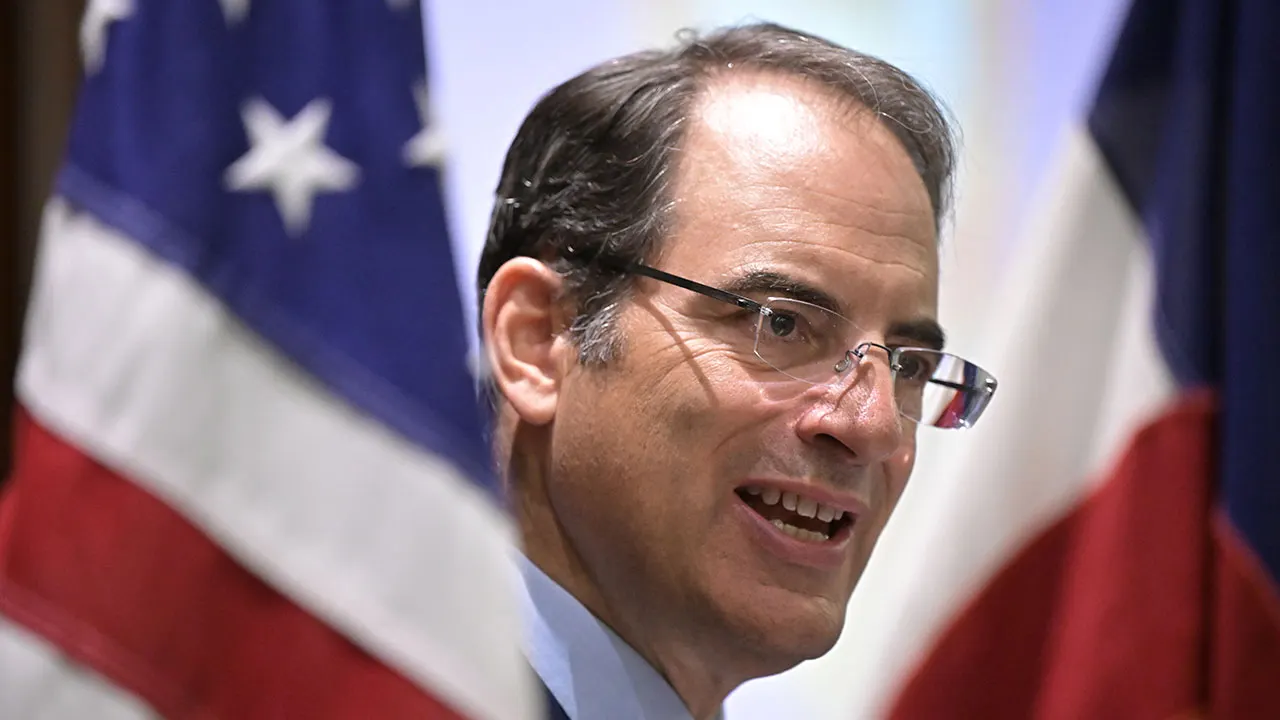
The atmosphere in Colorado’s political circles on Tuesday night was nothing short of electric, charged with the nervous energy that only a high-stakes primary election can generate as communities across the state anxiously awaited the decision that would shape their future leadership. As the local ballots were painstakingly counted across seventy-four diverse counties and the early returns began to flash across television screens, a stunning political upset began to materialize, defying the expectations of seasoned pundits and national campaign strategists alike. Colorado Attorney General Phil Weiser emerged victorious in a dependency-shattering and fiercely contested Democratic primary for governor, defeating the formidable sitting United States Senator Michael Bennet in a matchup that had captivated voters from the Front Range to the Western Slope. This momentous outcome effectively blocked Bennet’s ambitious attempt to transition from the halls of Congress in Washington, D.C., to the historic governor’s mansion in Denver, altering the trajectories of both public servants’ careers in a single night. For Weiser’s enthusiastic supporters, who had gathered in sleepless anticipation at campaign headquarters, the victory was a profound validation of a campaign built on local trust, grassroots legal advocacy, and persistent community engagement. For Bennet and his dedicated campaign staff, it was a sobering reminder of the unpredictability of primary voters, even for a seasoned politician with a national profile, a massive war chest, and deep roots in the state. This unexpected triumph instantly positioned Weiser as the runaway favorite to succeed the highly popular, term-limited Democratic Governor Jared Polis in the upcoming November general election. In a state that has increasingly leaned blue over the past decade, consistently choosing Democrats for statewide offices, winning this primary was widely viewed as holding the golden key to the governorship itself. Beyond the immediate celebrations, the ripples of this election night shockforce were felt far beyond Colorado’s scenic borders, rewriting the playbook for local execution versus federal experience and preserving a critical Democratic seat in an otherwise volatile United States Senate.
At the heart of Phil Weiser’s campaign was a deeply personal narrative of public service, legal integrity, and an unwavering commitment to the various communities that make up the vibrant fabric of Colorado. To understand Weiser is to understand an educator and legal scholar who has dedicated his entire professional life to the intricate machinery of the law, viewing it not as an abstract set of rules, but as a living shield designed to protect the vulnerable and elevate the marginalized. His campaign website passionately reminds voters of this lifelong dedication, framing him as a guardian who will continue to advance the rule of law, safeguard fragile democratic institutions, and tirelessly promote justice for every individual, regardless of their background or socioeconomic status. Cruising through the state from the soaring peaks of the Rocky Mountains to the bustling urban corridors of the Denver metro area and down to the agricultural hubs of the Eastern Plains, Weiser connected with everyday voters on a thoroughly human level. He successfully transformed complicated, technical legal victories against manipulative corporate giants, predatory lenders, and environmental polluters into deeply relatable stories of community defense and consumer protection. By positioning himself as a proven, hands-on defender of Coloradans’ daily lives, he successfully convinced primary voters that the governor’s office required a leader intimately familiar with the state’s executive and legal apparatus. As the state prepares to bid farewell to Governor Jared Polis, whose historic eight-year tenure left a modern, progressive, and economically vibrant footprint on the state, Weiser’s supporters see him as the natural heir to this legacy—a steady, principled administrator capable of navigating the complex legal, social, and environmental challenges of the future while keeping Colorado’s progressive momentum firmly on track.
On the other side of this monumental primary stood Senator Michael Bennet, a central figure in Colorado and national politics who has spent over a decade advocating for his constituents in the nation’s capital. Serving three terms in the Senate and even embarking on a courageous presidential run in 2020, Bennet possesses an undeniable charisma, an intellectual depth, and a robust legislative record that has earned him respect across the national political spectrum. His decision to enter the gubernatorial primary was a bold and calculated risk, born out of an intense desire to directly shape executive policy on the ground—touching education, healthcare, and public lands directly—rather than fighting the endless, exhausting federal gridlock of the United States Senate. However, this high-profile political gamble carried immense risk, as step-down attempts from the Senate to executive state leadership are notoriously rare and fraught with political peril, often causing voters to question why a leader would want to walk away from a powerful federal seat. Despite the stinging personal disappointment of the defeat, the broader political silver lining of Bennet’s loss is that he will remain in his Senate seat, sparing the national Democratic Party from what would have been an incredibly grueling, expensive, and stressful vacancy battle heading into the general election. Had Bennet won the gubernatorial primary and eventually the governorship, Democrats would have faced the daunting, resource-draining task of defending a newly opened Senate seat in a highly polarized national environment where control of Congress hangs by a razor-thin thread. Thus, while Bennet’s gubernatorial ambitions were brought to an unexpected and abrupt halt on Tuesday night, his continued presence in Washington provides a crucial, stable anchor for his party’s federal legislative agenda and judicial confirmation power.
This intra-party showdown split the state’s Democratic establishment down the middle, creating a fascinating study in political alliances that pitted long-time colleagues and friends against one another in a friendly yet fierce battle for the state’s future identity. Senator Bennet entered the primary contest with the heavy armor of the traditional establishment, boasting an impressive endorsement roster of more than two hundred influential state leaders, including sitting legislators and mayors. His campaign was publicly championed by his Senate colleague John Hickenlooper, as well as prominent U.S. Representatives Joe Neguse, Jason Crow, and Brittany Pettersen, alongside a powerful coalition of labor unions and legislative leaders who believed Bennet’s national stature was the ultimate asset to guide the state through economic uncertainty. Conversely, Phil Weiser built a formidable and diverse coalition of his own, drawing deep-seated support from Colorado’s foundational political figures and a swelling tide of progressive grassroots organizations. Weiser’s endorsement list read like a legendary history book of Colorado politics, featuring former Governor Roy Romer, former Representative Ed Perlmutter, former Denver Mayor Federico Peña, and former Senator Tim Wirth, alongside a passionate, energetic network of local municipal leaders, environmental groups, and grassroots activists. This diverse alignment of supporters illustrated a vibrant, healthy internal dialogue within the Colorado Democratic Party, contrasting Bennet’s federal legislative establishment with Weiser’s deeply rooted, home-grown network of state and local public servants. It was a clear demonstration that Colorado’s Democratic voters do not simply follow a single-directed playbook but are deeply attentive to the nuanced paths their leaders propose to take.
Throughout the long campaign trail, the two candidates articulated contrasting visions of how to best shield Colorado from national political storms, particularly those brewing from conservative elements in Washington. Bennet argued with quiet, reasoned intensity that his extensive legislative experience in Washington made him uniquely qualified to stand as a powerful bulwark against conservative policies and to implement pragmatically progressive policies directly at the state executive level. Weiser, on the other hand, masterfully leaned into his highly active role as Attorney General, reminding voters that he was already on the front lines, utilizing the power of the courts to defend reproductive freedom, combat climate change, protect safe communities, and challenge federal overreach when necessary. While this captivating Democratic debate unfolded, the Republican primary was simultaneously taking its own dramatic shape, with candidate Barb Kirkmeyer holding a steady lead as the Democratic race was officially called on Tuesday evening. Whether Kirkmeyer retains her lead or is overtaken by her Republican rivals, Victor Marx or Scott Bottoms, whoever ultimately claims the Republican nomination faces an incredibly steep, uphill battle in November against a highly motivated, unified Democratic base rallying behind Weiser. Colorado’s political landscape has shifted dramatically over the past two decades, evolving from a classic, unpredictable purple swing state into a reliable progressive stronghold, meaning the GOP nominee will need to stage a monumental, historic campaign to overcome Weiser’s formidable lead and deeply entrenched voter support.
Ultimately, this primary election was about far more than just political names, resumes, and party designations; it was a profound reflection of the values, hopes, and anxieties of the everyday people who call Colorado home. For the families living along the Front Range, the farmers and ranchers working the Eastern Plains, and the outdoor recreation communities on the Western Slope, the choice for governor is a deeply personal decision that directly impacts their quality of life, the preservation of their natural resources, and the stability of their local economies. As Phil Weiser prepares to pivot his campaign strategy from the primary to the general election, his message remains firmly grounded in the human element of governance—the persistent belief that the law must serve the people and that a governor’s primary duty is to unite a diverse state under the banner of progress, shared prosperity, and equal justice. The transition of power from the forward-thinking Polis administration to a potential Weiser administration represents an exciting new chapter of state leadership, one where the defense of democracy, educational opportunity, and environmental stewardship are woven into the very fabric of state policy. In an era often characterized by political division and public cynicism, Colorado’s primary demonstrated that voters are still deeply engaged, looking for leaders who show empathy, understand their daily struggles, and are willing to stand up for their rights. As the state moves toward November, the spirit of Colorado—bold, resilient, diverse, and fiercely independent—remains the true guiding force behind this historic political journey.