




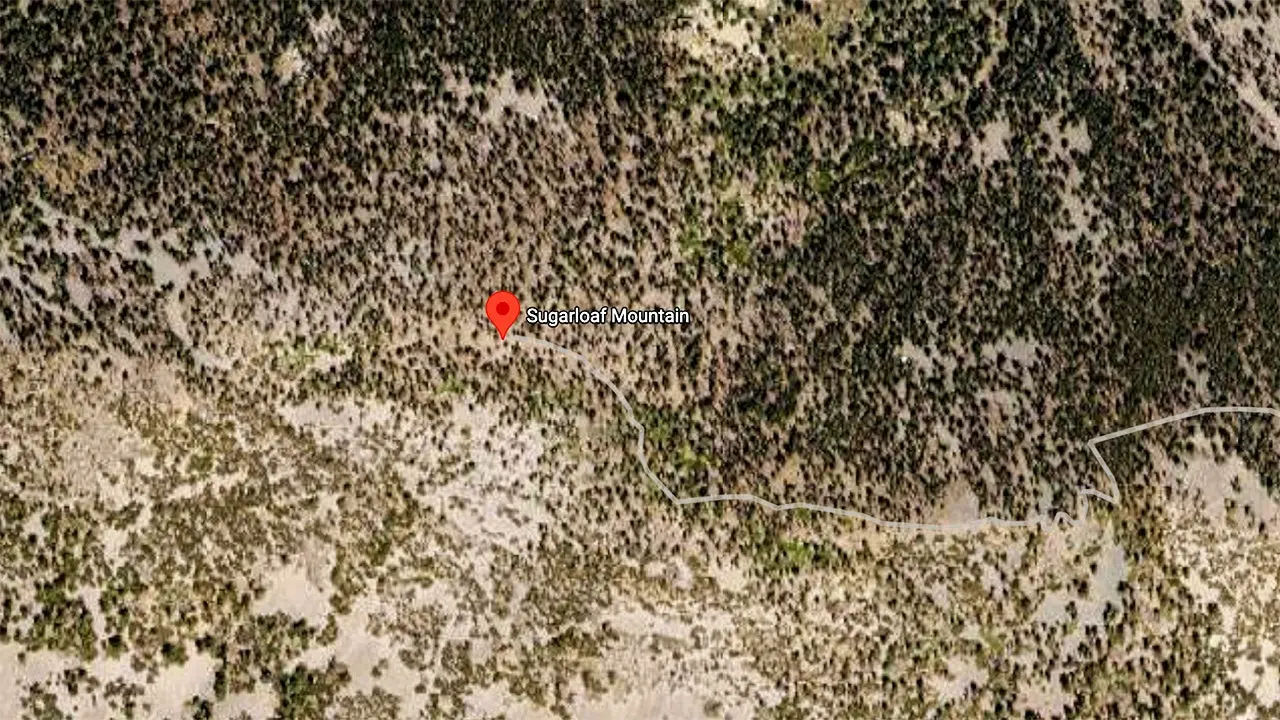
For over forty years, a shallow, unmarked grave near the rugged terrain of Sugar Loaf Mountain in Riverside County, California, held a secret that defied the efforts of generations of investigators. In November 1981, local residents out searching for firewood stumbled upon skeletal remains protruding from the earth near Highway 74. The body was so severely decomposed that forensic tools of the era were entirely useless in establishing an identity, leaving the victim to be known simply as an unidentified Jane Doe. While the physical remains lay nameless in a cold case file, a parallel drama of greed and betrayal was unfolding in nearby Los Angeles, where the sudden disappearance of a wealthy resident had already sparked a high-profile murder investigation.
The mystery actually began five months earlier, on June 28, 1981, when 80-year-old Thelma Gaston vanished without a trace from her home. Gaston was no ordinary retiree; she was a highly successful, multimillionaire real estate investor with an estate valued at an estimated $20 million. Suspicion arose immediately when a bizarre note was found taped to her front door, claiming she had merely stepped out to look for a missing cat. As weeks turned into months with no sign of the elderly woman, investigators began to suspect that her disappearance was part of a sinister plot to seize her vast wealth rather than a simple case of a missing person.
The spotlight quickly fell on Lawrence Remsen, then 39, who was described by authorities as Gaston’s “sometime companion.” Detectives discovered that Remsen had systematically misrepresented Gaston’s whereabouts while her associates received forged letters designating him as the sole controller of her immense fortune. Armed with evidence of forgery, grand theft, and blatant deception, the Los Angeles Police Department and the Los Angeles County District Attorney’s Office painted a chilling picture of a man who killed his elderly companion out of pure financial greed. Despite the absence of Gaston’s body, Remsen was tried, convicted of her murder, and sentenced to life in prison.
Though justice had been served in the courtroom, the painful question of what had actually happened to Gaston’s physical remains lingered for decades. Remsen, now 83 and incarcerated at the California Institution for Men in Chino, maintained his silence, leaving Gaston’s final resting place a mystery. He was recently denied parole in July 2025 and remains behind bars, but the passage of time did nothing to bring Gaston home. For forty-five years, she remained a nameless victim in a Riverside County grave, a tragic footnote to a solved courtroom drama but a bitterly incomplete puzzle for forensic investigators.
The breakthrough finally came when the Riverside County Sheriff’s Coroner’s Bureau secured funding through the Missing and Unidentified Human Remains Grant. In November 2024, investigators exhumed the nameless remains from the hillside and sent DNA samples to Othram, a pioneering forensic laboratory in Texas. Using cutting-edge Forensic-Grade Genome Sequencing, scientists built a comprehensive DNA profile that allowed investigators to utilize investigative genetic genealogy. By combining this state-of-the-art genetic tracking with historical dental records, forensic teams achieved the impossible: in May 2026, they officially confirmed that the remains discovered in 1981 belonged to Thelma Gaston.
This collaborative triumph between the Riverside Sheriff’s Coroner’s Bureau, the Cold Case Homicide Team, and Othram highlights the incredible power of modern science to restore dignity to those lost to history. Decades after a greedy companion tried to erase her from existence and steal her legacy, Gaston has finally been given her name and her story back. This extraordinary resolution serves as a powerful reminder that no victim is ever truly forgotten, and that even the coldest, most deeply buried secrets can eventually be brought into the light.