





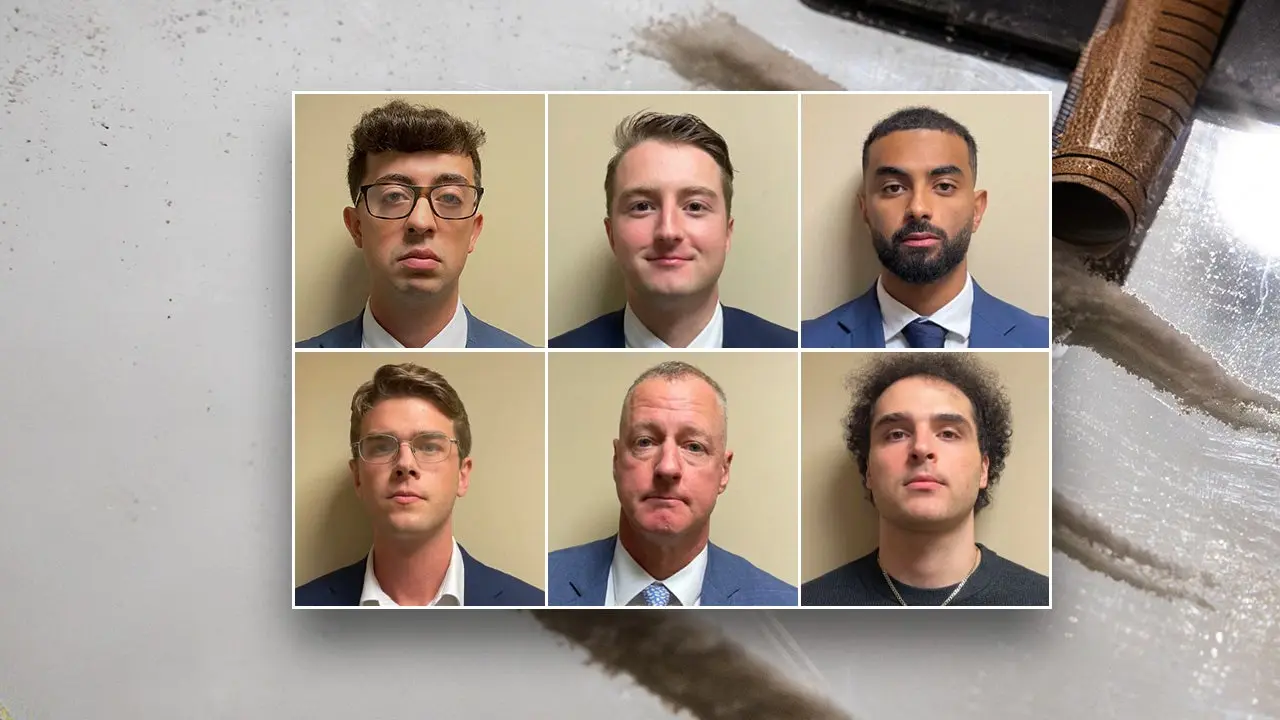
The recent news of an alleged cocaine distribution ring operating within the Penn State fraternity system has sent shockwaves through the university community and beyond. What initially seemed like a simple drug bust has unfolded into a sprawling, complex story that has captured national attention, revealing a sophisticated operation run not by career criminals, but by students who had, by all accounts, been leading seemingly normal, high-achieving college lives. The release of specific complaints by the Pennsylvania Office of the Attorney General has painted a detailed and startling picture of an enterprise with its own internal hierarchy, logistics, and even a touch of troubling irony, all operating in the shadows of a campus known for its school spirit and academic pursuits. This story is a human one, full of potential now hanging in the balance, of bad decisions, and of a culture that, at least for some, equated social success with access to illicit substances. This intertwining of the American university experience with an underground drug trade provides a compelling, cautionary tale about the pressures, naivete, and moral compromises that define the lives of some young adults in the modern era.
At the apex of this retail cocaine enterprise, the complaints name Agostino “Pablo Pledgescobar” Abbatiello, a 24-year-old accounting major from Westbury, New York. His nickname, a darkly humorous yet audacious moniker that combines a Narcos villain with frat-boy jargon, immediately signaled a certain bravado and detachment from the gravity of his alleged actions. On paper, Abbatiello appears to be the archetypal success story—a student who reportedly made the dean’s list and had a passion for financial storytelling. This detail is perhaps the most unsettling aspect, underscoring that intelligence and a strong work ethic are not real-time indicators of sound moral judgment. Prosecutors placed him at the “top of the food chain,” viewing him not just as a supplier but the operation’s primary organizer, seemingly using the same analytical skills he employed in his finance courses to orchestrate the flow of cocaine. He allegedly had a commanding presence, a leader who could delegate, and who, by virtue of his academic success, could have led a legitimate, lucrative financial career. His alleged choice to use his brains to build a collegiate drug-trafficking network highlights a troubling disconnect between personal ambition and a larger moral compass, as he faces a number of very serious felony charges that could upend a life that had, until this week, been defined by academic promise.
Working closely and operating as a key hub in this network was Thomas Robinson, a 22-year-old student from Pittsburgh. He majored in Human Resources and Management – a fitting field for someone accused of managing the day-to-day logistics of distributing drugs, as he allegedly took charge of the “downstream” part of the process, moving the product from Abbatiello and into the hands of other students, using the college’s anonymity to his advantage. He wasn’t just distributing on a small scale; he user-friendly, using Snapchat to advertise and sell the product, demonstrating a chillingly contemporary and casual way to conduct an illegal trade. It was Robinson’s arrest that ultimately blew the operation wide open, turning him into the crucial link that law enforcement relied on through confidential informants. His is a turning point of the entire case—a young man caught in the gears, who, in a choice between saving his own skin and protecting his “friend,” chose to give up his partner and expose the entire web, signaling a breakdown in loyalty and the transactional nature of all these relationships. Robinson’s background, woven into it, tells the story of a promising student who became a central operator within a network he likely thought was a short-term way to make money, not a path to felony conviction.
The network, however, was not just about the top brass, and the court filings show a complex flow of Allegiances and roles, adding nuance to the scheme. Mohammed Huraibi demonstrated this evolving and fragile structure when he, along with Robinson, initially split the costs of bulk cocaine, but in late 2023, he allegedly tried to buy out of the bulk operation. Yet, he above kept his foot in the door, using his dealings as a way to sell to other fraternities. Lars Zeepvat was a business partner to Abbatiello, and he navigated the detection of an earlier source in his pre-college life, which he now used to feed his own habit and the network’s risk operations. Robert Zanolla, the regular trips from State College down to New York City to pick up the illicit cargo for a fee, shows the risk inherent in the drug trade. These are all young men who freely moved between their classrooms and the streets, using their financial backgrounds to try and manage a risky enterprise with a sense of hubris. Their biggest mistake was to treat it like any other extra-curricular, not fully grasping that the hand they were in was not just a college gig with a financial edge, but a serious crime that would result in a lifetime of consequences.
The ripple effect of the scandal extends beyond the students, touching on the very core of family and the concept of putting loyalty above law. Paul Robinson, 59, the father of one of the main suspects, Thomas, has been charged with helping his son conceal evidence. Allegedly, he possessed a safe containing both the drugs and cash from his son’s trade. This detail transforms a story about a college drug ring into a broader cautionary tale about family complicity. The iconic image of a parent, someone who should be a guide and moral center, pulling a shady man to protect his child, speaks to the lengths that a parent might go to, to shield their children from the consequences of their poor decisions. Father Robinson’s actions blur the line between protection and enabling, and it shows the power of a parent’s bond that gets twisted by circumstance. The inclusion of his name suggests the scope of the problem extends beyond campus boundaries, and a dark shadow has been cast over the parent’s role in perpetuating the very secretive behavior that the authorities were trying to root out.
The majority of the men charged are, like dozens of others in college, were members of fraternity chapters, notably Sigma Chi, Delta Upsilon, and Acacia. It is a testament to how these institutions, which are meant to be centers for brotherhood, professional network-based, and social development, can sometimes fall into a culture that prioritizes loyalty to each other over moral righteousness. For instance, a pledge like Michael Brogno Jr., who was just 20, was reportedly tasked with packaging and delivering cocaine at Robinson’s direction. His deeds, he used the fraternity’s own inner and complex ways of the pledge system to his advantage – known for building bonds through shared obedience that individually defines what is normal. The same is seen in other accused younger members like Connor Hurleigh, Seth Beardsley, Daniel Price, and Charlie Weisman, who are all accused of weighing, packaging, and distributing cocaine, essentially taking on low-level roles that were complicit. The hierarchical nature of fraternities is their very strength and their weakness. In these cases, the “brotherhood” is mentioned in the context of the give-and-take hierarchy of the drug trade itself; the members were so consumed by remaining a part of the group that they unable to or unwilling to resist the demands of the upperclassmen, resulting in a blur between fraternity dedication and criminal subservience.
As the Penn State community grapples with these many pieces of information, it is hard not to focus on the monumental transformations that have occurred in the young lives. Men like Abbatiello and Robinson were seconds away from earning their degrees and launching futures; they carried themes and of whats what it because of a couple of ill-advised decisions. The courtroom cases will soon start to capture these college, the same educations that should have provided a life are the very platform for a criminal trial. The details of the accusations, still shrouded in the legal process, will present the hard evidence moving forward. But this incident serves as an alarming reminder that the glamorous, silver-screen image of the world is often replaced with a raw and deeply flawed reality. It can be found not in a crime-stricken city, but just outside a college campus on a Saturday, hidden in plain sight, in a local dorm or a lovingly maintained frat house. It forces both the university and the broader conversation community to ask difficult questions about the pressures students face—also concerning the need for social validation, financial gain, or just the simple need to belong—that can drive them to such risk. This is not just a New York Times crime story, it’s a cautionary tale about a generation, for the institutions that seek to nurture them, but also for each and every one of us who share a campus with them. The court will decide the guilt or innocence, but the human toll, of destroyed futures, shattered families, and betrayed trusts, is palpable now, a define for what’s lost in the pursuit of a college experience. And the silence of those words, once the football game recaps come to an end, is the most prevalent for a new chapter begins.