






Alarming Cruise Ship Outbreak: Hantavirus Claims Lives Amidst Atlantic Voyage
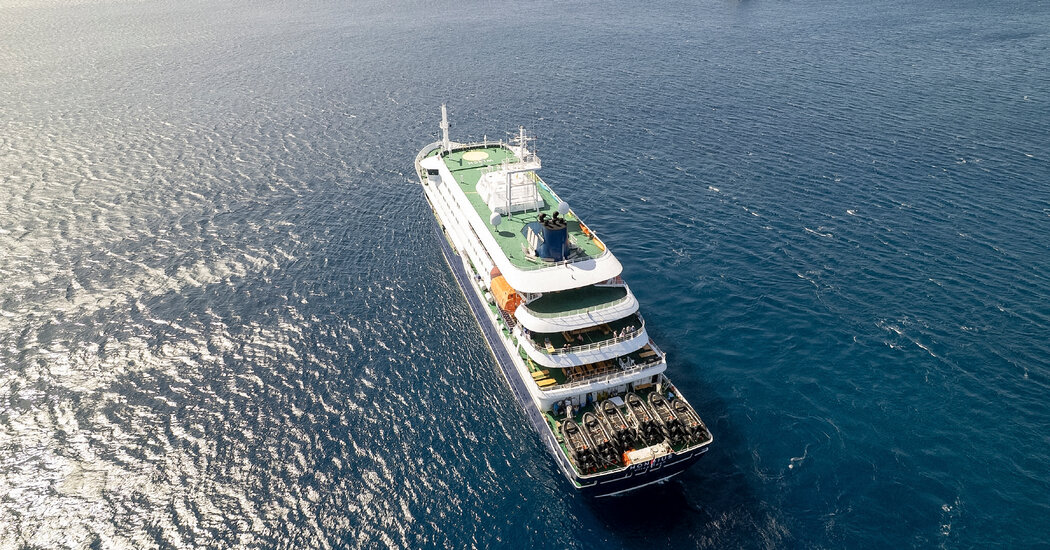
In a startling turn of events on the high seas, three passengers aboard a luxury expedition cruise ship have succumbed to what experts believe is hantavirus, a rare rodent-borne infection drawing global health scrutiny. The World Health Organization (WHO) announced this alarming development on Sunday, confirming one laboratory-verified case among six suspected infections aboard the vessel. As the ship, the MV Hondius, charts its way across the Atlantic, authorities in South Africa scrambled to contain the spread, highlighting the unforeseen dangers that can lurk in the most remote corners of the world. This incident not only underscores the fragility of long-haul travel but also raises critical questions about preparedness in isolated oceanic environments where medical resources are scarce.
The MV Hondius, operated by a Dutch exploration company yet unreachable for immediate comment, embarked on its ambitious itinerary three weeks prior from Ushuaia, Argentina’s southernmost outpost, bound for the Canary Islands via an epic loop through Antarctica, the Falkland Islands, South Georgia, and a series of remote Atlantic islands including Nightingale, Tristan da Cunha, St. Helena, Ascension, and Cape Verde. Carrying approximately 150 passengers from diverse international backgrounds, the vessel embodied adventure tourism at its zenith—skirting icy fjords, observing wildlife, and exploring some of the planet’s most untouched landscapes. Nowhere in their promotional materials did they foresee the intrusion of a deadly pathogen, one transmitted not by human contact but by innocuous-seeming rodents. Now, this journey, steeped in wonder, has turned into a harrowing narrative of illness, isolation, and loss, as the ship navigated treacherous waters both literal and epidemiological.
Tragedy struck first in the mid-Atlantic, where a 70-year-old male passenger fell gravely ill, manifesting fever, relentless headaches, abdominal distress, and severe diarrhea—symptoms that mirrored the onset of a respiratory crisis. Unfortunately, he passed away upon the ship’s arrival at St. Helena Island, a British Overseas Territory, where local authorities handled what would become the first grim milestone in this outbreak. His remains awaited repatriation to the Netherlands, a poignant reminder of the human cost amid the vast expanse of the ocean. Compounding the family’s heartbreak, his 69-year-old wife also fell ill during the voyage and collapsed upon touching down at O.R. Tambo International Airport in Johannesburg, South Africa, en route home. Medically unresponsive upon arrival at a local facility, she too succumbed, leaving loved ones to grapple with grief across continents. The pair’s story weaves a tapestry of devotion and disaster, illustrating how a shared dream of exploration can unravel into personal catastrophe.
A third victim, a British national in his later years, exhibited similar debilitating symptoms while the MV Hondius traversed from St. Helena to Ascension Island, prompting an urgent helicopter transfer to Ascension’s limited medical post before further evacuation to a specialized hospital. His lab results soon returned positive for hantavirus, solidifying the diagnosis and elevating the incident to a confirmed health emergency. Currently under intensive care in a private South African health facility in Sandton, this patient represents a tenuous hold on life, as medical teams monitor his condition with vigilant precision. Foster Mohale, spokesperson for South Africa’s National Department of Health, painted a sobering picture of these cases, describing them as stemming from undiagnosed severe acute respiratory infections. Yet, amidst the despair, there’s a coordinated response underway, involving contact tracing with the National Institute for Communicable Diseases and Gauteng Health authorities to identify and isolate any potential secondary exposures.
Public reassurance comes swiftly from Mohale, who urges calm: “There is no need for the public to panic because only two patients from the cruise ship have been within our borders.” This containment strategy, he notes, is part of a broader WHO-led multicountry effort, engaging island nations and affected countries in a collaborative bid to prevent further dissemination. The organization’s involvement signals a unified front against a virus that, while rare, demands rapid intervention to avert a broader contagion. By tracing contacts and implementing quarantines where necessary, health officials aim to safeguard passengers, crew, and shore communities alike, underscoring the importance of preparedness in an interconnected travel landscape where borders blur on the blue horizon.
At its core, hantavirus represents a family of elusive pathogens primarily harbored by rodents, with human transmission often occurring through the inhalation of aerosolized particles from contaminated excreta—like dried droppings or urine left in neglected corners of environments where mice thrive. Unlike more commonly discussed infectious diseases, hantavirus rarely spreads person-to-person, making outbreaks typically localized to areas with high rodent populations. However, the WHO emphasizes that vigilance is key, as it can escalate to severe respiratory syndromes requiring intensive support and monitoring. On a cruise ship, where confined spaces and shared facilities amplify risks, this becomes particularly perilous. This outbreak serves as a stark reminder of the hidden perils in global tourism, where exotic destinations might conceal biological hazards. As investigations deepen, experts are likely peeling back layers of the ship’s environmental history—perhaps uncovering unsanitary lapses or wildlife encounters that facilitated the virus’s leap from rodents to humans. For passengers who embark on such voyages dreaming of pristine wilderness, this cautionary tale highlights the uncharted boundaries between adventure and risk, prompting a reevaluation of health protocols in remote expeditions.
Moving forward, the international response to this hantavirus incident could reshape cruise industry standards, pushing for enhanced onboard hygiene regimens, rodent control measures, and rapid diagnostic capabilities that outperform the limitations of isolated islands. South African officials, working in tandem with global partners, are poised to monitor the remaining suspected cases, ensuring that this episode doesn’t spiral into a public health crisis. As the MV Hondius completes its altered journey and passengers scatter to their homelands, the echoes of these losses will linger, fueling discussions on how to fortify passenger safety against invisible threats. In the grand theater of global travel, where the ocean’s vastness once symbolized freedom, it now demands a new chapter of heightened awareness and innovation to protect those who dare to explore its depths. This story, unlike a mere headline, is a call to action for travelers and health authorities alike, reminding us that even in the age of modern medicine, nature’s microscopic dangers can strike unexpectedly, far from shore.