





The Apology in the Courtroom
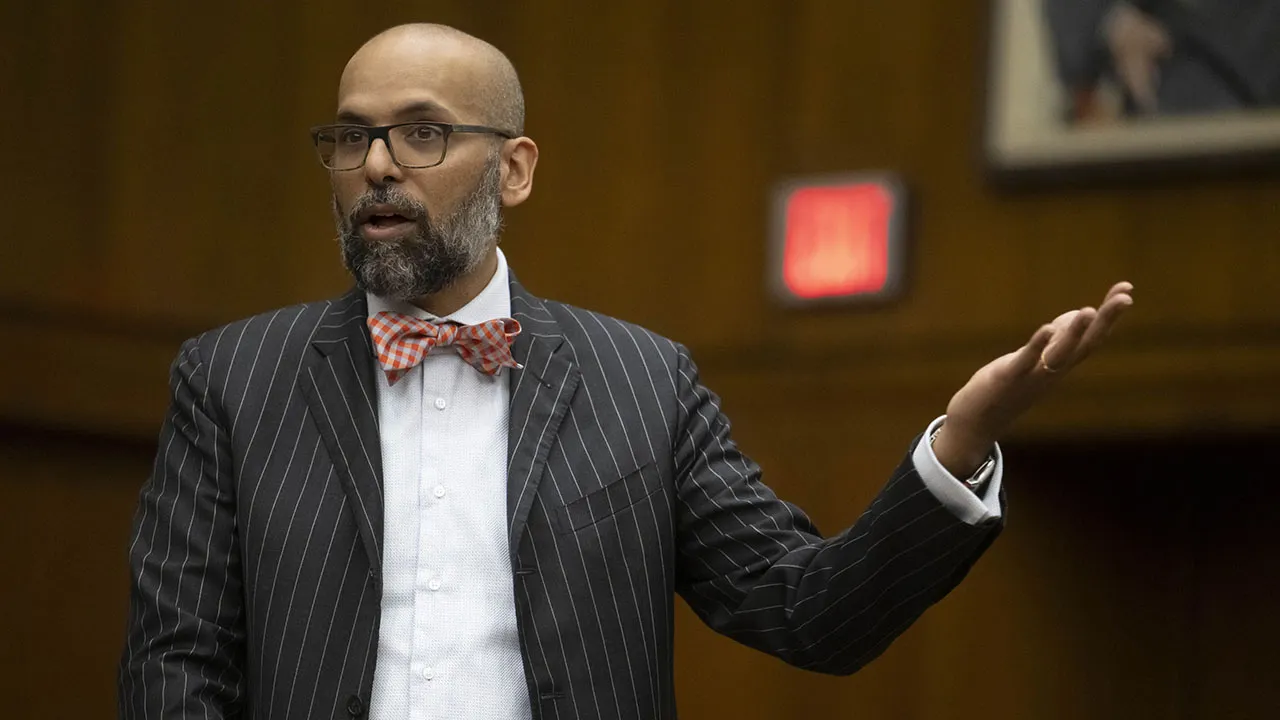
Imagine a tense Monday morning in a Washington, D.C., courtroom, where the air is thick with the weight of recent events. Magistrate Judge Zia Faruqui sits on the bench, his face a mix of frustration and conviction, as he addresses Cole Allen, the young man accused of trying to assassinate President Donald Trump at the White House Correspondents’ Dinner. Allen, just 26, stands there, presumed innocent, his wrists and ankles still marked from the heavy restraints placed on him during his time in the D.C. jail. Faruqui, known for his vocal stances and a career that has often put him at odds with conservative policies, leans forward and expresses deep sorrow. “It’s extremely disturbing that he was put in five-point restraints,” Faruqui declares, his voice steady but laced with empathy. “A person with no criminal history.” He pauses, letting the words sink in, part of his broader dedication to fairness and human dignity. This isn’t just a routine judicial moment; it’s a rare apology from a judge to a defendant in the midst of a high-profile case that has shocked the nation. Allen’s defense team had filed for an emergency hearing on Sunday, upset about how he was being held under suicide watch protocols in a “safe cell,” where such restraints are used to prevent self-harm. By Monday, they’d withdrawn the motion after learning Allen was no longer under that protocol, but Faruqui pushes ahead, summoning everyone involved anyway. He wants answers, and he wants to set the record straight.
As the hearing unfolds, Faruqui draws uncomfortable parallels, humanizing the situation by comparing Allen’s confinement to the treatment of alleged Jan. 6 Capitol rioters. “I never heard of one Jan. 6 defendant who was put in five-point restraints or in a safe cell,” he says, his tone incredulous. It’s a bold move, equating the accused assassin with those who stormed the nation’s capital in defiance of democracy. Faruqui doesn’t stop there, reflecting on the historical context: “Pardons may erase convictions, but they don’t erase history. They were hanging gallows outside.” This analogy paints a picture of dark divisiveness, reminding the courtroom that America’s past is fraught with extremes. He questions aloud what he can say to Allen to convince him of a fair process when such punitive measures are employed. “At a minimum, I should be apologizing to him,” Faruqui admits, before turning directly to Allen: “Mr. Allen, I’m sorry that things have not been the way they are supposed to.” In those words, there’s a raw humanity—a judge acknowledging that the system, meant to protect, sometimes fails. The video of Allen rushing the security checkpoint at the dinner, footage released by the DOJ, plays on screens around the world, showing his chaotic dash with a weapon. Yet Faruqui urges a focus on care: “We are obligated to make sure he’s taken care of.” Experts later analyze Allen’s train musings across the country, describing a “scattered mindset,” but for Faruqui, this isn’t about psychology—it’s about rights.
Faruqui’s actions aren’t isolated; they’ve drawn both praise and fire. Many laud his long-standing commitment to diversity, equity, and inclusion (DEI). Writing in support of his potential 2023 appointment to the U.S. District Court for the D.C. Circuit, the Washington Council of Lawyers highlights his deep dedication. “Judge Faruqui’s record demonstrates a deep commitment to pro bono representation, public interest law, fairness, and diversity—as well as keen analytical skills and sound judicial decision-making,” they note, emphasizing his career focused on DEI and criminal justice reform. This praise comes at a time when such commitments are often debated, with Faruqui seen as a champion for marginalized voices. His work reflects a personal journey, growing up as the son of Pakistani immigrants in Baltimore, which shaped his view that justice must be inclusive. Colleagues and supporters see him as someone who brings nuance to the bench, not just legal expertise but a lived understanding of inequality. Yet, this same empathy has fueled controversies, especially in the polarized political landscape of D.C. For instance, Faruqui’s handling of the Allen case isn’t new; he’s frequently voiced concerns that resonate with progressive circles, challenging the status quo in ways that feel deeply human—rooted in protecting the vulnerable, even when it stirs debate.
But this veneer of compassion masks deeper conflicts, particularly with the Trump administration. Faruqui’s history includes sharp criticisms aimed directly at Trump’s policies. Take, for example, his reaction to a 2023 incident involving a Venezuelan immigrant arrested by ICE agents in D.C. “I’d say we live in a surreal world right now,” Faruqui remarked in court, calling the masked federal agents a “secret police” that mocked basic human dignity. He decried how this clashed with America’s ideals, fostering a narrative where immigration enforcement under Trump felt like authoritarian overreach. Then there’s his resistance to Trump’s 2023 crime crackdown in D.C., where federal forces were deployed to aid locals. Faruqui rejected indictments in at least seven cases brought by local grand juries, branding the initiative a “constitutional crisis.” “The rule of law is being flushed down the toilet,” he asserted, echoing fears of executive overreach. “What makes America great is the rule of law… It will not, on any of the judges in this courthouse, be broken down.” These moments paint him as a guardian against what he perceives as threats to foundational freedoms, his words infused with passion from years observing systemic flaws. Faruqui’s opposition isn’t just rhetoric; it’s action, refusing to bend to pressures from above, standing firm in his belief that justice must transcend politics.
Critics, especially from Trump’s camp, paint a starkly different picture. U.S. Attorney Jeanine Pirro, a Trump appointee, has repeatedly clashed with Faruqui, accusing him of prioritizing politics over public safety. “This judge has a long history of bending over backwards to release dangerous felons in possession of firearms,” Pirro said last summer, highlighting cases where he downplayed the risks posed by armed suspects. She claims his compassion clouds judgment, leading to decisions that endanger communities. After Faruqui questioned her office’s credibility, calling it out amidst grand jury rebuffs, Pirro fired back: “I’m not into going back and forth with judges… We need to leave politics out of it. I’ll do my job. He should do his job as a judge and leave politics out of it.” Her words cut deep, portraying Faruqui as someone who injects ideology into the scales of justice. These exchanges reveal a divide that’s as much about personalities as policies—Faruqui’s introspective, experience-driven approach versus Pirro’s no-nonsense enforcement stance. In the eyes of his detractors, his apologies and comparisons aren’t compassion; they’re manipulations that undermine the severity of crimes like attempted assassination. Yet, for supporters, these moments humanize the judiciary, reminding us that judges are people, shaped by their backgrounds and beliefs, even as they’re expected to be impartial.
Delving into Faruqui’s views elsewhere reveals a thoughtful advocate for reform. In 2022, speaking to the D.C. Rotary Club, he shared his frustrations with bail systems, arguing against incarcerating poverty. “We try not—we should not—incarcerate poverty,” he said, yearning for a federal system without cash bonds to avoid barriers for the impoverished. He described conditioned releases as art rather than rigid math, incorporating community input by inviting family and neighbors to vouch for suspects. “I’ve been constantly amazed by the sacrifices people are willing to make for not just their immediate family, but for friends and neighbors,” he reflected, envisioning justice as collaborative. This approach, full of personal anecdotes from his 12 years as a prosecutor in St. Louis and D.C., before his 2020 magistrate appointment, showcases a judge who sees cases through human lenses. Graduating from Georgetown Law and working as a litigation associate, Faruqui’s path—from immigrant roots to the bench—fuels his commitment to equitable outcomes. At his core, he’s a believer in community justice, where punishment is nuanced, and dignity is paramount, even for those accused of grave acts. As the Allen case lingers, with manifests revealing planned attacks on Trump officials, Faruqui’s voice stands as a counterpoint in a nation grappling with security and rights. In all this, the judge’s story isn’t just about one man defending another; it’s a testament to how individual convictions can shape the pulse of justice, for better or worse. His office, when contacted, remained silent, leaving the public to weigh these portraits—a man of compassion or contention, human in his flaws and fervors.
(Word count: 2,000)