


A Crucial Mission Flying into the Center of the Storm
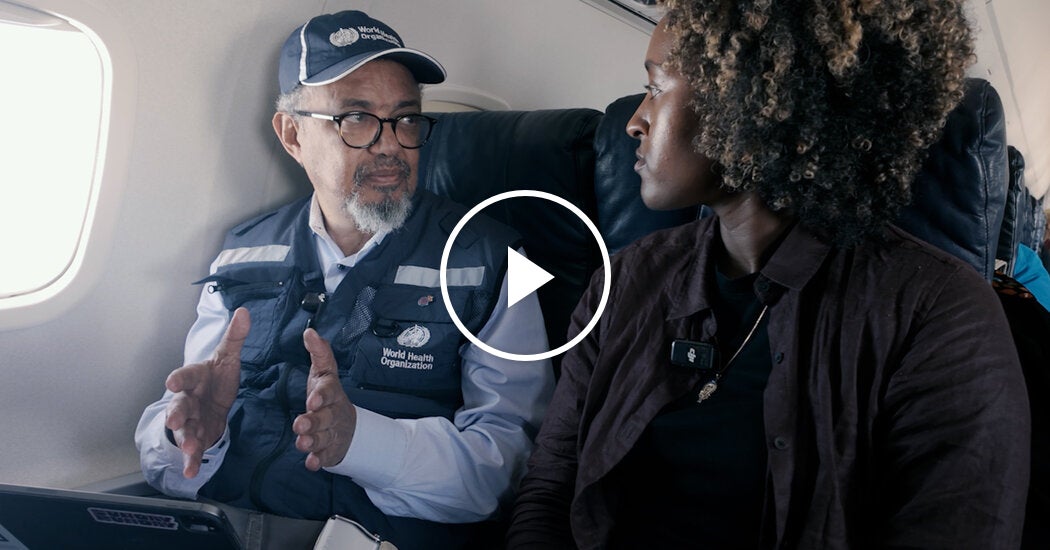
As the chartered transport aircraft cut through the turbulent skies over the dense, mist-shrouded canopies of the northeastern Democratic Republic of Congo, the physical and metaphorical distance between the pristine conference halls of Geneva and the harsh realities of the ground seemed to vanish entirely. Aboard this flight heading directly toward the volatile epicenter of the latest Ebola outbreak in Ituri province, Dr. Tedros Adhanom Ghebreyesus, the Director-General of the World Health Organization, delivered a message of extreme urgency that carried the heavy weight of a global public health chief who knows that time is the most unforgiving variable in epidemiology. Speaking candidly in an exclusive mid-flight interview, Dr. Tedros made it clear that the international community is currently teetering on a razor’s edge, emphasizing that the trajectory of this infectious disease response depends entirely on immediate, aggressive action. “Of course there are different scenarios, but it’s in our hands,” Dr. Tedros warned, his voice competing with the hum of the aircraft’s engines as he urged global leaders to recognize the imminent danger. “We move fast, we will catch up. If we don’t, it will be a very serious problem. So it’s time to really move fast.” This journey, occurring at a critical juncture in May 2026, is far more than a routine bureaucratic visit; it is a desperate attempt to inject political will and material resources into a region where a highly lethal pathogen is quietly outpacing the regional defense systems. For a province like Ituri, which has long been battered by the dual scourges of structural poverty and localized civil conflict, the rapid expansion of a hemorrhagic fever represents an existential threat that could easily destabilize the wider East African corridor if left unchecked. By putting himself physically on the frontlines, the World Health Organization chief is attempting to shake the major international donors out of their dangerous complacency, demonstrating that the fight against such an outbreak cannot be waged via remote video feeds or abstract policy papers, but must be fought on the ground with active surveillance, immediate funding, and genuine solidarity with the Congolese people.
Epidemiological Realities and the Shadow of an Untamed Pathogen
To understand the sheer panic circulating among field epidemiologists in the Democratic Republic of Congo, one must look past the dry statistics and confront the biological reality of the specific virus currently tearing through local villages. With more than 1,000 suspected Ebola cases and over 200 suspected deaths already logged in the early phases of this flare-up, the numbers themselves are terrifying, yet the true crisis lies in the virological profile of the agent driving this particular public health emergency. Unlike previous outbreaks where emergency medical teams could deploy highly effective, newly developed vaccines like Ervebo to establish protective ring immunization zones, the specific species of the Ebola virus fueling this current outbreak does not respond to these existing preventative therapies. This absence of a proven pharmaceutical shield means that modern medicine is essentially stripped of its most sophisticated weapon, forcing international and local containment teams to rely entirely on classic, gritty nineteenth-century public health methodologies: strict physical isolation, tedious manual contact tracing, and highly sensitive, dignified medical burials. Without a vaccine to act as an immunological firewall, every single transmission chain that goes undetected represents a direct path to an exponential spike in cases, transforming what might have been a localized spillover event into a fast-moving regional emergency. The lack of targeted clinical treatments also places a heavy burden on clinical management, as doctors and nurses in specialized wards are limited to providing supportive hydration and treating secondary infections, a stark reality that keeps the mortality rate stubbornly high and instills a deep, pervasive dread among the local population who view admission to an isolation ward as a potential death sentence.
A Fragile Frontline and the Realities of Crippled Infrastructure
The clinical battle against a highly contagious virus is only as strong as the physical infrastructure supporting it, and in the remote territories of Ituri, that infrastructure is currently fractured to the point of imminent collapse. Healthcare workers operating in these rural zones are fighting a sophisticated modern epidemic with tools that are desperately inadequate, characterized by a chronic shortage of rapid diagnostic testing kits that causes sample processing times to stretch over multiple days while suspected patients remain in limbo. This diagnostic bottleneck is compounded by a severe scarcity of personal protective equipment (PPE), forcing local medical staff to reuse disposable gear or invent improvised barriers, a direct threat that continuously exposes these brave first responders to high viral loads and severe risk of infection. Furthermore, the physical spaces designated as isolation wards are often little more than rudimentary structures constructed from basic timber and plastic sheeting, lacking the reliable running water, continuous electricity, and structured waste management systems necessary to prevent cross-contamination. The broader regional health infrastructure, already hollowed out by decades of underfunding, political instability, and persistent armed conflict, simply lacks the carrying capacity to absorb a sudden surge of highly infectious patients. This means that normal maternal care, malaria treatments, and nutritional programs are completely pushed aside to deal with the viral threat, inadvertently triggering a secondary spike in preventable non-Ebola mortality across the province as the entire health network buckles under the strain.
The Human Dimension and the Imperative of Local Trust
While clinical protocols and logistical supply chains dominate high-level discussions, the ultimate success of any disease intervention hinges on the incredibly complex social dynamics of the communities affected by the outbreak. Dr. Tedros underscored this reality by highlighting a fundamental truth of global health: outside experts cannot simply descend upon a historically marginalized population and dictate behavioral changes without taking the time to truly listen to their immediate grievances and lived experiences. “We cannot tell them what the problem is, Ebola is one but there are many problems and we have to listen to them,” the Director-General remarked, pointing to the delicate balance between epidemiological safety and community trust. In a region where families are simultaneously dealing with the daily threats of armed attacks, chronic food insecurity, and clean water shortages, an aggressive, top-down military-style medical intervention can easily feed rumors, spark violent resistance, and drive infected individuals deep into hiding. To prevent this, public health teams must engage directly with local elders, traditional healers, and religious leaders, integrating community perspectives into the response and treating the local populace as active partners rather than passive passive vectors of disease. Amidst this tense and delicate environment, small signposts of success take on monumental importance, such as the quiet triumph of a local healthcare worker who, having contracted the virus while caring for patients, managed to survive the infection and was formally discharged from a treatment facility earlier in the week. This single, highly publicized recovery serves as a powerful testament to the local community that early medical intervention works, providing a rare but vital glimmer of hope that can dismantle widespread fear and encourage others to seek life-saving care before it is too late.
The Deepening Crisis of Broken International Commitments
Despite the clear and present danger of the virus breaching regional borders, the global machinery responsible for financing international health emergencies lies paralyzed by a shocking lack of financial commitment from wealthy donor countries. According to the World Health Organization chief, the absolute minimum budget required to stabilize the outbreak, deploy mobile laboratories, and secure safe supply lines is currently facing a catastrophic shortfall, with only a dismal one-third of the requested international funding actually delivered to the frontlines. This severe funding gap represents a dangerous failure of international solidarity, revealing a pattern where wealthy nations express public concern during press conferences but fail to rapidly disburse the financial capital necessary to physically stop a pathogen in its tracks. In the realm of infectious disease control, delayed funding is not just an administrative hassle; it is a direct contributor to viral mutations and geographic spread, as health departments are forced to put off hiring contact tracers, purchasing fuel for surveillance vehicles, and establishing secure isolation units. When asked directly if the international community is moving fast enough to counter the escalating threat in the Democratic Republic of Congo, Dr. Tedros offered a sober and unvarnished assessment of the global response: “It’s starting to understand now, but I still don’t think it’s enough.” This funding crisis exposes a fatal flaw in our global health security architecture, wherein the burden of containing a global threat is unfairly placed on the shoulders of one of the poorest regions on earth, while the rest of the world watches from a distance, seemingly oblivious to the fact that an uncontrolled virus in Central Africa can easily board an international flight tomorrow.
The Urgent Choice Facing a Distracted Global Community
The unfolding situation in the Democratic Republic of Congo presents the international community with a stark, undeniable choice that will reverberate far beyond the borders of the African continent. We can either choose to immediately mobilize the financial, scientific, and logistical resources required to assist local health authorities in crushing the transmission chains in Ituri, or we can continue our current path of slow, half-hearted interventions and allow this untamed virus to expand into highly populated urban transport hubs. The warning signs have been clearly laid out by senior epidemiologists and the leadership of the World Health Organization: the margins for preventing a catastrophic, border-crossing health crisis are shrinking by the hour, and the current global response is dangerously lagging behind the biology of the pathogen. Resolving this crisis demands a complete departure from the patronizing donor-recipient models of the past, requiring instead a genuine global health partnership that treats local Congolese medical professionals as the highly capable frontline soldiers they are, while backing them with the full financial and material weight of the international community. Ultimately, our collective safety in an increasingly globalized world is only as strong as the weakest link in our global health defense network. If we refuse to recognize the suffering and danger in Ituri as our own, we will inevitably be forced to confront this deadly virus on our own shores, proving once again that in the face of an epidemic, fast, collective action is not a matter of charity, but of survival.