

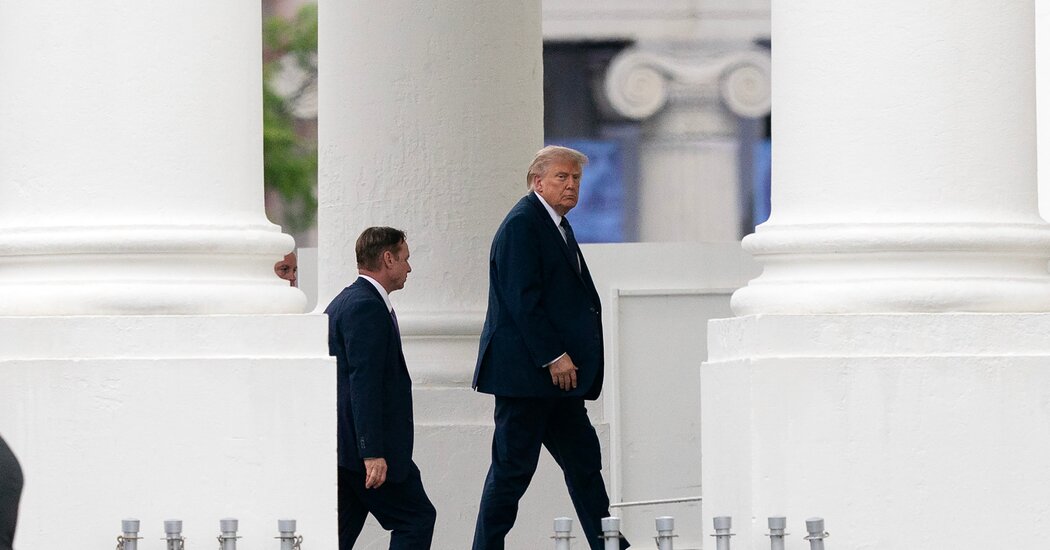
Late on a Friday evening, a time traditionally reserved in the political arena for quiet disclosures, the White House released a three-page clinical window into the life of the nation’s oldest sitting president. Compiled by Dr. Sean P. Barbabella, the official physical exam results from Walter Reed National Military Medical Center sought to reassure an anxious public that the 79-year-old commander-in-chief remains in excellent health, exhibiting robust cardiac, pulmonary, and neurological functions. Yet, reading between the lines of this glowing report reveals a deeply human story about the inevitable friction between biological aging and the rigorous demands of the presidency. Donald Trump, standing on the precipice of his eighth decade, resides in a realm where physical vulnerability is treated as a political liability, transforming a routine medical check-up into an elaborate public relations exercise. The report does not merely list vital signs; it paints a picture of an elder statesman fighting to project absolute vitality while his body quietly navigates the natural, everyday wear and tear that comes with reaching late life under the harshest spotlight in the world. As the oldest man ever inaugurated as president, his trips to Walter Reed are more than clinical evaluations—they are high-stakes performances where the natural vulnerabilities of human aging are continuously managed, contextualized, and presented to a watching world.
At the heart of this human health narrative is the cardiovascular system, the silent engine of survival, which for the president has required increasingly close monitoring. The Walter Reed assessment detailed that he underwent an echocardiogram to capture high-definition ultrasound images of his heart, an escalation in testing prompted by a diagnosis of chronic venous insufficiency—a condition where the veins in the lower extremities struggle to efficiently pump blood back up to the chest. Beyond this structural challenge, the president’s medical history is marked by a long-running battle with high cholesterol, managed daily through a combination of prescription medications, Crestor and Zetia. However, the most human revelation in this section lies in his rejection of his doctors’ advice regarding his daily preventive regimen. Despite explicit medical guidelines and direct pleas from his physicians to transition to a lower, safer dosage of aspirin, Trump steadfastly continues to take a high daily dose to stave off heart attacks and strokes. This stubborn insistence on his own pharmaceutical choices over professional medical advice speaks to a classic clinical phenomenon: a patient of advanced years who insists on maintaining personal autonomy and taking control of their own survival, even when it runs counter to modern medical consensus.
Equally fascinating is the intersection of the president’s cognitive performance and his physical struggles with weight, both of which are common anxieties for millions of aging individuals. On the neurological front, the report highlights his perfect score of 30 out of 30 on the Montreal Cognitive Assessment (MoCA), a standard ten-minute screening tool designed to detect early indicators of dementia, Alzheimer’s disease, or other cognitive impairments. While this flawless score is held up as a triumph of mental acuity, the physiological metrics tell a quieter, more vulnerable story of weight gain and self-image. The scales at Walter Reed revealed that the president has gained 14 pounds since his previous exam, bringing his weight to 238 pounds—a number that edges him dangerously close to the threshold of clinical obesity. In a rare moment of candid relatability, Trump has publicly mused about his acquaintances who utilize modern weight-loss medications, colloquially referring to them as “the fat drug” and admitting, with characteristic humor and vulnerability, that he probably should be on them himself. Instead, Dr. Barbabella’s report outlines a familiar list of preventive counseling measures, advising the president on diet, weight loss, and increased physical activity—demands that are notoriously difficult for any average citizen to integrate into their daily lives, let alone a global leader navigating an incredibly high-stress, highly visible lifestyle.
Aging under a microscopic public gaze means that even minor physical blemishes are magnified into national talking points, requiring the White House to employ careful narrative management to explain away the visible signs of a human body in transition. Recently, observers have noticed prominent bruising on the president’s hands, a symptom that his communications team initially blamed on vigorous handshakes, leading Trump to obscure the marks with cosmetic makeup to preserve an image of flawless strength. When bruises subsequently surfaced on his other hand, the explanation shifted to an accidental collision with a table, exacerbated by the thinning effects of his self-prescribed high-dose aspirin regimen. Dr. Barbabella took the unusual step of validating both of these colloquial explanations in his official report, categorizing the hematomas as common, benign side effects of aspirin therapy. Similarly, the persistent swelling in the president’s legs—a direct consequence of his chronic venous insufficiency—was noted as having improved compared to the prior year, despite the fact that his previous medical report conspicuously omitted any mention of leg swelling altogether, instead praising his joints and muscles for having a full range of motion. This delicate dance of acknowledging physical defects only when they become impossible to hide highlights the profound human struggle of trying to look invincible while dealing with the mundane, occasionally embarrassing realities of physical decline.
While the three-page report offers a glimpse into some aspects of the president’s physiology, it is equally defined by what it chose to leave in the shadows, reflecting a broader tension between public transparency and personal medical privacy. For instance, the public had previously observed the president sporting a noticeable neck rash, which his physician had briefly addressed with a vague mention of a prescribed medicated cream without ever diagnosing the underlying skin condition. In the recently released report, the entire dermatology section remains completely silent on the status of this rash or the nature of his skin treatments, leaving a void of information. This selective transparency is a deeply human strategy; when faced with ailments that do not fit a narrative of perfect strength, individuals often choose containment over exposure. However, for a head of state, these omissions spark intense curiosity and concern, as the public is left to wonder whether such dermatological conditions are minor annoyances or symptoms of larger systemic issues, illustrating how the withholding of clinical details can sometimes generate far more anxiety than the simple truth would.
Ultimately, this latest medical update cannot be viewed in isolation; it represents the latest chapter in a decade-long tradition of theatrical, highly protective medical communications surrounding Donald Trump. For years, his physicians have engaged in unprecedented hyperbole to describe his constitution, from Dr. Harold Bornstein’s famous 2015 declaration that Trump would be the healthiest president in history, to Dr. Ronny Jackson’s later assertion that with a slightly better diet, the president could have lived to be 200 years old. This pattern of rosy, abbreviated disclosures peaked during his recent campaign journey, where he refused to release standard, basic health metrics like blood pressure, cholesterol levels, or prescription records, offering instead vague, single-page assurances of supreme fitness. The human drive to project immortality and absolute vitality is as old as leadership itself, yet as Trump approaches his 80th birthday, the gap between political mythology and biological reality inevitably narrows. By analyzing these reports not as flawless declarations of health but as deeply human documents, we gain a more empathetic understanding of an aging leader wrestling with his own mortality, determined to demonstrate to the world that his spirit and body remain untouched by the relentless march of time.