


The Intersection of Sport and Biosecurity: The White House’s High-Stakes Ultimatum to the DRC World Cup Team
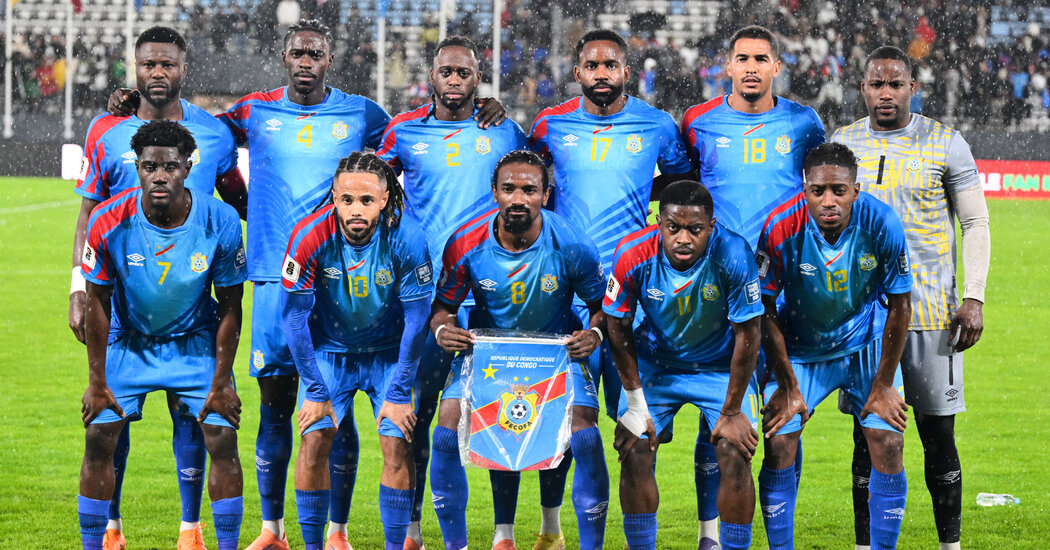
In an unprecedented move that highlights the growing tension between international sports and global health security, the White House has delivered a strict, non-negotiable ultimatum to the Democratic Republic of Congo’s national soccer team as they prepare for the world’s most prestigious athletic stage. Federal authorities have mandated that the entire squad, known affectionately by their fans as the Leopards, must undergo a rigorous, three-week quarantine in Belgium before they are permitted to travel to the United States to participate in this year’s highly anticipated FIFA World Cup. This decisive executive action, which has sent shockwaves through the sporting world, comes in response to an increasingly volatile and deadly Ebola outbreak that has taken root in the conflict-ridden eastern provinces of the African nation. Andrew Giuliani, serving as the executive director of the White House Task Force on the FIFA World Cup 2026, made the administration’s uncompromising stance abundantly clear during a Friday interview with ESPN, emphasizing that the team must strictly adhere to the isolation protocols. “They need to maintain that bubble or they risk not being able to travel to the United States,” Giuliani asserted, adding a stark warning that left no room for bureaucratic ambiguity: “We cannot be any clearer.” This aggressive intervention underscores a broader, highly protective biosecurity posture by the U.S. government, placing national health defense squarely above the interests of international athletic competition and establishing a strict precedent for how foreign delegations from high-risk health zones will be handled in a hyper-connected, post-pandemic world.
Constructing the Belgian Bubble: Logistics, Isolation, and the Fragile Hopes of the Leopards
The administrative and physical execution of this quarantine has created an intricate logistical puzzle, forcing the Congolese soccer delegation to pivot instantly from standard athletic preparation to tight clinical containment. To comply with the White House directive, the team has established an isolated encampment in Belgium, utilizing the European nation as a strategic buffer zone because a significant portion of their roster already plays professionally for various European clubs. However, the situation is far more complicated for the domestic coaching staff, medical support personnel, and local players who had to travel directly from the Democratic Republic of Congo, bringing them under intense scrutiny from international epidemiologists. Giuliani noted that while many of the elite players were already based in Europe, the threat of cross-contamination from staff traveling from Central Africa necessitated a strict, absolute separation of the team from the outside world. This meant the immediate cancellation of their planned training camp in Kinshasa, the Congolese capital, to prevent any potential exposure before the delegation converged. The pressure on the team is immense; they must keep their “bubble” perfectly intact for 21 consecutive days—the maximum incubation period for the Ebola virus—prior to their scheduled flight to Houston on June 11. The White House has made it clear that any secondary cohorts or late arrivals must establish entirely separate quarantine protocols, warning that if even a single member of the traveling party displays symptoms or tests positive, the entire team’s dream of competing in the World Cup will be instantly dissolved.
The Epidemic in the Shadows: War, Displacement, and the Silent Spread of Ebola in Eastern Congo
To understand the severity of the U.S. government’s drastic measures, one must look closely at the catastrophic humanitarian crisis unfolding half a world away in the dense forests and volatile territories of eastern Congo. According to official reports from the World Health Organization (WHO), the active Ebola outbreak has already claimed more than 170 lives and resulted in over 750 confirmed and suspected infections, with experts warning that these figures likely represent a conservative estimate of a rapidly escalating disaster. This particular strain has proved exceptionally difficult to track because it emerged in a region ravaged by decades of brutal, armed conflict—a geopolitical nightmare where militia violence has displaced more than a million civilians and systematically destroyed the local healthcare infrastructure. In this chaotic environment, where medical clinics are frequently attacked and public distrust of foreign aid is high, a rare and highly lethal form of the virus managed to circulate undetected for weeks before health authorities could identify the primary transmission vector. While the WHO has officially assessed the risk of this outbreak as exceptionally high at both the national and regional levels, it has kept its global threat projection at “low,” suggesting that localized containment remains possible. However, the sheer unpredictability of the conflict-ridden region, coupled with the high mobility of displaced populations crossing porous borders into neighboring countries, has fueled deep anxieties in international capitals, prompting the United States to reject more conservative containment guidelines in favor of absolute prevention.
Leaning in Harder: The Trump Administration’s Unprecedented Approach to Pandemic Containment
The uncompromising stance taken against the Congolese soccer team is reflective of a fundamental shift in American foreign and domestic biosecurity policy, with the Trump administration adopting a far more aggressive containment strategy than saw deployment during previous global health emergencies. Confronted by the simultaneous threats of this volatile Ebola outbreak and separate, lingering concerns over localized hantavirus transmissions, federal officials have shown a willingness to enforce strict travel bans and mandatory quarantines that exceed international norms. In his interview with ESPN, Andrew Giuliani acknowledged this divergence in strategy, openly declaring that the Centers for Disease Control and Prevention (CDC) is “leaning in even heavier than the World Health Organization is at this point.” This assertive approach is designed to eliminate even the most marginal risk of transmission, with Giuliani stating flatly, “We want to make sure that there is nothing that is going to come in or near our borders here on this.” This hyper-vigilant posture has drawn mixed reactions from global health experts, some of whom have expressed surprise and mild concern over the administrative overreach, noting that such rigid mandates can sometimes discourage international cooperation and transparency. The administration’s aggressive measures have not been confined to foreign athletes either; they have also taken the controversial step of enforcing strict containment protocols on American medical doctors and humanitarian aid workers who were exposed to Ebola while treating patients in foreign hospitals, signaling a broad policy of defensive isolation.
The Fractured Border: How the 30-Day African Travel Ban Redefines Transnational Movement
Beyond the confines of the football pitch and the athletic arena, the White House’s response to the African health crisis has manifested as a sweeping disruption of international travel, redefining the boundaries of transnational security and diplomacy. Just days before issuing the ultimatum to the Congolese soccer team, the Trump administration enacted a sweeping executive order that temporarily blocked entry to the United States for any individual without a U.S. passport who had set foot in the Democratic Republic of Congo, Uganda, or South Sudan within the preceding three weeks. This aggressive travel ban, scheduled to remain in effect for at least 30 days, represents a dramatic tightening of the nation’s borders and has cast a wide shadow over diplomatic relations, international commerce, and academic exchanges across East and Central Africa. By group-isolating countries that border the outbreak’s epicenter, the federal government aims to create a geofenced shield against any potential transmission vectors, completely bypassing the more targeted, individual screening processes favored by international medical bodies. This broad-brush policy has sparked fierce debate among policymakers and human rights advocates, who argue that such sweeping bans can economically cripple vulnerable nations and hinder the international flow of medical personnel vital to halting the outbreak at its source. Yet, for an administration that has consistently prioritized strict border security and nationalist defense, the temporary suspension of normal travel protocols is viewed as a necessary, rational sacrifice to guarantee the domestic safety of the American public.
The Road to Houston: Redefining Athletic Resilience Under the Shadow of Global Quarantine
As the clock ticks down toward the World Cup, the Congolese national team faces a psychological and physical trial that transcends the boundaries of standard athletic training, turning their journey to the tournament into an epic of pure survival and resilience. Should their Belgian quarantine remain completely unblemished, the Leopards will finally be permitted to touch down in Houston, Texas, on June 11, leaving them with a mere six days to acclimate to the sweltering Texas heat, overcome severe jet lag, and prepare for their monumental opening match against a formidable Portuguese national team on June 17. The hurdles they must overcome are unprecedented; while their competitors are fine-tuning their tactical schemes in open training camps and playing friendly warm-up matches, the Congolese players are physically confined to a sterile hotel environment, their every movement monitored by medical staff, their collective morale tested by the anxiety of potential infection or sudden disqualification. Yet, this high-stakes ordeal has also transformed the team into a powerful symbol of their nation’s enduring spirit, representing a population that has long endured the compounding tragedies of war, poverty, and disease. When they finally step onto the pitch in Houston, the match will be much more than a quest for soccer glory; it will stand as a testament to human endurance, showing the world that even in the face of strict biosecurity blockades, geopolitical isolation, and the terrifying specter of an epidemic, the passion for sport can bridge the deepest divides and shine through the darkest of times.