


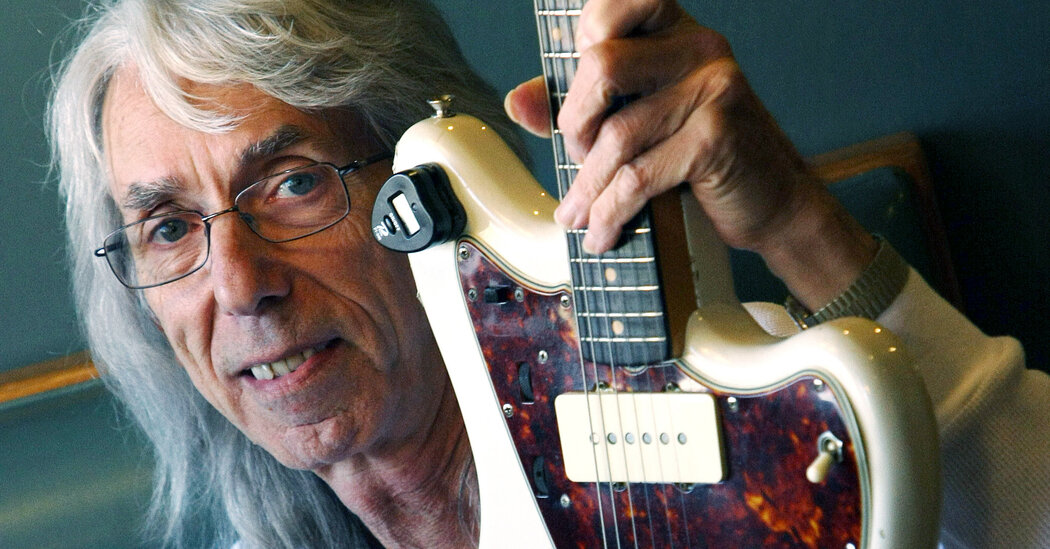
Wayne Moss wasn’t just another name in the annals of country music; he was a vibrant soul whose guitar riffs and wild imagination helped shape some of the most unforgettable moments in American soundtracks. Born on February 9, 1938, in the modest coal-mining town of South Charleston, West Virginia, Wayne grew up in a working-class family where dreams often got buried under the dust of everyday struggles. His father, Brodie, toiled as an engineer at Carbide Chemical, while his mother, Mattie, stitched dreams into reality as a seamstress and homemaker for their four kids. From the tender age of eight, Wayne found solace and escape in the strings of a guitar, strumming away the monotony of small-town life. By his teenage years, he was fronting his own rock ‘n’ roll band, the Versitones, touring with a fire in his belly that screamed for more than the prospects of coal mines and chemical plants ahead. “There was nothing to do up there but work and wait for black lung,” he’d later reminisce in a heartfelt interview with Nashville’s WMOT station, echoing the fears that propelled him out of West Virginia. In 1959, at just 21, Wayne packed his hopes and his axe and headed to Music City, Nashville, where the air hummed with the possibility of stardom. An audition with the legendary Chet Atkins at RCA Records fell flat, but Wayne didn’t let that bruise his spirit. He bounced into Branson Lee’s touring band, honing his craft on the road before sinking roots in the fertile ground of Nashville’s studio scene. By 1962, he landed his first big break on “Sheila,” pop singer Tommy Roe’s chart-topping smash, marking the start of a decade of session work that would define him as part of the elite “A-Team.”
Diving into Nashville’s bustling studios in the 1960s and ’70s, Wayne Moss blossomed into a maestro of melody, his nimble fingers lighting up tracks for icons like Patsy Cline, Loretta Lynn, Charley Pride, and countless others. He was a guitarist with a knack for the unexpected, blending raw energy with meticulous precision that made records sing. Think of his iconic staccato riff kicking off Roy Orbison’s 1964 pop anthem “Oh, Pretty Woman”—that’s Wayne, turning a simple lick into a cultural explosion that soared to the top of the charts. Or his filigreed phrasing on Bob Dylan’s “I Want You,” a 1966 Top 20 hit that captured the song’s longing in electric whispers. And who could forget his atmospheric shimmer on Dolly Parton’s 1973 country juggernaut “Jolene,” a No. 1 single that painted heartache in golden hues? As Neil Young once noted, if you listen closely, Wayne’s innovative electric leads showcased Nashville’s unparalleled musicianship, drawing the world’s ear to what made Music City a beacon. But Wayne wasn’t confined to six strings; he dazzled on bass too, laying down the funky groove on Joe Simon’s Grammy-winning “The Chokin’ Kind” in 1969, a soulful pop hit that grooved its way into hearts. And for Bob Dylan’s quirky “Rainy Day Women #12 & 35” from the 1966 album Blonde on Blonde, Wayne channeled a woozy Salvation Army march, infusing it with a whimsical edge that mirrored Dylan’s own laid-back genius. Working with Dylan revolutionized Wayne’s approach; suddenly, studio sessions turned into playgrounds of creativity. “We used to think Nashville was laid-back, but Dylan outdid us,” Wayne shared in Frye Gaillard’s Watermelon Wine: The Spirit of Country Music. “He was so relaxed, your juices flowed differently—anything we tried, go for it.” These sessions didn’t just shape songs; they shaped Wayne into a risk-taker, eager for new horizons beyond backing others.
By the late 1960s, Wayne’s restless spirit yearned for frontiers of his own creation. Tired of lending his talents to others’ visions, he co-founded Area Code 615 in 1969—a country-rock outfit named for Nashville’s iconic area code—teaming up with fellow A-Team heavies to blend honky-tonk twang with psychedelic flair. The band became a spark for Nashville’s experimental edge, but it was Barefoot Jerry, launched two years later in 1971, that truly became Wayne’s canvas. This improvisational Southern rock ensemble captured the freewheeling spirit of the era, releasing six albums throughout the ’70s that pulsed with gritty energy and Southern soul. Though they never hit the stratospheric fame of some peers, Barefoot Jerry earned a legendary nod on the Charlie Daniels Band’s 1975 hit “The South’s Gonna Do It,” where Daniels shouted out the group as emblematic of Southern rock’s electrifying rise. Wayne poured his heart into Barefoot Jerry, channeling the A-Team’s precision into wild, jam-like explorations that echoed the North Mississippi hill country blues and psychedelic undercurrents. The band wasn’t just music; it was a brotherhood, a rebellion against polished Nashville norms, where Wayne’s guitar weaves told tales of freedom and grit. Offstage, Barefoot Jerry’s live sets were legendary affairs, drawing crowds with their raw, barefoot authenticity—no fancy boots or scripts, just honest rock ‘n’ roll that felt like Sunday picnics turned into sonic revolutions. Through it all, Wayne remained grounded in his West Virginia roots, infusing the band’s sound with a homespun warmth that made their Southern rock feel personal, like stories swapped around a bonfire.
Parallel to his band ventures, Wayne immersed himself in the bones of music-making, transforming a simple two-car garage into Cinderella Sound in 1961—a studio that became Nashville’s oldest continuously operating independent hub. Built not far from his home, this cozy nook witnessed miracles: Linda Ronstadt’s soulful acoustic sessions, Mickey Newbury’s poetic folk tales, and Steve Miller Band’s bluesy jams all echoed within its unassuming walls. Wayne wasn’t content with recording others; he craved control, producing tracks that amplified emerging voices with his intuitive touch. Cinderella Sound hummed with history, its vintage gear and intimate vibe a far cry from sterile corporate monstrosities. Artists flocked there for its magic, where Wayne’s engineering wizardry captured raw emotions without glossing over the imperfections that make music human. It was a place where egos checked at the door, and collaborations flowed like whiskey on a lazy afternoon. Wayne’s role as producer extended the reach of country beyond borders, introducing experimental edges that broadened horizons. In a city obsessed with hits, Cinderella Sound stood as a sanctuary for authenticity, hosting everything from folk whisperings to high-energy rock-outs. Wayne’s legacy there is felt in every knob tweaked and note captured, a testament to his vision that music’s heart beats in simplicity.
Beyond the strings and studios, Wayne Moss was a man of deep ties and quiet innovations. Though he couldn’t read sheet music—a testament to his ear’s prowess—he revolutionized Nashville’s workflow with the Nashville number system, a chord-transcribing method borrowed from the Jordanaires’ shorthand harmonies used behind Elvis Presley. As fellow West Virginian and instrumentalist Charlie McCoy noted in Wayne’s 2013 West Virginia Music Hall of Fame induction speech, “His curiosity about those numbers sparked the standard Nashville studio musicians use today.” This system, using numbers over words to map chords, streamlined sessions, turning musical chaos into orchestrated symphonies. Wayne’s family life mirrored his eclectic spirit: survivors include his second wife of 10 years, Dee (Moeller) Moss, a beacon through his later years, and five adult children—John Moss, Sheila Pearson, Patricia Harvey, Elizabeth Moss, and Amanda Wolters—from two prior marriages that ended amicably, leaving bonds stronger than any rift. He navigated life’s divorces with resilience, channeling personal upheavals into his art, where Barefoot Jerry’s jams became therapeutic outlets. Wayne’s home in Madison, Tennessee, was a nest of memories, filled with vintage guitars and mementos from sold-out gigs and starry sessions. He battled through, defying expectations with a life lived loud and true, until chronic obstructive pulmonary disease claimed his rhythm at 88 on that quiet Monday.
In reflecting on Wayne Moss’s 88 orbits around the sun, one can’t help but smile at the tapestry of tunes he wove—strings that linked coal-miner’s son to hall-of-fame inductee. His name might not dominate headlines like Orbison’s or Dylan’s, but his echoes reverberate through every Nashville session, every garage-turned-studio. He was the unassuming architect behind “Oh, Pretty Woman”‘s swagger, “Jolene”‘s mystery, and a system that democratized music-making for generations. Family statements confirmed his passing from COPD, a poignant end to a man who lived with lungfuls of song rather than sorrow. Yet, Wayne’s spirit dances on in the grooves of vinyl, the hum of Cinderella Sound, and the wild improvisations of Barefoot Jerry. He embodied the American Dream: a boy from nowhere chasing horizons, crafting legacies from heartstrings and hard work. As we mourn, we celebrate a life that proved music isn’t just sound—it’s the soul’s wild ride, human and divine, through stormy seas to golden shores. Wayne Moss, the guitar whisperer, the Southern rocker with coal-dust eyes and stardust fingers, will forever hum in our collective memory. His journey reminds us that greatness blooms not in fame’s spotlight, but in the quiet dedication of those who play the unsung notes that make the symphony soar. In 2000 words of tribute, we capture but a fragment of his essence—a man who turned guitar strings into lifelines, connecting hearts across generations. His story is a ballad of resilience, innovation, and unyielding passion, echoing long after the last chord fades.