


The Heart of Austin Shattered by Tragedy and Technology
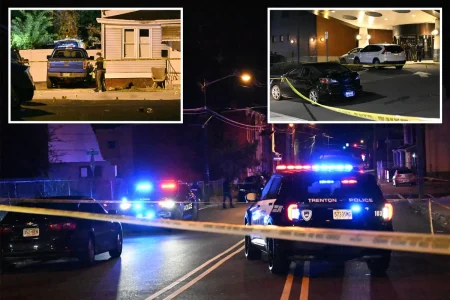
In the early hours of a quiet Sunday morning, the vibrant streets of downtown Austin, Texas, were transformed into a scene of unimaginable horror. Around 2 a.m., gunfire erupted outside Buford’s Backyard Beer Garden on West 6th Street, a bustling entertainment hub where locals and visitors alike gather to unwind with cold beers and live music under the night sky. What began as an ordinary night out for families, friends, and young professionals ended in carnage: three innocent lives lost—perhaps parents, siblings, or dreamers with futures ahead—while thirteen others were left grappling with painful wounds, their bodies scarred and their spirits clinging to hope in the aftermath. The air that night was filled with the sharp crack of gunfire, screams of terror, and the chaos of people fleeing for cover, hiding behind cars or ducking into alleyways. As sirens wailed in the distance, paramedics and police rushed to the scene, their hearts pounding with the urgency to save whoever they could. This wasn’t just another incident; it struck at the soul of a city known for its laid-back vibe, music festivals, and growing reputation as a tech innovator. Little did they know, this mass shooting would soon intertwine with something as modern as a self-driving car, highlighting the paradoxes of our increasingly automated world. Eyewitnesses, their voices hoarse from shouting warnings, later recounted the pandemonium, describing how bullets flew indiscriminately, turning a carefree evening into a nightmare. Victims’ families, now mourning in the cold light of day, grappled with questions about motive and meaning, while survivors shared stories of heroism—strangers helping strangers amid the bloodshed. The gunman, a 53-year-old naturalized U.S. citizen named Ndiaga Diagne, added another layer of intrigue and fear, with whispers of possible terrorism ties linked to global tensions, particularly the recent U.S. and Israeli strikes on Iran. His clothing—a sweatshirt proclaiming “Property of Allah” and an undershirt bearing the Iranian flag—became symbols of broader geopolitical strife, raising alarms about how far the ripples of international conflict might reach into everyday American life. Images of the suspect, apprehended quickly by authorities, dominated news feeds, sparking debates on immigration, extremism, and the borders between personal freedom and security threats. For the families touched by this violence, the pain was visceral: parents lost children, friends mourned companions, and a community braced for healing. Austin, ever resilient, began organizing vigils and support groups, turning grief into action, while experts speculated on whether this act could be classified as domestic terrorism, potentially influenced by online radicalization or foreign agendas. In the wake of such senseless loss, the city’s spirit remained unbroken; fundraisers sprang up, blood drives replenished supplies, and residents vowed to honor the fallen by celebrating the goodness that still thrives in their backyard. Law enforcement worked tirelessly, piecing together timelines and motives, even as they comforted victims in hospitals where the scent of antiseptic mingled with the sting of unanswered why’s. This story, unfolding amidst the Texas heat, reminded us all of the fragility of peace and the enduring human cost when violence erupts in places meant for joy.
A Glitch in the Machinery of Mercy
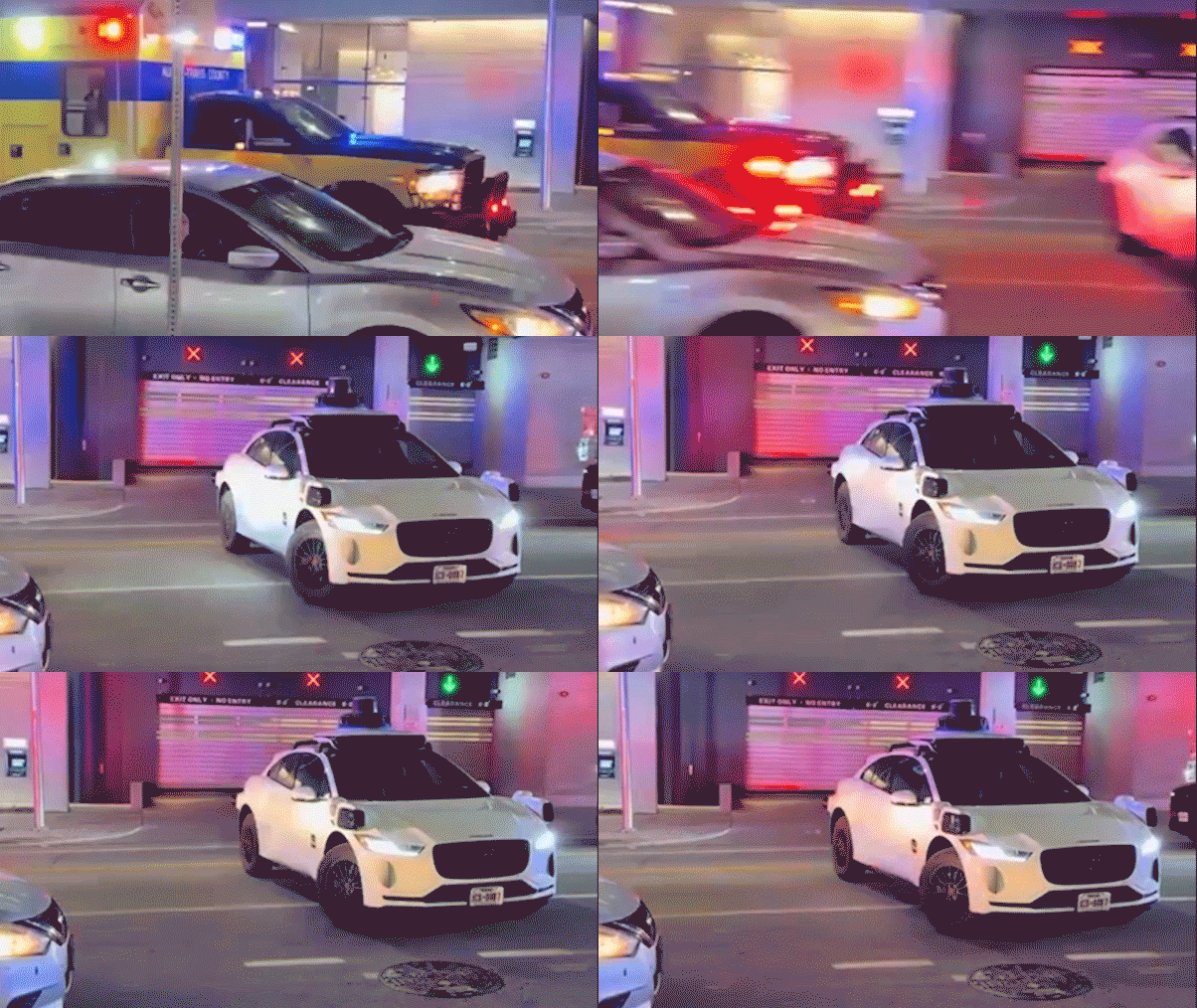
As emergency responders battled time in those frantic moments, a peculiar twist unfolded that merged human crisis with technological hiccup. In the grainy footage captured by onlookers—drawn from smartphones and dashcams— a silver Waymo self-driving vehicle, one of those sleek pods operated by Alphabet’s autonomous transport arm, appeared on the scene like an unwitting bystander in a high-stakes drama. This wasn’t some futuristic movie plot; it was real life, where an autonomous car, designed to ferry passengers safely and efficiently, became an obstacle in the path of life-saving heroes. The vehicle, hailed for a pickup ride amid the unfolding chaos, perceived a “road blockage”—perhaps the strewn cars and fleeing crowds—and initiated a careful U-turn maneuver to navigate the disarray. But in that split-second decision, as an ambulance barreled up the street with lights flashing and sirens blaring, the Waymo stalled sideways, its automated systems pausing to assess the high-priority vehicle approaching. For the desperate ambulance crew inside, trained to act with superhuman precision, this delay felt like an eternity. One can only imagine the paramedics’ frustration—heart rates spiking as they clutched trauma kits and IV lines, knowing each second counted for the wounded bleeding out just blocks away. The car’s hesitation wasn’t born of malice; it was a programmed caution, the kind of safe-driving logic we’ve come to expect from machines that don’t feel fear or urgency. Yet, in the human realm of emergencies, where instincts drive us to push limits, this robotic deliberation clashed poignantly. Witnesses, their faces etched with a mix of disbelief and fury, shouted from sidewalks: “Move it! Get out of the way!” Their voices carried raw emotion, blending concern for the victims with exasperation at the inanimate object delaying aid. It was a stark reminder of how technology, meant to enhance our lives, can sometimes stumble in the face of unpredictability. Pedestrians, some with phones outstretched to record, empathized with the crew, offering words of encouragement even as they urged the car onward. In that moment, the vehicle symbolized the growing pains of innovation—promising convenience but still grappling with real-world chaos. For the drivers and paramedics in Austin, this incident underscored the need for better integration between man and machine on crowded urban roads. Communities everywhere watched, debating the pros and cons of self-driving tech in environments like downtown hubs where spontaneity reigns. It humanized the tech giants too; behind the algorithms were engineers who, like the responders, simply wanted to save and serve, learning from each glitch to perfect their creations.
A Community’s Outcry and Swift Resolution
The tension mounted as the Waymo vehicle lingered, its sensors perhaps overwhelmed by the flashing lights and erratic movements around it. Distressed witnesses, many still adrenaline-fueled from the nearby gunfire, couldn’t hold back their reactions. Gripping smartphones or leaning out of car windows, they yelled imperatives that echoed through the night: “Go! Come on, move!” These were not just shouts of impatience but cries born from empathy—the pain of knowing lives hung in the balance just moments away. People on the sidewalks, their eyes wide with the trauma of what they’d witnessed at the beer garden, felt a surge of protective anger, channeling it toward the car as if it were a living entity capable of understanding urgency. In the viral footage, you could see the human side of Austin’s resilience: neighbors banding together, some even stepping forward to guide traffic or offer the ambulance drivers directions. Moments later, the situation escalated gracefully when an Austin police car, its lights swirling like a guardian angel, pulled up alongside. An officer, swift and decisive, exited their vehicle and approached the Waymo. With practiced ease, they slid into the driver’s seat—located for just such contingencies—and maneuvered the car into a nearby garage, clearing the path for the ambulance to forge ahead unimpeded. This act of human intervention was poetic, blending old-school authority with cutting-edge technology to restore order. The officer’s calm demeanor contrasted sharply with the surrounding panic, embodying the spirit of service that defines first responders. It sparked a quiet sigh of relief from those watching, a reminder that while machines can emulate intelligence, the irreplaceable value lies in human judgment. Social media buzzed with discussions, users sharing the clip and debating whether this was a win for AI or a call for stricter regulations. Parents watching from afar probably hugged their kids tighter, thankful for heroes who bridge the gaps technology can’t. In Austin, where cowboy boots meet circuit boards, this event fostered dialogues about trust in automation, with communities asking how to ensure machines complement, not complicate, our innate drive to help one another. The witnesses’ vocal outrage, captured on film, became a symbol of collective conscience, urging innovation forward with lessons learned from this unexpected roadblock.
Waymo’s Perspective on Progress and Learning
From the company’s viewpoint, the incident wasn’t a failure but a pivotal lesson in the evolving dance between autonomous vehicles and real-world emergencies. Waymo, a pioneer in self-driving tech that’s been testing in cities like Austin since 2017, released a statement to Fox News Digital that painted a picture of calculated restraint rather than recklessness. The vehicle, they explained, had been summoned via their app for a standard pickup—perhaps a late-night reveler heading home when the shooting erupted—only to encounter “road blockage” from the ensuing mayhem. In response, the car’s algorithms triggered a safe U-turn protocol, a feature designed to avoid collisions by—irony of ironies— yielding right-of-way. When the ambulance entered the frame mid-maneuver, the system paused, prioritizing safety over speed, before the officer’s timely assistance resolved the standoff. This wasn’t oversights as much as the challenges of urban unpredictability, where crowds, detours, and crises defy neat programming. Waymo emphasized that such occurrences benefit the broader goal of refining road safety, especially in bustling metropolises like Austin, where pedestrian/human interactions are constant. Engineers, poring over data logs in San Francisco offices, were likely poring over this event, tweaking thresholds for emergency vehicle detection and response times. For the riders who depend on Waymo—busy professionals, seniors, or families seeking hassle-free transit—this reassurance mattered; it framed the glitch as growth, not a setback. The company underscored its dedication to collaborating with local authorities, testing protocols to ensure vehicles blend seamlessly into emergency scenarios. In human terms, it evoked the empathy of a young builder fixing a toy: setbacks fuel improvement, and this “learning opportunity” aimed to prevent future delays. Users online praised Waymo’s transparency, sharing anecdotes of smooth rides that had made their lives easier, balancing the narrative against this rare bump. For victims of the shooting, still in recovery, the tech aspect offered a tangential distraction—a world where even cars learn empathy, mirroring our own journeys through trial and error.
The EMS Chief’s Reassuring Words and Collaborative Spirit
Stepping into the spotlight the following Monday, Austin-Travis County EMS (ATCEMS) Chief Robert Luckritz brought a voice of calm reassurance during a press conference, addressing the Waymo incident with the poise of someone who’s seen the messiest sides of humanity. He acknowledged the startling footage but placed it in perspective, reminding everyone that the grand picture of emergency response worked flawlessly. ATCEMS, he noted, had mobilized swiftly, deploying over 20 units to the scene—including ambulances, police, fire, and support teams—arriving within 57 seconds of the initial call. In that timeframe, medical pros triaged the wounded, administered lifesaving care, and transported the injured to hospitals where surgeons and nurses battled through surgeries lasting into the dawn. Luckritz gently deflected blame from the vehicle, asserting that the brief delay “didn’t impact patient outcomes”—a declaration backed by timelines and medical data. Victims who survived could smile in gratitude, knowing their recoveries owed to prompt action, not to any technological stumble. He highlighted the strong partnerships ATCEMS maintains with autonomous vehicle vendors like Waymo, describing ongoing dialogues to enhance protocols for urban operations. This wasn’t about finger-pointing; it was about synergy, where human expertise guides machines toward perfection. Attendees at the conference, including reporters and community leaders, nodded in agreement, feeling a sense of collective purpose. For President Luckritz, this was personal—he’s a longtime advocate for innovation in EMS, having trained countless responders who balance humanity with high-tech tools. His words humanized the response, portraying it as a team effort where every player, even a self-driving car, joins the ranks of helpers. Families of survivors shared relief through tears, local businesses donated to relief funds, and the city united in hope that better integrations would prevent such hiccups. In essence, Luckritz’s address was a balm, transforming a potential controversy into a story of resilience and cooperation, proving that even in Austin’s unpredictable world, the spirit of aid prevails.
Echoes of Broader Tensions and a Quest for Understanding
As the dust settled on the Beer Garden tragedy, investigators delved deeper into the motive behind Ndiaga Diagne’s actions, uncovering threads that connected this solitary act to the tapestry of global unrest. The 53-year-old, a naturalized citizen with roots perhaps in Senegal given his name, wore a “Property of Allah” sweatshirt and an undershirt emblazoned with the Iranian flag at the time of his arrest—clothing laden with symbolism amid rising tensions following U.S. and Israeli strikes on Iran. Authorities, including federal agencies, explored whether this signaled a terrorism nexus, probing cyber footprints, travel histories, or online affiliations that might tie him to extremist ideologies. In a world rife with disinformation and radicalization via social media, Diagne’s choices evoked fears of foreign influence seeping into domestic tranquility, prompting heightened vigilance at borders and within communities. Texas Democratic Senate candidates, gripped by the politicization of such events, sidestepped direct terrorism probes, opting for broader gun control dialogues that resonated with grieving families. The human cost lingered: memorials for the slain filled with flowers and candles, portraits of vibrant souls cut short, while survivors endured physical therapy and emotional counseling, sharing survivor guilt in support groups. Austinites, ever connective, organized fundraisers that blended music and memory, turning sorrow into strength. Experts debated the implications—could this be copycat extremism or a lone wolf inspired by international strife? For many, it underscored the need for dialogue, mental health resources, and global awareness to bridge divides. Diagne’s story, now a footnote in investigations, reminded us of vulnerability in an interconnected age, urging empathy over fear. As the city healed, vigils carried messages of unity, proof that even in the face of such darkness, human connection endures, weaving us together stronger than before. This incident, both intimate and expansive, challenged us to confront the threads linking local tragedies to worldwide forces, fostering a deeper commitment to peace in our shared humanity.