





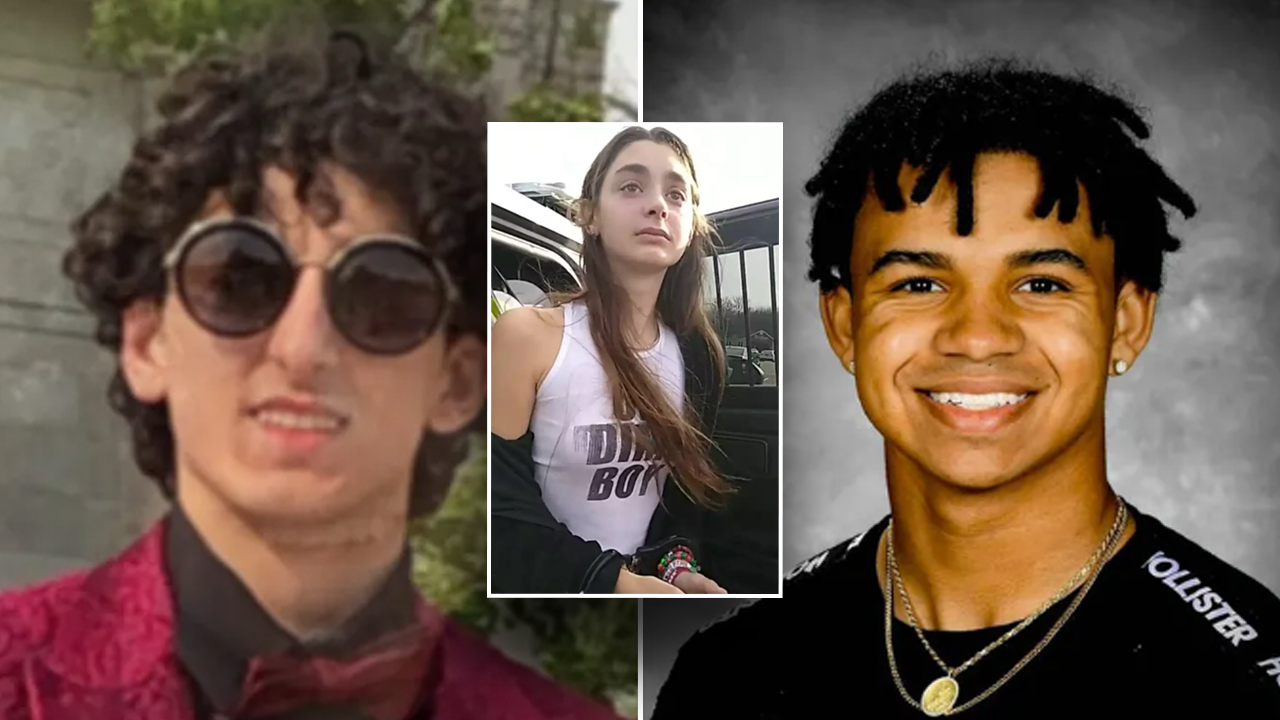
In the quiet, pre-dawn hours of July 31, 2022, the peaceful silence of Strongsville, Ohio, was shattered by an unthinkable act of violence that would forever alter the lives of three local families. At approximately 6:15 a.m., a Toyota Camry roared through a suburban corporate park, its engine screaming under maximum acceleration before colliding brutally with the brick wall of the PLIDCO building on Alameda Drive. Inside the vehicle were three teenagers whose young lives were violently derailed in a matter of seconds: seventeen-year-old Mackenzie Shirilla, her twenty-year-old boyfriend Dominic Russo, and their nineteen-year-old friend Davion Flanagan. The force of the impact was so catastrophic that the vehicle was instantly reduced to an unrecognizable tangle of metal, glass, and plastic, trapping the occupants within its crushed frame. First responders arriving at the wreckage were met with a scene of absolute devastation; while Shirilla was critically injured but miraculously alive in the driver’s seat, both Russo and Flanagan had sustained fatal injuries and had to be mechanically extricated from the metal tomb, their vibrant lives extinguished long before they could reach Mount Sinai or MetroHealth Medical Center. What initially appeared to be a heartbreaking, yet tragic teenage traffic accident soon unraveled into something far more sinister, exposing a dark undercurrent of adolescent toxicity and calculated intent. This horrific event marked the beginning of a complex legal and emotional saga that would eventually captivate the nation, leaving a tight-knit community searching the wreckage for answers to a question that defied comprehension: how could a routine drive end in such absolute destruction?
As investigators began meticulously piecing together the events leading up to the crash, they uncovered digital and mechanical evidence that transformed a devastating accident into a chilling double-homicide investigation. Telemetry data recovered from the Life360 mobile tracking application, combined with the vehicle’s Event Data Recorder, told a precise and terrifying story of the crash’s final seconds, revealing that the Camry had accelerated to a staggering 90 miles per hour in a quiet 35-mile-per-hour zone. Even more damning was the complete absence of any braking activity; the data confirmed the accelerator pedal was fully engaged at 100 percent capacity, with no service brake applied as the car careened toward the brick facade. This cold physical evidence painted a grim picture of a deliberate act, forcing the Cuyahoga County Medical Examiner’s Office to officially reclassify the manner of death from accidental to homicide. Prosecutors at trial laid out a haunting motive, painting Mackenzie Shirilla as a deeply troubled, controlling partner who was desperate to end her volatile relationship with Dominic Russo, choosing to orchestrate a high-speed collision to ensure they died together, while treating Davion Flanagan as an unintended collateral victim. The weight of this calculated malice culminated in a dramatic trial presided over by Judge Nancy Margaret Russo, who forcefully rejected any defense of reckless driving, declaring that Shirilla had a “mission” of death and executed it with precision. Sentenced to two concurrent terms of 15 years to life, Shirilla, now 21, remains behind bars, permanently branded by the court and the public as “hell on wheels” for her fatal actions.
The raw human tension surrounding the tragedy found renewed focus with the recent public release of police bodycam footage capturing the raw, frantic moments following Mackenzie Shirilla’s arrest on November 4, 2022. The video depicts her father, Steven Shirilla, arriving at the Strongsville Police Department lobby in a state of high anxiety, desperate to shield his daughter from the impending legal fallout. In the recorded interaction, Steven is heard vehemently demanding that officers refrain from questioning Mackenzie, asserting that their family attorney had instructed them to remain completely silent. When officers attempted to de-escalate the situation, reminding him that his daughter was legally an adult at eighteen and could make her own decisions regarding police questioning, Steven immediately dismissed her autonomy, loudly referring to her as a “dumb 18-year-old that just turned 18.” Despite quiet protests from his wife, Natalie Shirilla, who stood beside him in the loud police lobby, Steven doubled down on his frustration, declaring that “all the kids nowadays are dumb” while pacing frantically and demanding to speak with his daughter so she understood not to say a word to investigators. As the police officers walked away to process the arrest, Steven’s desperate protective instincts manifested as angry commands, with him shouting into the station hallways, “Don’t ask her any questions!” This intense family dynamic, captured in real-time, offers a raw window into the panic of a father watching his child’s life irrecoverably collapse, balancing the instinctive urge to protect his offspring with the undeniable reality of the heinous crimes she stood accused of committing.
The ripple effects of Mackenzie’s actions have continued to expand outward, demonstrating how a single catastrophic decision can deconstruct the lives of entire families long after the physical crash scene has been cleared and the headlines have faded. In the wake of Netflix’s true-crime documentary series “The Crash,” which thrust the young woman’s case back into the international spotlight, the public scrutiny has intensified to an unbearable degree for the Shirilla family. This media attention has carried severe real-world consequences, most notably for Steven Shirilla himself, who was recently forced out of his teaching position at Mary Queen of Peace School in the Cleveland area. Though the Catholic Diocese of Cleveland declined to provide specific details regarding the termination due to standard personnel privacy policies, they formally confirmed that he would not be returning to his role at the school, showcasing how the societal stain of such a high-profile crime can lead to collateral professional ruin. This development highlights the deep-seated public discomfort surrounding the case, as the local community struggles to find closure or boundary lines when dealing with the aftermath of the crash. For the neighbors, students, and congregants who once knew the Shirilla family in a normal, everyday context, the constant media reminders of that fateful morning in July serve as a permanent scar, reinforcing the uncomfortable truth that the consequences of extreme juvenile violence are rarely confined to the courtroom or the prison cell, but instead bleed into the lives of everyone associated with the perpetrator.
At the heart of this sensationalized legal drama, viral bodycam footage, and media circus lies an ocean of profound, unfillable grief for the families of Dominic Russo and Davion Flanagan, the two young men whose futures were stolen in an instant. Dominic, a twenty-year-old on the cusp of adulthood, was a young man of vibrant energy whose life was cut short by a relationship that had turned tragically toxic, leaving his family to mourn a future of unfulfilled milestones, lost career paths, and quiet, empty rooms. Davion Flanagan, just nineteen, was an innocent bystander in the truest and most heartbreaking sense—a loving son, loyal friend, and hardworking teenager who happened to accept a ride on what would become his final night, his promising life snuffed out because he was simply in the wrong place at the wrong time. For the families of these two boys, no amount of prison sentencing, bodycam footage releases, or true-crime documentary analysis can ever heal the deep, lingering ache of their absence. While the public dissects the psychological motives of the driver and analyzes the outbursts of her father under the flickering lights of the police department, these grieving parents are left with the quiet, devastating reality of empty chairs at dinner tables and birthdays that will never be celebrated. Their pain is an agonizing reminder that behind every viral news story and sensational trial are real, flesh-and-blood victims whose voices have been silenced forever, and whose loved ones must navigate a lifetime of trauma while the rest of the world moves on to the next headline.
Ultimately, the tragic saga of Mackenzie Shirilla serves as a somber modern parable about the devastating intersection of youth, impulsive rage, and the destructive capacity of toxic adolescent dynamics. Now twenty-one years old and navigating the bleak, sterile reality of a fifteen-years-to-life prison sentence, Shirilla represents a tragic waste of human potential—a young woman whose entire adulthood will be defined by a few seconds of uncontrollable, vengeful fury behind the wheel of a vehicle. Her case stands as a terrifying testament to how teenage relationship struggles, often dismissed as mere high school drama, can escalate into lethal scenarios when combined with mental instability, control, and a lack of emotional regulation. The stark contrast between the middle-class comfort she once enjoyed in suburbia and her current existence behind bars serves as a grim warning to a generation increasingly navigating complex emotional landscapes in an era of intensive digital monitoring, where every text message and location ping can later be used to reconstruct a crime. As the dust slowly settles on the courtroom battles and the public interest ebbs, the enduring image of this tragedy remains the cold brick wall in Strongsville—a silent monument to the fragility of youth and the permanent, catastrophic damage that can be wrought by a single moment of unchecked malice. For those left behind, the path to healing is long and uncertain, paved with the bittersweet memories of two young men who should have had decades ahead of them, but whose stories were cut short by the devastating wake of a vehicle driven to destruction.