





Shadow Over the Danube: How a Russian Drone Strike on a Romanian Apartment Shattered NATO’s Illusion of Safety
The Midnight Cry of Sirens and the Shattered Peace of Galati
For the civilian populations residing along Romania’s northeastern frontier, the haunting, high-pitched wail of the government’s emergency RO-Alert system had slowly devolved from an urgent call to seek shelter into an exhausting, late-night annoyance. Over the course of many months, as Russian forces relentlessly targeted Ukrainian shipping infrastructure just across the border, these automated mobile phone warnings—cautioning citizens of “falling objects from the surrounding airspace”—frequently flashed across screens in the dead of night, only to be followed by silence. This persistent, numbing repetition eventually bred a dangerous sense of complacency among locals, prompting many, including thirty-eight-year-old Galati resident Andra Lupsa, to routinely silence their devices before falling asleep. On a recent Thursday night, Lupsa adhered to this modern security ritual, seeking a few hours of uninterrupted rest, only to be jolted awake shortly after 1:00 a.m. by the piercing, unsilenced phone of her husband. Her initial reaction was one of exasperated familiarity, an internal dismissal of what she assumed was merely another false alarm in a long line of bureaucratic overreactions, before she settled her head back onto her pillow. Within minutes, however, the fragile illusion of safety was shattered by a deafening, metallic roar that reverberated through the concrete foundations of her neighborhood, as a Russian-designed suicide drone slammed directly into a nearby residential apartment complex in Galati, one of eastern Romania’s most densely populated urban centers, signaling a terrifying new phase in the regional spillover of the war in Ukraine.
=== AIRSPACE INTRUSION PATHWAY ===[ UKRAINE Airspace ] [ ROMANIA (NATO) Airspace ]
 Russian Drone Swarm                             Galati Urban Center
 (43 Shahed-type UAVs)                          +-----------------------+
          |                                     |  Residential Block    |
          v                                     |  (10th Floor Impact)  |
 Intercepted/Damaged                            +-----------^-----------+
 by Ukrainian Defense                                       |
          |                                       Veered 9 Miles West
          +-------------------------------------------------+
                     (Over Danube River Border)
The Geography of Fear along the Danube Border
To understand how an administrative nuisance transformed into an active military threat is to examine the highly volatile geography of the Danube River, a natural water barrier that serves as the international boundary dividing democratic Romania—and by extension, the external frontier of NATO—from the war-torn territories of Ukraine. For nearly two years, the sky above this narrow river corridor has served as a primary theater for Russian drone campaigns aimed at choking off Ukraine’s vital agricultural export hubs, such as the ports of Reni, Izmail, and Kiliya. While the strategic targets lay on the Ukrainian shore, the kinetic realities of modern air defense have repeatedly ignored geopolitical borders, with explosive debris, metal shrapnel, and defunct navigation components routinely raining down upon the sparsely populated Romanian marshlands and small agricultural communities like Plauru and Ceatalchioi. Yet, until this catastrophic Friday morning event, these incidents had been carefully managed by Western military officials as minor, involuntary airspace violations occurring in uninhabited marshlands. The catastrophic direct strike on a multi-story apartment block in Galati, located a significant nine miles inland from the immediate border zone, completely upends this delicate narrative, forcing both local civilian authorities and high-ranking defense planners in Bucharest and Brussels to confront a harrowing vulnerability: the war is no longer merely knocking on NATO’s door; it has breached the threshold of its domestic infrastructure.
Shrapnel, Fire, and the Human Cost on the Tenth Floor
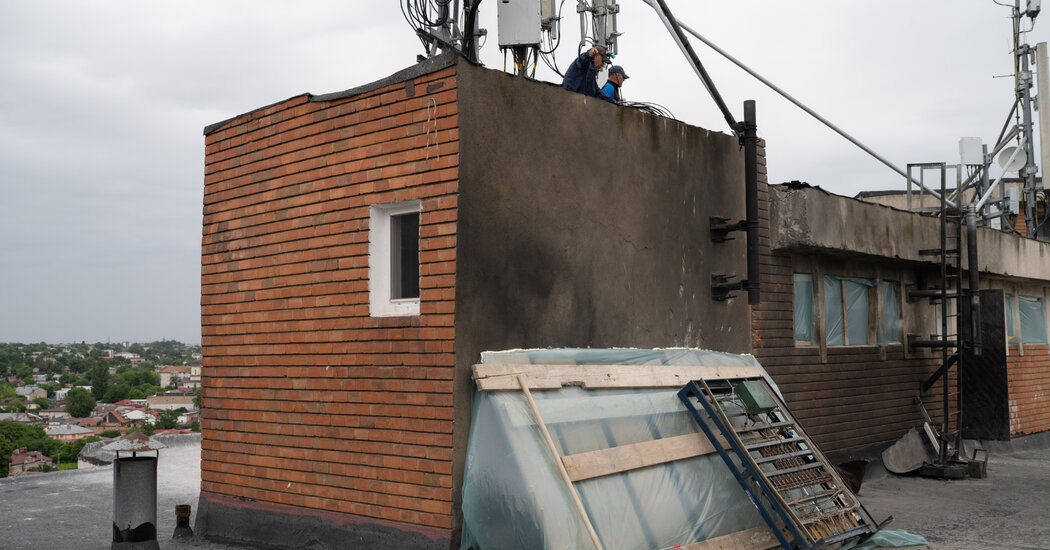
The physical devastation of the attack was concentrated near the apex of the targeted residential building, where the loitering munition struck the concrete housing of the rooftop elevator shaft, detonating on impact and creating a shockwave that obliterated windows and masonry across the upper levels of the structure. The force of the explosion ripped downward, breaching the ceiling of a tenth-floor apartment where a fifty-three-year-old mother and her fourteen-year-old son lay sleeping; though miraculously preserved from the fatal kinetic blast of the initial impact, both victims sustained severe, debilitating burns while navigating their way out through the roaring, toxic inferno that instantaneously consumed their living room and primary escape corridor. As specialized emergency crews rushed to evacuate the building’s traumatized occupants amidst billowing plumes of black smoke, neighboring residents stood in the dark streets, grappling with a profound sense of psychological violation that no rapid building repair could easily soothe. Ionut Oanea, a thirty-nine-year-old father of two young daughters living a stone’s throw from the impact site, recalled the sheer terror of being woken by his crying children as the hum of the incoming drone’s engine grew impossibly loud, followed by the terrifying visual of Romanian F-16 fighter jets tearing across the midnight sky in a frantic but ultimately belated defense scramble. The subsequent deafening blast and the smell of burning fuel and concrete left an indelible mark on Oanea and his neighbors, permanently replacing their accustomed nocturnal peace with the paralyzing, persistent anxiety of living under an unprotected sky.
Accident or Provocation: The Duel of Conflicting Explanations
In the tense, smoke-haze aftermath of the disaster, a stark and vital debate immediately erupted among international observers regarding the true nature of the strike: was this a mechanical aberration, or a calculated geopolitical provocation designed to gauge the collective resolve of the Atlantic Alliance? Romanian President Nicusor Dan sought to quickly de-escalate public panic and avoid a direct diplomatic showdown with Moscow, announcing after a solemn hospital visit to the injured mother and son that the drone was part of a larger swarm of forty-three Russian aircraft targeting Ukrainian infrastructure that had been knocked off course by Ukrainian anti-aircraft countermeasures over the nearby port of Reni. This narrative of technical malfunction closely mirrors recent air defense anomalies witnessed hundreds of miles to the north in the Baltic region, where heavy Russian electronic jamming has routinely caused Ukrainian and Russian surveillance systems to drift into the sovereign territories of Latvia, Lithuania, Estonia, and Finland without causing civilian casualties. However, this reassuring narrative of accidental drift was swiftly and chillingly undermined by the Kremlin itself, as former Russian President and current senior security adviser Dmitry Medvedev issued a menacing public warning on social media. Medvedev asserted that European Union citizens are now actively paying the literal price for their leaders’ unilateral involvement in the war against Russia, declaring with cold rhetorical satisfaction that “the peaceful sleep is over”—a calculated statement of psychological warfare that strongly suggests Russia view such cross-border strikes not as mere accidents, but as useful tools of systemic terror.
| Metric / Detail | Incident Data & Analysis |
|---|---|
| Location of Impact | Galati, Eastern Romania (approx. 9 miles from Ukrainian border) |
| Target Profile | 10th-floor residential apartment building (rooftop elevator shaft) |
| Originating Munition | Part of a swarm of 43 Russian-launched strike drones |
| Intervenese Measures | Romanian F-16 jets scrambled; Ukrainian air defense interference |
| Casualties & Damage | Two civilians severely burned; extensive structural rooftop damage |
| Geopolitical Impact | Direct kinetic strike on inhabited civilian infrastructure within NATO territory |
NATO’s Strategic Dilemma and the Fragile Threshold of Article 5
The physical damage to the apartment building in Galati is being rapidly cleared by local construction crews, but the strategic damage to NATO’s deterrent posture remains deeply unresolved, highlighting the acute gray-zone dilemma currently vexing Western military strategists. Under the solemn provisions of Article 5 of the North Atlantic Treaty, an armed attack against one member state is considered an attack against all, requiring a collective military response; yet, the alliance’s leadership has consistently sought to avoid triggered escalation over what it deems “unintentional” or localized cross-border incidents. This cautious, slow-moving approach has drawn sharp criticism from military analysts and frustrated eastern flank defense officials, who argue that by failing to establish clear, kinetic red lines—such as actively intercepting and shooting down any unidentified aerial systems approaching allied airspace—NATO is effectively signaling to Moscow that its border regions can be violated with impunity so long as the Kremlin maintains plausible deniability. As Russian drones continue to test the boundaries of European airspace with increasing frequency, the dangerous precedent set in Galati demonstrates that the strategic policy of deliberate restraint may eventually invite the very escalate-to-de-escalate scenario that Western diplomats are desperately trying to avoid, transforming minor defensive gaps into major national security failures.
The Critical Geopolitical Reality of NATO’s Eastern Flank
       =========================================================
       NORTH ATLANTIC TREATY - STRATEGIC DILEMMA ON THE BORDER
       =========================================================

            CRITICAL POINT OF ESCALATION:
            Direct strike on inhabited civilian block in Romania.

            [ NATO DEFAULT POSTURE ]          [ THE ESCALATION RISK ]
           Avoid direct engagement with      Passive monitoring may invite
           Russian forces; rely on diplomatic  more aggressive Russian grey-zone
           protests and passive defense.     airspace violations.

                                    |
                                    v
                           [ STRATEGIC NEED ]
                  Enhanced air-intercept protocols and
                  forward-deployed air defense batteries.
The New Normal of an Unquiet Sky
As the dust settles over the scarred streets of Galati, the local population is left to navigate a deeply altered reality, one where the physical rebuilding of concrete and glass cannot easily restore their fractured sense of personal security. The terrifying night when war literally crashed through a residential ceiling has permanently stripped away the comforting insulation of geographical distance, proving that even the umbrella of the world’s most powerful military alliance cannot offer absolute protection against the unpredictable realities of modern, high-intensity drone warfare. For the families living along the winding waters of the Danube, the routine RO-Alert warnings will never again be dismissed as minor, remote technical errors to be ignored on silent mode before bed. Instead, every midnight siren now carries the very real threat of sudden death, turning the night sky into a source of constant surveillance and anxiety, and serving as a poignant, structural reminder that as long as the devastating conflict in Ukraine continues to rage, the peace of Europe’s borderlands will remain fragile, contested, and perpetually under threat.