







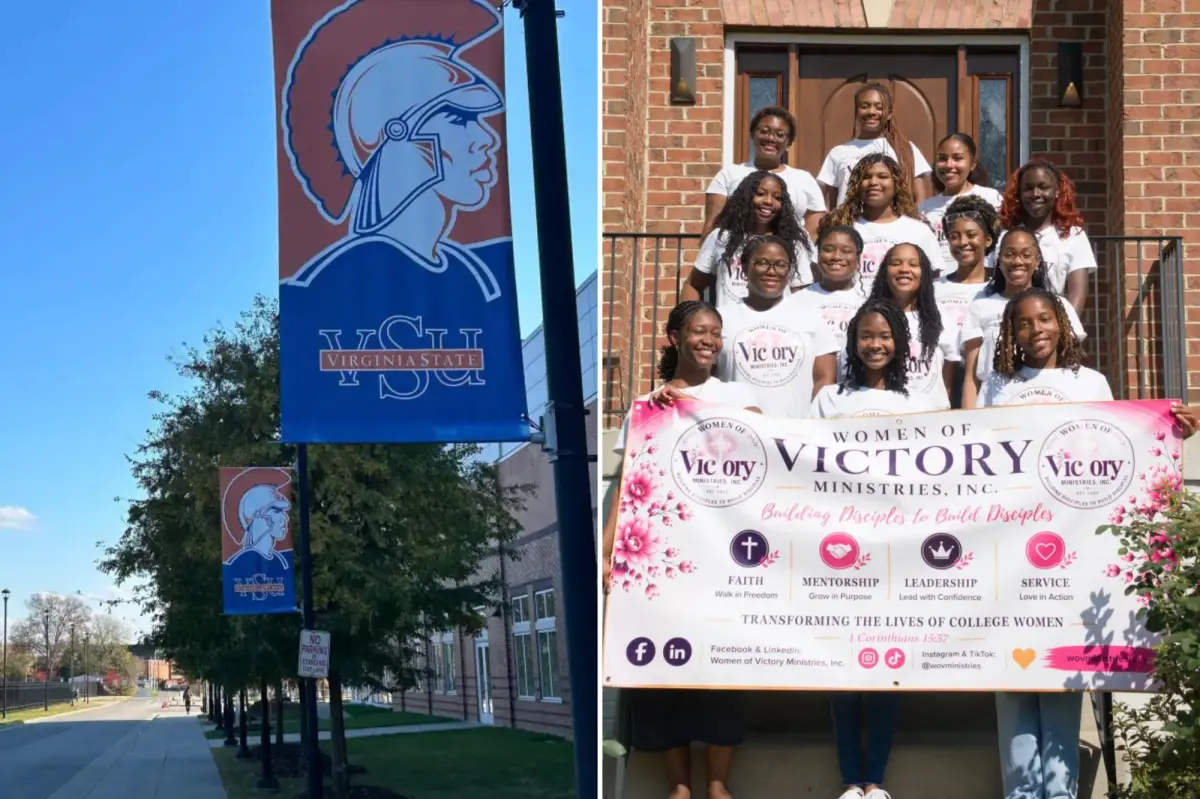
For students on a college campus, a recognized student organization is often more than a line on an official directory—it is a lifeline. It is the weekly Bible study where friendships deepen, the leadership training that shapes character, and the service projects that connect faith to community. At Virginia State University, two Christian student groups, Women of Victory and Bethel Campus Fellowship, built their campus presence on exactly those things. They prayed together, studied Scripture, organized mentorship programs, and offered students a place to belong. Now, according to a federal lawsuit filed by the Alliance Defending Freedom, the university has stripped both organizations of their official campus status and placed them under the direct authority of a university-appointed minister. The groups are no longer allowed to function as independent, recognized student organizations in the way they have for years. Instead, they are told that their faith-based ministries must submit to the governance and influence of a campus minister chosen by the university and an advisory board made up of faculty and administrators. For the students involved, the practical consequences are immediate and deeply personal: they lose the recognition, the resources, the meeting spaces, and the legitimacy that come with being an official campus group, all because of what they believe and how they choose to practice their faith.
The policy at the center of the lawsuit is, on its face, strikingly unequal. According to the complaint, Virginia State University’s updated Campus Ministries Policy applies to every Christian student-led ministry on campus. Those ministries must now operate under the “governance and influence” of VSU Campus Minister Thomas Wynn, along with an advisory board composed of university faculty and personnel. The policy also forbids student ministries from maintaining affiliation with their national parent organizations, cutting them off from the doctrinal identity, resources, and support networks that sustain them. Meanwhile, non-Christian and Muslim student organizations are exempt from these requirements. They can continue to operate independently, without university-imposed spiritual oversight, and with the full benefits of recognized status. That double standard is not just unfair; it is, the plaintiffs argue, a direct violation of the First Amendment. As Alliance Defending Freedom Senior Counsel Tyson Langhofer put it, the message the policy sends is simple: you cannot treat secular groups better than religious groups, and you cannot treat one religious group worse than another, no matter the stated motive. The Constitution does not permit a public university to place a single campus pastor in control of all Christian groups while allowing Muslim and other non-Christian groups to receive the full benefits of campus recognition without such interference.
For the two student organizations, the lawsuit is not just a legal challenge to a policy; it is a fight for their very existence as authentic expressions of faith. Women of Victory and Bethel Campus Fellowship are local chapters of national organizations that host Bible studies, leadership training, and spiritual development events both on and off campus. Their faith tradition is not simply a category on a form; it shapes everything they do. Being forced to operate under the authority of a university-appointed minister is not a minor administrative change. It means that a third party with potentially different theological views could exercise authority over their message, their programming, and their spiritual direction. It also means that their connection to their national parent organizations—connections that provide accountability, resources, and a shared doctrinal foundation—would be severed. The organizations remain listed on VSU’s official website, but the Alliance Defending Freedom says that listing does not reflect their actual operational status. They are, in effect, shadow organizations, existing in name but stripped of the rights and recognition that other student groups enjoy. That is why they are asking a federal court to issue an order restoring their status as fully recognized registered student organizations. Langhofer emphasized that decades of legal precedent require public universities to treat all student groups equally, and the Supreme Court has made clear that no group can be singled out simply because of what it believes. The university’s motives, whatever they may be, do not change that constitutional reality.
Beyond the specific facts of this case, Langhofer sees a broader and more troubling trend in American higher education. Universities, he argues, have drifted away from their long-standing mission of promoting intellectual diversity and seeking truth. Instead of encouraging students to engage with different perspectives, institutions increasingly teach that certain speech is violence and that hearing differing opinions on important topics is unwelcome. That approach, he said, is a failure of higher education’s primary role: preparing the next generation to live in a pluralistic society alongside people with different beliefs, values, and worldviews. The Virginia State University policy, in his view, is a symptom of that larger problem. Rather than creating a campus environment where students of faith can learn, grow, and debate ideas in the open, the university is attempting to control, manage, and sanitize religious expression. Christian students are not being treated as intellectual partners in a vibrant academic community; they are being treated as a problem to be solved. Their faith is seen as something divisive, something that must be contained under the authority of a university administrator. That mindset, Langhofer suggests, undermines the very purpose of higher education. A university should be a place where students learn how to engage with people who see the world differently—not a place where disagreement is discouraged and religious communities are forced into submission.
At the heart of the university’s mandate, Langhofer pointed to a particularly troubling issue: the theological differences between the campus pastor and the student organizations. The policy effectively makes the university-appointed minister a gatekeeper for Christian students’ faith life on campus. If that minister holds theological views that differ from those of Women of Victory or Bethel Campus Fellowship, he could influence or even override what these groups teach, how they worship, and whom they choose as leaders. The students are not asking the university to endorse their beliefs; they are asking it to stop interfering with them. Their national affiliations matter enormously to them because those affiliations define their beliefs and connect them to a broader Christian tradition. When the university mandates that these groups sever those ties, it is not creating unity; it is dismantling the religious identity of the groups. Langhofer was careful not to speculate about the exact origins of the policy, saying he did not know whether theological differences were the cause. But he was clear about the result: the policy is an attempt by the university to control what these groups do, rather than allowing them to continue operating as they have for years. And whatever the university’s stated motives—whether promoting unity, avoiding controversy, or something else—the Constitution does not allow public institutions to single out religious groups for special restrictions. The First Amendment means that faith-based student organizations must not be subjected to burdens that other groups do not face.
The case against Virginia State University is, at its core, about whether the First Amendment still means what it says. It is about whether a public university can force Christian students to surrender the governance of their ministries to a university employee, while leaving other religious groups free. It is about whether students can gather in the name of their faith without losing their official standing, their meeting spaces, and their right to self-determination. The lawsuit asks the court to restore the organizations to their rightful place as recognized student groups and to declare the university’s policy unconstitutional. Langhofer’s message is direct and grounded in precedent: all student groups on campus must be treated equally. You cannot single some out simply because of what they believe, no matter how sincere the university’s motives might be. Virginia State University did not respond to requests for comment, leaving students and observers to wonder why a policy so clearly tilted against Christian ministries was enacted in the first place. But for the students of Women of Victory and Bethel Campus Fellowship, the answer is less important than the remedy. They want to return to what they were always meant to do: gather in community, study their faith, serve their neighbors, and live openly as believers in a public university setting. Their case is a reminder that higher education should never be in the business of policing religious belief. A university’s job is to open minds, not to control them. And in a pluralistic society, the only way forward is not to silence or manage faith, but to protect the right of every student group to speak, believe, and gather freely.