



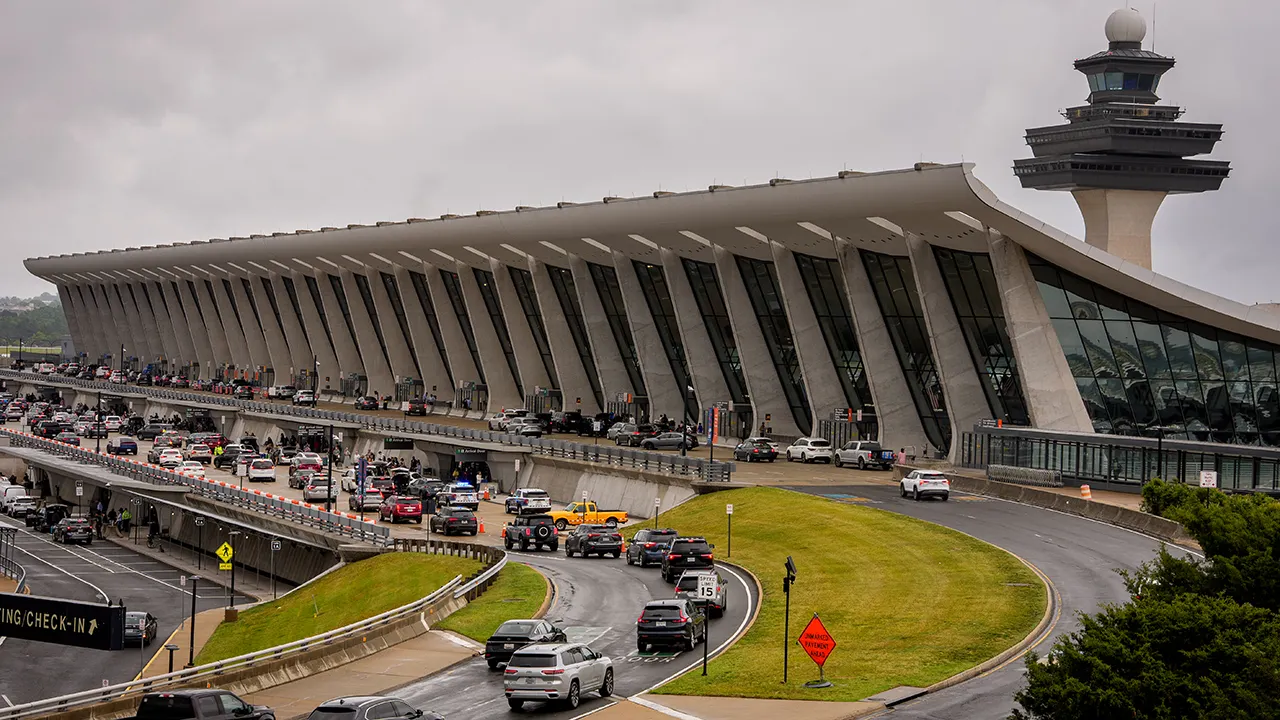
In a story that feels almost too strange for fiction, a Virginia man who was once found not guilty by reason of insanity for a violent death has vanished from the very system meant to treat him and protect the public. Abdulloi Toshpulodzoda walked out of the Northern Virginia Mental Health Institute on July 6 for what was supposed to be an approved 48-hour pass—a brief taste of ordinary life, an opportunity that state law allows for certain committed patients. He never walked back in. Court records show that he was required to return by July 8, but instead of going back to the facility, he made his way to Washington Dulles International Airport and boarded a Turkish Airlines flight. The itinerary preserved in airline records attached to the court filing tells a startling story: from Dulles to Istanbul, and then onward to Dushanbe, the capital of Tajikistan, thousands of miles away on the other side of the world. This was not a matter of missing a bus or getting lost in the city. Someone had enough presence of mind to find the airport, navigate international security, present a passport, and board a one-way flight to Central Asia. For a person who had been locked inside a psychiatric institution after killing his landlord, that level of coordination is both alarming and deeply sad. The legal papers put it plainly: “The Acquittee failed to return to NVMHI on July 8, 2026, as required.” Those two sentences, buried in a court filing, now stand as the beginning of an international incident and a broken promise to everyone who believed the system could keep a dangerous, mentally ill man from disappearing.
But the most unsettling part of this story is not just that a troubled man escaped; it is that he had been given the chance to leave in the first place. Only days before he disappeared, a judge had considered his case and concluded that Toshpulodzoda remained mentally ill and in need of inpatient hospitalization. The court’s finding was not a vague worry. It was a formal, legal determination that he should stay confined, that his mind was still too unstable, that he still posed a risk to himself or others. And yet, on June 29, that same court system that declared him too ill for release was operating alongside a state law that allows mental health facilities to grant certain committed patients unaccompanied community visits lasting up to forty-eight hours. The Northern Virginia Mental Health Institute authorized him to leave on July 6. Instead of using that time to buy groceries, take a walk, or do whatever small errand might have been approved, he used it to make an international escape. The tragedy here is layered. On one hand, mental health professionals often encourage gradual autonomy for patients, because treating the mind is not the same as keeping someone in a cage. On the other hand, this is a man who was found to have killed his landlord, who was legally committed after being acquitted by reason of insanity, and who a judge had just determined was still mentally ill. The tension between compassion and public safety, between rehabilitation and risk, is not abstract. It is written into the story of a man boarding a plane to Tajikistan while the state police and federal authorities were left to scramble.
To understand how this happened, one has to go back to the beginning. The death that led to Toshpulodzoda’s commitment happened in 2019, when he killed Mohammad Hemmatian, his landlord. The relationship between a tenant and a landlord can be fraught in ordinary circumstances, but in this case, it ended in violence and the loss of a human life. Mohammad Hemmatian was not just a name on a court docket. He was a person with a life, with relationships, with people who loved him and still carry the weight of what happened. In 2022, a judge found Toshpulodzoda not guilty by reason of insanity. That legal verdict does not mean he did not commit the act. It means that, because of severe mental illness, he was not considered legally responsible for his actions at the time. It is a verdict that exists to protect people whose minds are so profoundly broken that they cannot be blamed in the way we blame others. But for the family of Mohammad Hemmatian, the word “insanity” offers little comfort. It explains a tragedy in clinical terms, but it does not bring back their loved one. Toshpulodzoda was committed to the custody of the Virginia Department of Behavioral Health and Developmental Services, and for years, he remained inside the mental health system, subject to annual review hearings. Prosecutors repeatedly opposed his release. They argued that he remained dangerous, that his mental illness was not cured, and that he belonged in a secure facility. And in June of this year, a judge agreed—he ordered that Toshpulodzoda continue to be confined. Yet a week later, he was outside the gates.
This is the moment where the story becomes a sharp critique of how the law and mental health systems interact. Virginia law, as written, gives mental health facilities the authority to grant unaccompanied community visits to certain committed patients, even those who have been found not guilty by reason of insanity. The rule is not necessarily cruel or careless in design. It reflects a belief that recovery can require practice, that patients cannot be treated forever in isolation, and that small supervised freedoms can eventually lead to greater stability. But the case of Toshpulodzoda exposes the risk in that approach. He had a history of lethal violence. He had just been found by a judge to be in need of inpatient hospitalization. And still, a facility authorized him to walk out the door for two days. Even more troubling, court records indicate that he had previously been allowed to travel to Washington, D.C., in 2024 to obtain a passport, with the support of the Commonwealth’s Attorney’s Office. That passport became the key that unlocked his escape. Perhaps no one could have predicted he would use it to run to Tajikistan, but the decision to allow a man with his history to hold a valid travel document was a gamble that did not pay off. The Commonwealth Attorney’s office has since stressed that prosecutors opposed his release at every annual review hearing. In their own words, “Abdulloi Toshpulodzoda was found by clinicians to be insane at the time he killed Mohammad Hemmatian – a legal finding that means the Commonwealth would be unable to secure a conviction at trial.” They wanted him confined. They said so in court. But the system that was supposed to listen found other ways to let him slip through.
Once Toshpulodzoda failed to return, the response was swift in paperwork, but too late in real life. The Northern Virginia Mental Health Institute placed him on escape status, revoked his pass, and issued a facility warrant. Virginia State Police and federal authorities were notified. U.S. Customs and Border Protection issued an alert in case he attempted to re-enter the United States. A bench warrant was later issued for his arrest. All of these steps are the correct ones, the ones memorialized in forms and databases, the ones that allow an agency to say it acted responsibly. But none of them brought him home. The man was already in Istanbul by the time anyone realized he was gone. He was already somewhere in Tajikistan, a country far outside of American jurisdiction, where the reach of a Virginia bench warrant means very little. The Fairfax County Commonwealth Attorney’s office issued a statement explaining that prosecutors had opposed his release at annual review hearings, including in June of this year, and that a warrant had been issued immediately after notice of the escape. “So if he enters the U.S.,” the statement said, “he will be arrested and brought to Virginia.” That is a solid plan for a man who voluntarily returns, but it says nothing about how to bring him back if he chooses to stay away. The office, the mental health institute, and Turkish Airlines could not be reached for further comment. In the silence left behind, unanswered questions pile up. Was the 48-hour pass a terrible mistake? Did anyone know he had a passport? Did anyone at the airport question why a patient from a psychiatric hospital was flying to Central Asia? And, most painfully, does the family of Mohammad Hemmatian feel that the system has failed them all over again?
Perhaps the hardest part of this story is that there are no simple villains. Toshpulodzoda is not a cunning criminal mastermind in the usual sense. He is a man with a severe mental illness who killed someone and was found not legally responsible because of that illness. He was then placed in a facility where he spent years being treated, evaluated, and argued over by lawyers and doctors. It is possible that he genuinely believed he needed to run, that his mind twisted the situation into something terrifying, or that he simply used a moment of freedom to satisfy a deep and irrational need to disappear. It is also possible that he knew exactly what he was doing, that he planned his escape meticulously, and that he took advantage of a system that wanted to trust him. Both things can be true. Mental illness does not erase intelligence, and it does not always erase calculation. What is certain is that a man the court system said was too mentally ill to be released was able to walk out of a hospital, board international flights, and vanish into the vast expanse of Central Asia. The story is a reminder that the line between care and custody is razor thin. Too much control and we become cruel to the mentally ill. Too much freedom and we endanger the public. This balance has no perfect formula, and when it fails, the consequences land on human beings—on a victim’s family still grieving, on doctors who trusted their patient, on a community left wondering whether it is safe, and on a man, alone in a foreign country, who may not fully understand what he has done or where he is going. Until Toshpulodzoda is found, until he returns or is captured, the story remains unfinished, a strange and heartbreaking chapter in the ongoing American struggle to handle mental illness, justice, and the dangerous gap between them.