



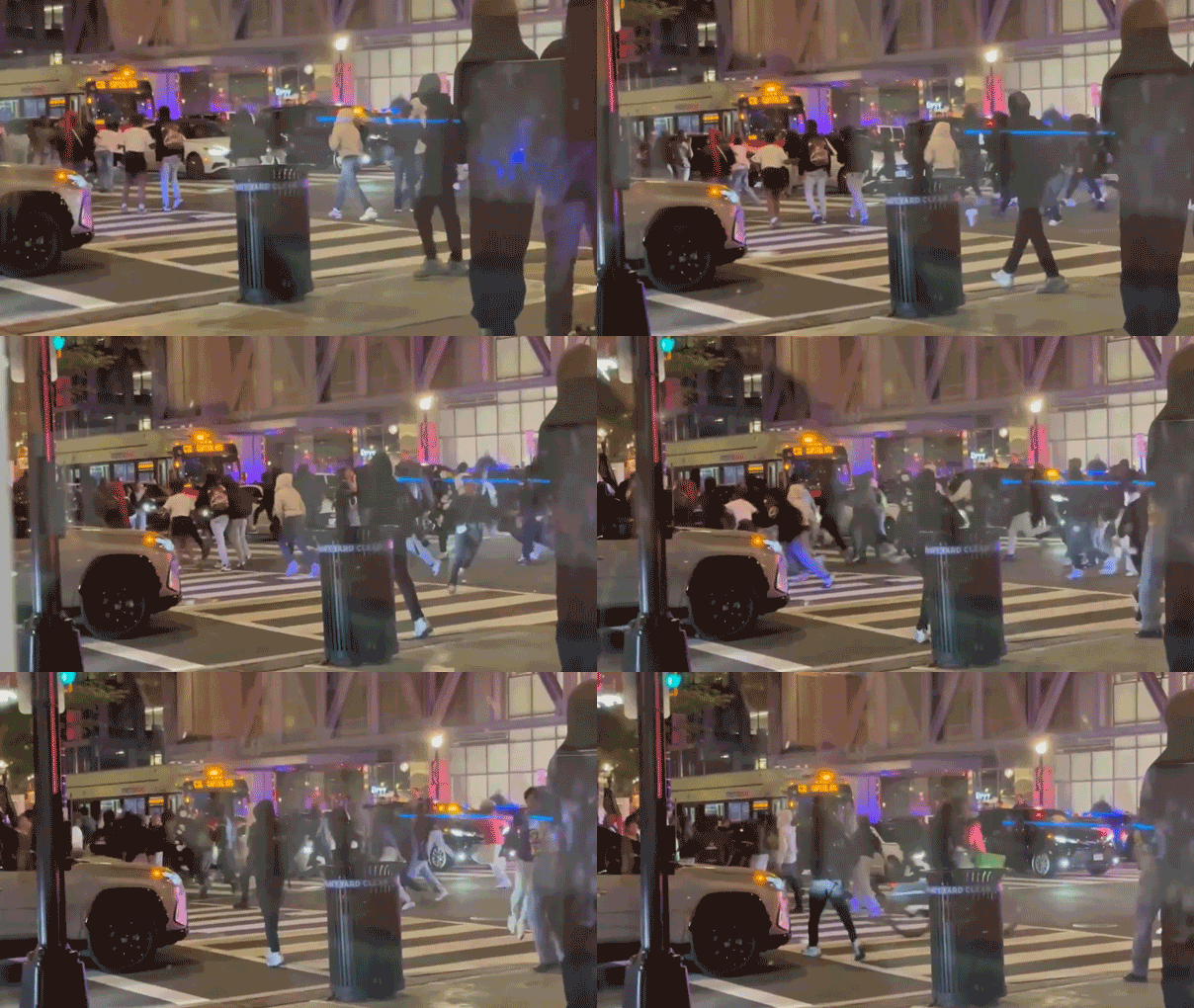
Across the United States, a deeply unsettling phenomenon is rapidly transforming ordinary afternoons and weekends into scenes of sudden, heart-pounding panic. What have colloquially become known as “teen takeovers” are erupting in some of the most unsuspecting places—from quiet, upscale waterfront districts and suburban shopping malls to neighborhood parks and family-friendly restaurants. For generations, these public spaces served as the backdrops of shared community life, places where families strolled with strollers, elders sat on benches, and friends met for dinner without a second thought. Today, however, these locations are finding themselves increasingly vulnerable to sudden influxes of hundreds of young people, mobilized almost instantaneously through viral posts on platforms like TikTok and Instagram. When these massive, highly energized crowds assemble, the peaceful atmosphere frequently curdles into intense volatility, marked by violent brawls, property destruction, daring acts of vandalism, and, in the most terrifying instances, active gunfire. For local residents, business owners, and everyday patrons, the experience of being caught in the middle of these events is traumatizing. The sheer speed with which a peaceful public space can devolve into a chaotic stampede of screaming teenagers leaves eyewitnesses shaken and raises urgent questions about the breakdown of social norms, the isolation of post-pandemic youth, and the modern digital landscape that facilitates these flash-mob-style gatherings with chilling efficiency.
The heart of the nation’s capital has found itself at the absolute center of this gathering storm, with two high-profile incidents exposing the brazen nature of these disruptions. Inside a bustling Chipotle restaurant in the Navy Yard neighborhood, a quiet weekday dinner turned into a war zone when a group of teenagers began throwing heavy metal chairs and physically brawling across the dining room. Terrified parents and young children were forced to huddle in corners, shielding themselves from flying furniture, while one teenager even weaponized a high chair meant for toddlers before hurling it across the crowded space. The fallout was so severe that the FBI intervened, offering thousands of dollars in rewards alongside local police to track down the young perpetrators, while prominent public figures called for prosecuting the children’s parents. This shocking restaurant melee occurred just weeks after a similarly chaotic event in the exact same neighborhood, where roughly two hundred black-clad teens swarmed the streets in open defiance of a newly established juvenile curfew. As the crowd surged through the upscale waterfront district, fights erupted, robberies occurred, and a teenager fired a handgun into the air in a public park, forcing running crowds to flee for their lives. The back-to-back crises in Washington have ignited a furious political debate over local law enforcement policies, with critics arguing that soft-on-crime approaches in major cities have left police ill-equipped to handle mobs of minors who feel entirely insulated from legal consequences.
The anxiety generated by these sudden gatherings is not confined to dense urban neighborhoods; it has also swept through sunny coastal retreats, leaving tourists and locals scrambling to process sudden violence on their vacations. On the usually tranquil shores of Tybee Island, Georgia, a popular pier and pavilion area became the site of a massive, unpermitted pop-up event that drew hundreds of youths onto the beach. What began as a loud, crowded gathering of young people quickly took a frightening turn when a single gunshot rang out under the pier, instantly transforming a sunny afternoon of coastal recreation into a scene of sheer terror. Video footage captured the dramatic and heartbreaking moment as hundreds of teenagers ran in a blind panic across the sand, desperately trying to escape what they feared was an active shooter situation. Tourists who had come to the island to enjoy a peaceful coastal getaway suddenly found themselves trapped in a human stampede, highlighting how quickly a relaxed environment can turn hostile. For the local community, which relies heavily on tourism and a reputation for being safe and welcoming, the incident served as a stark reminder that no place is entirely insulated from the volatile dynamics of viral teen gatherings, leaving local authorities to desperately search for clues beneath the wooden planks of the pier where the violence began.
In the Midwest, cities like Detroit are grappling with the digital infrastructure that fuels these modern crises, where online platforms act as accelerators for chaotic real-world meetups. A stark example occurred when the downtown entertainment district of Detroit was suddenly overrun by roving mobs of youths, an event that had been heavily promoted and romanticized on social media for days beforehand. As hundreds of young people poured into the city streets, screaming, running, and clashing with one another, officers struggled to maintain any semblance of order, with the chaos escalating to the point where an active firearm was discharged into the night air. The timing of this particular takeover was particularly painful for local leaders, occurring just twenty-four hours after Detroit Mayor Mary Sheffield and various youth advocacy organizations had met to discuss the urgent need to create safer, constructive, and supervised spaces for young people to gather. The clash between the city’s aspirational youth outreach programs and the sudden, destructive reality of the takeover highlighted a difficult truth: while city planners and community organizers are working tirelessly to build bridges and offer positive outlets, the viral allure of immediate, unregulated street culture continues to easily overpower local initiatives, leaving city officials struggling to catch up with a generation that communicates and congregates on a digital plane far ahead of physical policing strategies.
The illusion that these dangerous disruptions are strictly urban problems was shattered in Glendale, Wisconsin, when the upscale Bayshore Mall became the target of an intensely coordinated online “takeover” invitation. Anticipating trouble after tracking the viral posts, local law enforcement deployed extra security to the shopping center, but the sheer volume of the incoming crowd completely overwhelmed their preparations. Within hours, hundreds of teenagers flooded the indoor and outdoor spaces of the plaza, launching into violent brawls that spilled directly into retail stores and caused shoppers to flee in terror. Heart-stopping mobile phone footage captured the moment a teenager was violently shoved through the glass doors of a Kohl’s department store, while other videos showed hooded youths trading punches in the center plaza as terrified retail workers locked down their businesses. The chaos resulted in thirteen arrests for offenses ranging from physical battery and disorderly conduct to actively resisting law enforcement officers, leaving a community that prided itself on suburban peace deeply shaken by the sudden intrusion of mob violence. For the mall’s merchants and visitors, the incident was a sobering reminder that suburban shopping centers, traditionally regarded as safe, climate-controlled environments for families, have now become highly visible targets for flash-mob violence, forcing businesses to rethink their security protocols and face the harsh reality that their brick-and-mortar stores are highly vulnerable to the digital whims of youth culture.
As summer approaches and warm weather naturally draws more young people outside, municipal leaders, behavioral psychologists, and police forces across the United States are locked in a desperate search for effective solutions to contain this volatile trend. The debate over how to respond splits communities down the middle: some argue for heavy-handed punitive measures, advocating for strict nighttime curfews, the prosecution of parents whose children are caught rioting, and a surge in tactical police presence in popular public zones. Others warn that treating an entire generation with suspicion will only deepen young people’s alienation from society, urging instead for massive investments in youth community centers, late-night recreational programs, and structural mentorship initiatives that address the root causes of this post-pandemic behavioral crisis. Ultimately, the rise of these teen takeovers exposes a profound and systemic disconnect in modern society, where an increasingly hyper-connected digital world has left many young people feeling intensely isolated, bored, and eager for the cheap thrill of viral notoriety, even at the cost of public safety. Reclaiming these shared spaces will require a delicate, highly empathetic balance—one that strictly enforces the law to protect innocent citizens, while simultaneously offering young people real, accessible paths toward community integration, proving that the solution lies not just in policing the streets, but in actively rebuilding the social fabric that holds us all together.