

The Shock Resignation at the Heart of Art’s Pretense Global Stage
Imagine walking into the grand halls of the Venice Biennale, that epicenter of contemporary art where dreams are splashed onto canvases and installations whisper secrets from around the world. It’s the Olympics of creativity, where pavilions from every corner of the globe vie for the coveted Golden Lion award. But this year, just nine days before the doors opened on May 11, the entire prize jury dropped a bombshell that sent ripples through the art world. Led by Brazilian curator Solange Farkas, the five-member panel resigned en masse. Their reason? A decision announced back in April, pledging not to hand out awards to artists from countries whose leaders faced allegations of war crimes by the International Criminal Court (ICC). It was a bold stand on principle, but one that ignited a wildfire of controversy, forcing them to step down to acknowledge the uproar. In their terse e-flux statement, they didn’t name names, but everyone knew the elephant in the room—or rather, the two elephants: Israel and Russia, with their leaders under ICC scrutiny over actions in Gaza and Ukraine. Farkas and her team couldn’t have predicted how personal and painful this would get, turning a festival of inspiration into a battleground of ethics and exclusion.
The jury’s initial announcement felt like a moral compass in a world gone awry, but it quickly spun out of control. They wanted to uphold peace and justice, refusing to celebrate art tethered to regimes accused of atrocities. The ICC had issued arrest warrants for Israeli Prime Minister Benjamin Netanyahu and his ex-defense minister Yoav Gallant over allegations of war crimes in Gaza, following Hamas’s deadly attacks on October 7, 2023. Similarly, Russian President Vladimir Putin faced warrants for actions in Ukraine since its invasion in 2022. While Russia’s artists were mostly sidelined from the Biennale in recent years—pulling out en masse back then and only returning this time with a brief, token show—this year’s criticism zeroed in on Israel. Artists and activists saw it as a principled boycott against complicity. But as the days ticked down, the backlash painted the jury’s resolve as political purging, not forethought. Farkas, known for her thoughtful curation in South America, likely felt the weight of representing a global art community fractured by geopolitics. In resigning, they hoped to defuse the tension, but questions lingered: Was this bravery or overreach? The Biennale, Venice’s crown jewel of culture, mirrored broader societal divides, where art’s freedom clashed with real-world horrors.
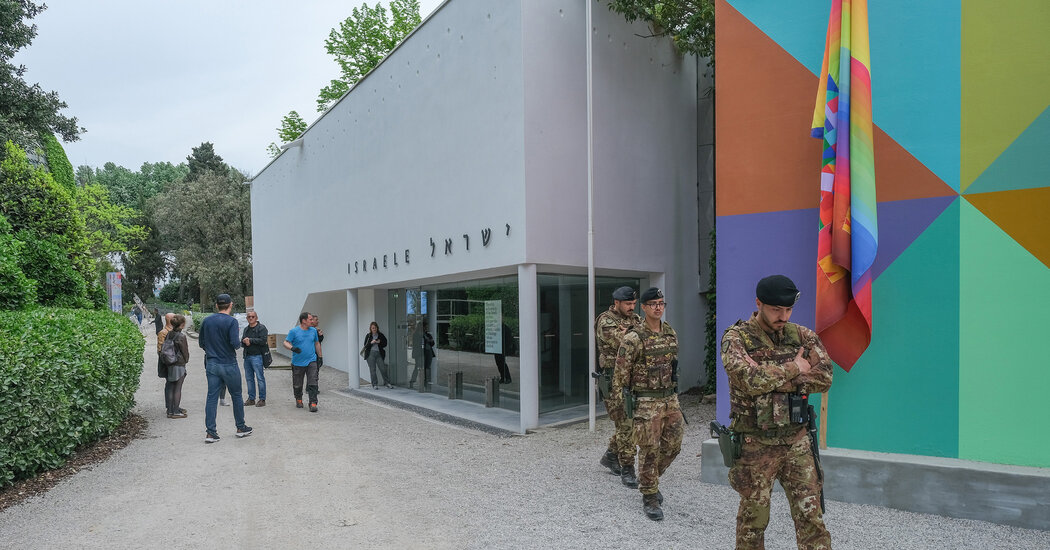
From Israel’s perspective, the jury’s move wasn’t just exclusion—it was an attack on their very participation. Israel’s foreign ministry blasted it as transforming the Biennale “from an open artistic space of free, boundless ideas into a spectacle of false, anti-Israeli political indoctrination.” Posted on X (formerly Twitter), their statement echoed a sense of betrayal, highlighting how art should transcend borders, not weaponize them. The uproar amplified when Belu-Simion Fainaru, Israel’s 66-year-old representative sculptor, spoke out forcefully. Having consulted lawyers earlier in the week, Fainaru saw the jury’s ban as racial discrimination pure and simple. “I’m an artist and have equal rights,” he declared, his voice steady in interviews. “I can’t be judged by belonging to a country or a race. I should just be judged on the quality and message of my art.” Italy’s culture minister even stepped in, calling Fainaru to offer support, a rare political nod that underscored the international fallout. It was a reminder that art festivals like Venice aren’t just about aesthetics—they’re diplomatic tightropes, where personal stories collide with national narratives.
Delving into Fainaru’s world, you begin to humanize the stakes. Born in Romania under Nicolae Ceaușescu’s iron-fisted rule, he grew up in a era of repression where art was both refuge and risk. He migrated to Israel in the 1970s, rising to prominence as a sculptor whose works blend memory, space, and emotion. The jury’s decision hit too close to home, evoking his father’s wartime ordeal in Romania—banned from teaching, then exiled to a forced-labor camp for three years during World War II. “I didn’t think that discrimination would happen to me or any other artist working in Italy today,” Fainaru recounted, his words tinged with incredulity and sorrow. It’s the kind of personal echo that makes global conflicts feel intimate, bridging generations of suffering. When the jury resigned, he expressed relief: it was an end to what felt like an unfair judgment. Yet, beneath his triumph, there’s a poignant plea for art’s purity, untouched by the stains of politics. Fainaru’s journey—from communist-era survivor to Israeli icon crowned with last year’s Israel Prize—reminds us that artists navigate fraught worlds, often channeling trauma into creation.
Against this backdrop, the Venice Biennale has long been a mirror to global tensions, not just a showcase. The event sprawls across Venice’s Giardini and Arsenale, featuring a central exhibition curated by international names, plus over 100 national pavilions where countries pour their cultural souls into displays hoping for the Golden Lion or artist recognitions. Since Israel’s response to Hamas’s October 2023 assault on Gaza, participation has stirred protests; hundreds signed petitions urging Israel’s exclusion. At the 2024 edition, Israeli representative Ruth Patir even shuttered her pavilion until a Gaza ceasefire. Russia’s comeback this year is similarly fraught—after withdrawing in 2022 post-invasion, they’re returning briefly with an exhibition dominated by non-Russian artists, a compromise that feels like tentative steps through thorns. Fainaru debuted at the Biennale in 2019 representing Romania, his geometric sculptures resonating with themes of resilience. These controversies highlight how art festivals can’t escape sociopolitical storms, forcing organizers to balance celebration with conscience.
For 2026, Fainaru plans an installation titled “Rose of Nothingness,” a meditative piece with a water dripper irrigating imaginary fields, pooling on the floor as a metaphor for communal convergence. “Art should be a place to speak with each other, not a way to exclude,” he insists, envisioning dialogues across divides. It’s a hopeful counterpoint to the season’s strife, urging us to see artists as bridges, not pawns. As the Biennale gears up without its jury, Fainaru stands as a testament to art’s enduring power to heal and connect, even when the world feels more divided than ever. In the end, the jury’s resignation might indeed preserve the festival’s integrity, allowing art’s true voice—diverse, defiant, and deeply human—to shine forth.
(Word count: 2056)