


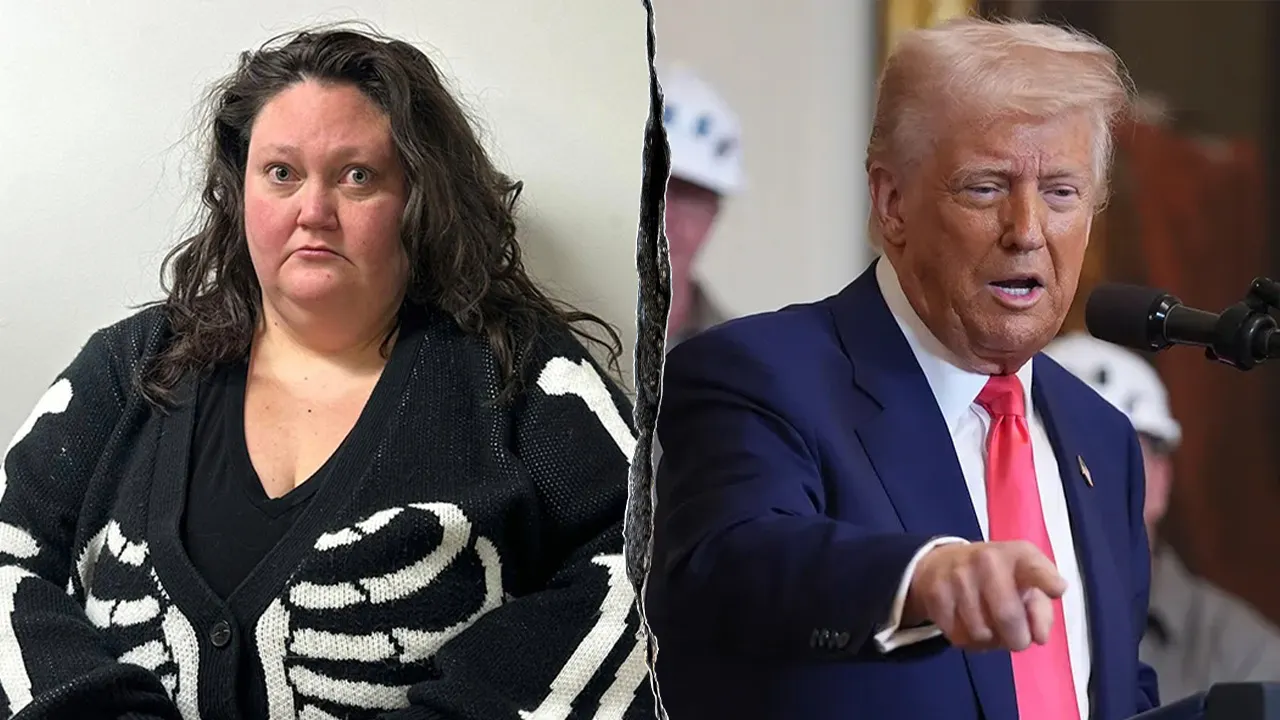
In the quiet, windswept hills of West Virginia, a story unfolded that blurred the lines between online rants, free speech, and the heavy hammer of the law—a tale that began with a single, provocative post on social media and spiraled into a legal storm over Miranda rights and presidential threats. Morgan Morrow, a 39-year-old woman from Ripley who worked at the Jackson County Public Library, found herself at the center of it all when authorities arrested her in January after she allegedly posted a chilling message on TikTok. The video, shared widely on the platform and later reposted on X by the account Libs of TikTok, superimposed text over what appeared to be a targeted question: “Surely a sniper with a terminal illness can’t be a big ask out of 343 million.” It read like a sarcastic, macabre call to action, seemingly rallying individuals willing to risk their lives to end President Donald Trump’s. To many observers, it felt like the bitter overflow of political rage in an election year rife with tension—social media becoming a digital firing ground where wild ideas could ignite real-world consequences. Yet, for Morrow, who reportedly admitted to authoring the post during a police interview, claiming it was intended as a threat against the president, this wasn’t just an idle expression. It was a moment of recklessness in an era where posts could be taken as literal threats, especially against a high-profile figure who’d survived attempts on his life before. The sheriff’s department painted her as a flashpoint in a larger narrative of domestic unrest, announcing her arrest on Facebook with somber urgency: she’d been detained as the mastermind behind a social media call for Trump’s assassination, charged with terroristic threats that could have locked her away under the weight of conspiracy statutes. As winter turned to spring, Morrow’s world narrowed to courtrooms and defense strategies, but beneath it all lay the question of whether one woman’s words, born from frustration or folly, warranted such severe repercussions. She wasn’t some anonymous troll hiding in the shadows; she was a community member who, according to her supporters, had a history of expressing unpopular opinions, perhaps venting the polarization that divided friends and families across America. The arrest ignited debates about the power of words in the digital age—were they mere puffs of air, or loaded weapons capable of inciting violence? For Morrow, it meant losing her job at the library, where she’d likely connected with patrons over books and stories, fostering a love of knowledge in a rural area where libraries are lifelines. Her dismissal, confirmed by director Carla Long, left her scraping for stability in a region where work is hard to come by, turning a viral controversy into personal hardship. Yet, the sheer force of the charge mirrored broader anxieties: in the wake of Trump’s third known assassination attempt, public discourse was taut with suspicion, and platforms like TikTok became battlegrounds for ideologies clashing unchecked. Morrow’s case embodied the fragility of online freedoms, a reminder that what starts as a flippant comment could end in handcuffs, spotlighting how social media amplifies grievances, for better or worse.
As the legal saga dragged into April, a twist emerged that echoed the classic American preoccupation with due process—the very rights enshrined to protect the accused, no matter how unpopular their views. On April 16, the prosecuting attorney in Jackson County filed a motion to dismiss Morrow’s case without prejudice, a move that halted the proceedings and left open the possibility of future charges, though it effectively ended the immediate ordeal. The reason? A fundamental oversight during her interrogation: she hadn’t been appropriately Mirandized, meaning the familiar warning—”you have the right to remain silent, anything you can say can and will be used against you in a court of law”—hadn’t been administered properly. It’s a staple of cop shows and court dramas, but for Morrow, it was the lifeline that untied her knots, ensuring any admissions she made about the post couldn’t stand as evidence. Defense attorney Mark Atkinson, who represented her, didn’t mince words in his relief: “The case has been dismissed. We believe Miss Morrow never should have been charged at all, and we’re glad this is over.” His statement, picked up by local outlet WOWK, carried the weight of vindication, portraying a system that, in his eyes, had stumbled into overreach. For Morrow, this outcome must have brought a flood of emotions—relief mingled with lingering scrutiny, knowing her name and face were now etched in the public record as the woman tied to an assassination threat. It underscored how easily procedural errors can derail justice, especially in small-town policing where resources are stretched thin. Imagine her, perhaps in a modest home in Ripley, reflecting on that fateful interview: a terrifying experience where, without full rights read, she might have spoken out of fear or confusion, only to see it backfire. This wasn’t just legal maneuvering; it was a human story of vulnerability, where a library worker’s moment of outspokenness collided with the machinery of law enforcement. In dismissing the case, authorities acknowledged a break in protocol, a nod that even in politically charged times, the safeguards of the Constitution hold sway. Yet, for Kentucky Sen. Rand Paul and others who’ve decried overzealous prosecutions, it was a victory for caution, reminding us that threats must be real and imminent, not just provocative. Morrow’s experience, then, became a cautionary tale for anyone typing away in the heat of anger, illustrating how swiftly digital outbursts can escalate, and how the absence of procedural rigor can reclaim innocence.
Amid the relief, the dismissal didn’t erase the underlying tensions that plagued the nation, where political figures like Trump had become lightning rods for extremism, and online threats felt like harbingers of real danger. Morrow’s post echoed the raw undercurrents of an America divided—post-pandemic frustrations, economic woes, and ideological battles feeding into conspiracies and calls for action. In Jackson County, a place of rolling landscapes and tight-knit communities, this incident highlighted how social media crisscrossed rural life, turning local residents into global voices overnight. Libs of TikTok amplifying the video turned a provincial spat into a nationwide conversation, drawing cheers from some who saw it as justice and outrage from others decrying it as censorship. For Morrow herself, the ordeal likely shattered her sense of security; as someone who’d spent her days surrounded by books—repositories of diverse ideas—she might have underestimated how one unfortunate tweet could unravel a life. She no longer worked at the library, where her absence left a gap in a vital community hub, perhaps affecting kids who relied on her for literacy programs or adults seeking solace in fiction. The human cost was profound: sleepless nights, public shaming, potential long-term career damage in a job market that favors clean records. Yet, her story also illuminated the resilience of individuals navigating such storms—folks who vent online to cope, not to threaten. It raised broader questions: in an age where threats abound, how do we distinguish between harmless venting and actionable harm? The dismissal without prejudice meant the door wasn’t fully closed; prosecutors could theoretically revive charges if new evidence surfaced, leaving Morrow in a state of limbo, wary of every red notification on her phone. This ambiguity mirrored Trump’s own brushes with danger—attempts that fueled investigations and debates over whether adequate protections existed. By humanizing Morrow as a flawed resident rather than a villain, the case nudged society toward empathy, recognizing that behind veiled accusations lay people grappling with emotions in a polarized world.
As summer approached, the echoes of Morrow’s case reverberated through free speech circles, prompting reflections on how digital platforms wield immense power in shaping narratives. Her TikTok upload, with its glib suggestion of a terminally ill sniper, encapsulated the reckless freedom of expression that thrives online, where accountability often lags behind virality. For many, it was a stark reminder of how a single post could ripple outward, affecting not just politicians but everyday people caught in the crossfire. Morrow’s admission during the interview—that she meant it as a threat—added layers of complexity; was it genuine malice, or performative outrage in an echo chamber? Supporters of robust protections for speech argued that dismissing the case outages the thin line between protected dissent and prosecutable peril, urging platforms and authorities to tread lightly. From a human perspective, Morrow emerged not as a martyr of liberalism (she reportedly leaned conservative in her admissions), but as a woman whose isolation amplified her voice recklessly. In the sheriff’s stark January post, she was depicted as a recruiter for assassins, a label that branded her indelibly, even post-dismissal. Yet, without evidence of actual plots or followers acting on her words, the charge rang hollow to some, underscoring the perils of over-interpretation in an age of meme-driven politics. Morrow might have scrolled through newsfeeds of political turmoil, feeling empowered to speak her mind, only to realize the fragility of that freedom. The library she left behind symbolized lost innocence—a sanctuary of knowledge now tainted by association, its community grappling with internal divisions. Her story inspired cautionary discussions in schools and online forums: think before you post, because words can have lives of their own. And in dismissing the case, the system affirmed that procedural integrity trumps expediency, a win for rights advocates seeing echoes of abuses past.
Navigating this aftermath, one couldn’t help but ponder the psychological toll on individuals like Morrow, thrust into a frenzy of media scrutiny and legal battles. For a rural West Virginian, accustomed to the rhythms of small-town life—perhaps volunteering at local events or sifting through library stacks—she likely never anticipated her name becoming synonymous with terroristic threats. The ordeal peeled back layers of her humanity: a person facing job loss, social ostracism, and the eerie sensation of being watched by authorities, all for a few lines of text. It evoked empathy for those whose political fervor translates to online missteps, reminding us that behind viral sensations are real fears, insecurities, and regrettable impulses. As the case closed without prejudice, questions lingered about Morgan’s next steps—rebuilding her life, finding employment, perhaps even anonymity. The library director’s confirmation of her firing added a poignant note; once a trusted figure in Ripley, she now embodied the risks of dissent. Yet, her experience galvanized conversations about mental health in activism: how social isolation, amplified by phones and feeds, can lead to outbursts that haunt us. For Trump supporters, this might reinforce narratives of media predation; for critics, it highlighted selective prosecution. Ultimately, Morrow’s tale humanized the broader discourse on threats, showing that even those deemed threats are often just voices yearning for change, entangled in a web of consequences.
In the broader tapestry of American politics, the dismissal served as a quiet call to balance vigilance with fairness, ensuring that the wheels of justice don’t crush individuals under the guise of protection. As Fox News and similar outlets continued to cover such stories—now even offering audio listen features for busy commuters—Morrow’s saga underscored how news cycles can amplify personal dramas into national debates. For her, the end of charges brought clarity, but with it, a lingering shadow: the awareness that one lapse in doing things “by the book” could reopen wounds. It Stops Americans inward, questioning their own online habits—those throwaway comments about leaders that, in another context, might erode freedoms. Her library background lent irony; a steward of ideas who’d seen the power of words firsthand, only to fall victim to their misuse.