




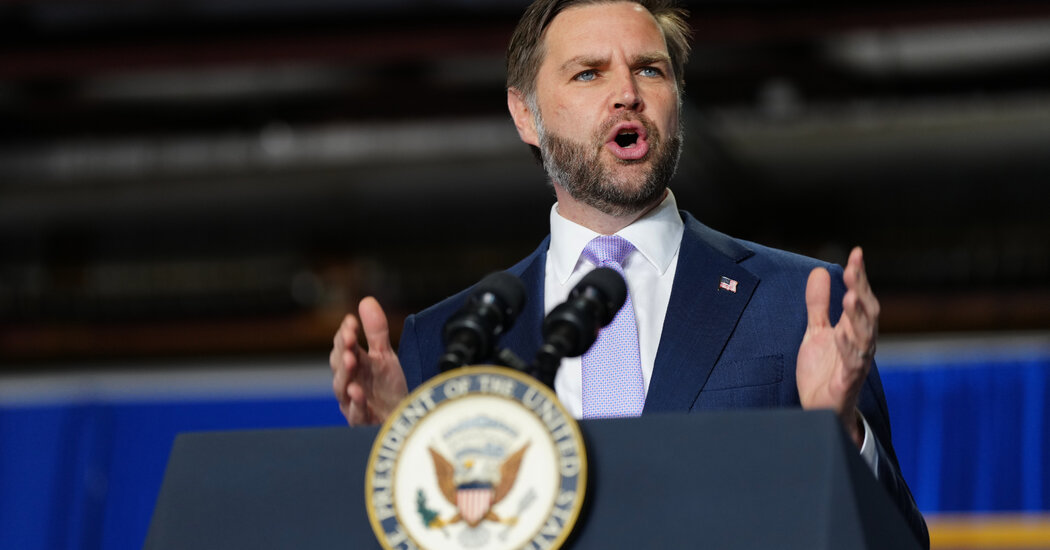
As President Donald Trump conducts high-level affairs on the global stage, Vice President JD Vance has embarked on a deeply personal and highly strategic campaign of his own back home, navigating cultural landscapes far removed from his typical political strongholds. Venturing outside the protective confines of the conservative media ecosystem, the young vice president launched a major media blitz this week, ostensibly to promote his newly published memoir centered on his personal faith. However, beneath the spiritual reflections lies a calculated political rollout designed to introduce Vance on his own terms as speculation intensifies regarding his inevitable presidential ambitions for the 2028 election cycle. By framing his public reintroduction around his faith, Vance is attempting to soften his image and establish a moral and intellectual foundation capable of appealing to a broader, more moderate American public. This media tour represents a critical transition phase for Vance, as he steps out of the shadow of a deeply polarizing administration to prove he can command national attention independently, relying on personal narrative, charm, and intellectual agility rather than the combative rhetoric that characterized his rapid political rise.
The true test of this charm offensive occurred in the brightly lit studio of ABC’s daytime talk show, The View, where Vance voluntarily walked into what many in his party view as hostile territory to face a panel of six formidable female hosts. The encounter served as a fascinating preview of how Vance intends to defend his administration’s most controversial policies while simultaneously presenting himself as a reasonable, empathetic leader. When confronted with sharp, pointed questions about the moral compromises required to sustain his political power, as well as the administration’s aggressive immigration tactics and detention centers, Vance did not resort to the aggressive, dismissive posture he often adopts on the campaign trail. Instead, he presented a disarming, self-deprecating demeanor, attempting to de-escalate tension with warmth and measured explanations. He worked to humanize his boss, defending Trump’s past association with Jeffrey Epstein by highlighting how Trump cooperated with law enforcement, while framing the president’s reluctance to release the Epstein files as a sign of his independent defiance of congressional pressure. This carefully recalibrated approach—climaxing with the hosts presenting him with a show-branded baby onesie for his child due in July—underscored Vance’s strategy of projecting working-class accessibility and familial warmth over partisan vitriol.
However, this carefully curated facade of easy-going civil discourse faced a severe and emotionally charged test when the discussion pivoted directly to the sensitive issues of race, historical representation, and minority voter disenfranchisement. The atmosphere in the studio shifted dramatically when Whoopi Goldberg passionately questioned Vance about the administration’s impact on communities of color, pointedly reminding him that his own multiracial household means these issues carry personal weight. When asked how he reconciled the removal of Black history and monuments with his personal values, Vance’s supportive demeanor vanished, replaced by a defensive, skeptical look as he demanded specific details—a reaction that immediately drew sharp boos from the live studio audience. The tension escalated rapidly as co-hosts Sunny Hostin and Ana Navarro pressed him on the dismantling of minority voting districts and highlighted an immigration statistic showing that of the thousands of refugees admitted, nearly all were white South Africans. While Vance expressed skepticism over the immigration numbers and reiterated that his political coalition welcomed all Americans, the friction of this exchange illustrated the immense difficulty of his political task, revealing the deep, unresolved cultural divides that lie just beneath the surface of his polished rhetoric.
Adding to the complexity of the media tour was the silent, ironical backdrop of Vance appearing on ABC in the first place, given the administration’s ongoing, bitter feud with the network. Only months prior, ABC had agreed to pay a staggering fifteen-million-dollar settlement to resolve a defamation lawsuit brought by the president, while Donald and Melania Trump had publicly pressured the network to fire late-night host Jimmy Kimmel over highly personal jokes directed at the First Lady. This tense corporate warfare, which recently included network accusations of federal regulatory intimidation, made Vance’s presence on the channel feel like an act of high-stakes political diplomacy, as if he were trying to mend fences his administration had spent years tearing down. Vance’s media strategy also includes an upcoming high-profile sit-down with conservative commentator Megyn Kelly, a figure who has herself been the target of Trump’s personal insults and who recently questioned whether the president could behave like a normal human being. By engaging with media figures and platforms that have been openly hostile to, or critical of, his administration, Vance is demonstrating an independence in communication strategy, positioning himself as a leader willing to confront critics directly and rebuild broken bridges.
While Vance addresses these cultural and media battles at home, his statecraft credentials are being tested in the international arena as the administration orchestrates a major pivot in foreign policy. With President Trump attending the G7 summit in France, Vance has been elevated as the primary public face of the peace negotiations aimed at concluding a landmark cease-fire agreement with Iran, which he is scheduled to sign in Europe. This diplomatic achievement represents a massive milestone for Vance, elevating his status from a domestic political operator to a global statesman capable of managing highly complex geopolitical crises. However, the diplomatic breakthrough has also exposed a growing ideological fault line within the conservative populist movement. While the anti-interventionist wing of the party is celebrating the wind-down of hostilities and the fulfillment of promises to end foreign entanglements, more traditional foreign policy hawks are growing increasingly anxious over the lack of transparency surrounding the terms of the deal. Vance must navigate this internal divide with extreme care, ensuring that his role in securing peace is viewed as a major victory without alienating key conservative factions who demand a strong, uncompromising posture on the global stage.
Ultimately, this entire media blitz serves as the opening chapter of Vance’s calculated journey toward a potential 2028 presidential bid, a path that requires a delicate balance of personal ambition and absolute loyalty to Donald Trump. During a recent appearance on CBS Sunday Morning alongside his wife, Usha, Vance addressed these aspirations with a careful mixture of humility and strategic preparation, projecting the image of a modern, forward-looking political family. Vance spoke candidly about his relationship with the president, revealing a psychological dynamic where he avoids initiating conversations about his own political future, while Trump frequently and enthusiastically brings up the topic of succession. This dynamic highlights the unique challenges Vance faces as he attempts to build his own political legacy; he must establish a distinct identity and a broad national appeal, yet he must do so without appearing to eclipse or displease a leader who demands total fealty. As Vance continues his tour, balancing his faith, his growing family, and high-stakes international diplomacy, he is offering a compelling preview of a new generation of conservative leadership—one that is highly educated, media-savvy, and deeply ambitious, attempting to navigate the volatile currents of modern American politics to claim the ultimate prize.