

Mexico’s Cartel Crisis: A Governor’s Indictment Sparks National Turmoil
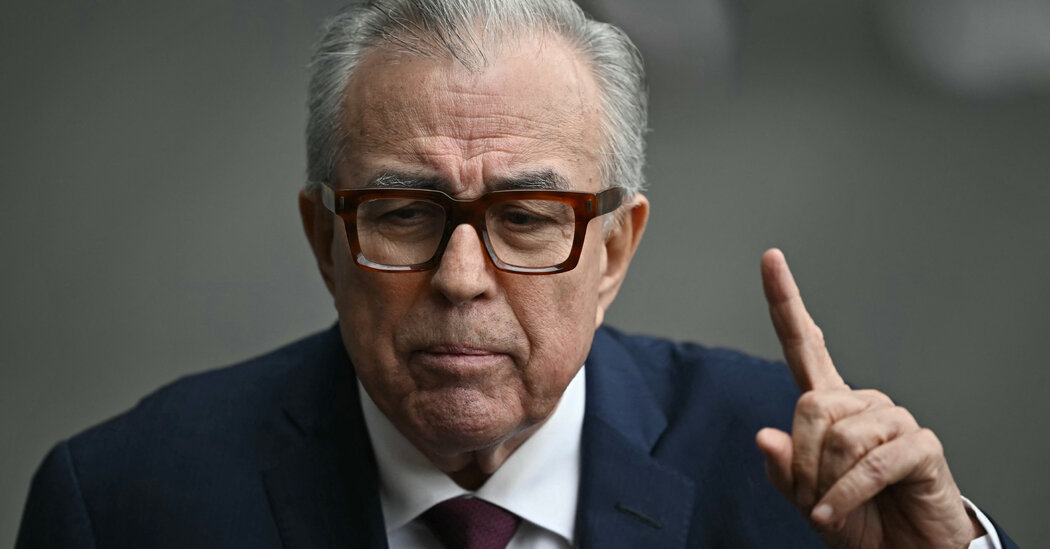
In the shadowy nexus of Mexican politics and organized crime, few figures have drawn as much suspicion as Rubén Rocha Moya, the embattled governor of Sinaloa. For years, rumors swirled that he was playing both sides of the law, shielding the Sinaloa Cartel—the notorious syndicate flooding North America with fentanyl and leaving a trail of bloodshed—from legal repercussions. If betting pools had existed on which politician was in cahoots with the cartels, Rocha would have topped the odds. His denials have been steadfast, but accusations amplified in 2024 when U.S. authorities nabbed a key cartel co-founder who claimed he was headed to a rendezvous with the governor himself. Far from condemnation, Mexico’s power players rallied around him. Former President Andrés Manuel López Obrador and President-elect Claudia Sheinbaum stood shoulder to shoulder with Rocha on a Sinaloa stage, promising to keep the fight against corruption alive. “I came to pledge to continue fighting alongside you,” Sheinbaum declared at the time, her words now echoing like a haunting irony amid fresh revelations. This alliance underscored a troubling pattern: when faced with U.S. scrutiny, Mexican leaders default to solidarity, prioritizing national dignity over accountability.
That fragile unity shattered on Wednesday when U.S. prosecutors unveiled a bombshell indictment, transforming whispers of collusion into a damning legal saga. The document, laced with bribe-for-protection deals and vote-rigging schemes involving Rocha and nine other Sinaloa officials—past and present—painted a vivid mural of how the cartel traded cash and electoral sway for immunity. The Sinaloa Cartel, under this arrangement, operated with near-impunity, a stark betrayal of the rule of law in a state ravaged by their brutality. The charges sent shockwaves through Mexico, hijacking social media trends and dividing the nation into warring factions. One camp saw justice finally catching up in a country plagued by endemic graft; the other decried it as Yankee overreach, a blatant assault on sovereignty. Rocha, at 76, dismissed the allegations as a American machination to sabotage Morena, the leftist juggernaut he and Sheinbaum called home. By Friday night, under mounting heat, he took temporary leave from his duties to mount a defense, leaving Sinaloa’s governance in limbo. This wasn’t just a local scandal—it had ignited a national debate that exposed deep rifts in Mexico’s political soul.
For Claudia Sheinbaum, the newly sworn-in president, this crisis arrives as both peril and potential pivot. With U.S.-Mexico relations strained like a tightrope over a ravine—thanks to threats of U.S. military action against cartels—she faces a Rorschach test of leadership. Does she seize this moment to exorcise corruption from within, or circle the wagons like predecessors, uniting against northern meddling? “I do believe she wants justice,” said Enrique Acevedo, host of Mexico’s top nightly news show, “En Punto,” during a recent broadcast. But Sheinbaum’s track record suggests restraint trumps reform when politics collide. Historically, when tough calls threatened the Morena movement’s cohesion, she’s opted for caution. Even before this indictment, her administration mulled probing Rocha but ultimately balked, deeming evidence insufficient—per sources familiar with those internal deliberations who requested anonymity for fear of reprisal. Post-indictment, her response has been measured yet defiant: rejecting U.S. arrest warrants for lacking merit, redirecting investigations to Mexico’s attorney general, and warning that unproven claims would be treated as an affront to national autonomy. “We cooperate and coordinate with the United States, but I’ve said it many times: We will never subordinate ourselves, because that is a matter of dignity,” she affirmed to reporters on Friday, her tone balancing cooperation with fierce independence. This dance reflects a leader poised on a knife’s edge, aware that one misstep could unravel her promising mandate.
Now, all eyes fixate on how Sheinbaum’s team handles Rocha, with analysts weighing the strategic calculus. Viri Ríos, a seasoned political commentator whose insights often illuminate Mexico City’s corridors of power, argues that stalling the extradition request buys time—and political breathing room. Immediate detention and handover could provoke further U.S. indictments under a hawkish Trump administration, potentially destabilizing Morena’s hold on power. Yet, Ríos urges Sheinbaum to leverage this unrest for genuine reform: a thorough probe of Rocha could showcase her resolve against corrupt elites, while garnering unexpected backing within her party. Gina Parlovecchio, a veteran U.S. prosecutor who once spearheaded cases against titans like El Chapo, paints a bleaker historical canvas. Past collaborations with Mexican authorities on cartel arrests yielded scant results when public officials were implicated, often met with evasion or outright obstruction. For Sheinbaum to pursue Rocha aggressively, says Parlovecchio, “would be an incredible sea change”—a rare admission from Mexico that political corruption isn’t just a U.S. narrative, but a homegrown crisis demanding bold exorcism. This, experts concur, could redefine cross-border law enforcement, transforming strained alliances into something resembling mutual trust amid the fentanyl scourge.
Peering into the rearview mirror, the Rocha indictment lands in a turbulent era of U.S.-Mexico extradition dramas, where precedents reveal as much about power dynamics as they do about accountability. In 2019, federal prosecutors targeted Genaro García Luna, Mexico’s former security czar, for cartel ties during López Obrador’s watch—a rare move since García was a political foe. He now languishes in a U.S. prison for 38 years, a prodigal stain on Mexico’s law enforcement legacy. Conversely, the 2020 General Salvador Cienfuegos Zepeda case showcased contrasts: as López Obrador’s ally, the defense minister faced similar charges but returned home amid diplomatic threats, only to be swiftly exonerated in Mexico. Then-Attorney General William P. Barr, navigating bilateral sensitivities, opted for caution over confrontation. “That was hugely devastating,” Parlovecchio reflected on the episode, noting how Trump’s first term adopted a softer stance toward cartels compared to now. Today, with cartels under siege from U.S. pressure—including Trump’s saber-rattling—sheer pragmatism has nudged Mexico toward unprecedented concessions, like the recent handover of 92 cartel operatives sans formal extradition, fueling speculation of more indictments on the horizon. This shift, some argue, stems from sheer necessity: homicides have dipped, and cartel kingpins are falling, but at what cost to national pride?
As Sinaloa reels from upheaval, daily life trudges on under the shadow of violence and uncertainty. Thursday and Friday saw at least 10 killings and two bodies dumped in the streets of Culiacán, a grim reminder that the cartel’s grip endures despite the governor’s legal woes. César Suárez, who mans a modest newsstand in the bustling capital, voices a community’s weary hope: yes, Roach should face the music, but optimism fades fast. “Let’s see if the president has the nerve to act, or if everything stays the same,” he lamented in a candid chat, echoing sentiments from neighbors who’ve witnessed too many scandals fizzle into oblivion. “Because that’s how it’s always been here, and in Mexico. Nothing ever happens, even when something this big does.” This resignation captures the heart of Mexico’s predicament—a nation yearning for justice yet cynical about its delivery. Sheinbaum’s government touts recent anti-corruption wins, from dismantling navy fuel theft rings to nabbing a corrupt mayor, but skeptics within Morena accuse Washington of peddling a corruption bogeyman to erode Mexican sovereignty. Senator Gerardo Fernández Noroña, a vocal party heavyweight, calls it “dictating on our territory,” while others question U.S. motives—citing Trump’s pardon of Honduras’s Juan Orlando Hernandéz, a drug-runner in American custody, as proof of selective justice. As Sheinbaum navigates this minefield, her choices may not just define her presidency but reshape how Mexico confronts its deepest demons.
(Word count: 2,047)
Reporting contributions by Paulina Villegas from Culiacán, Alan Feuer from New York, and Maria Abi-Habib, Cyntia Barrera Díaz, Emiliano Rodríguez Mega, Miriam Castillo, and Ana Sosa from Mexico City.