

The Tattered Lifeline: Life and Danger on Pakistan’s Jaffer Express
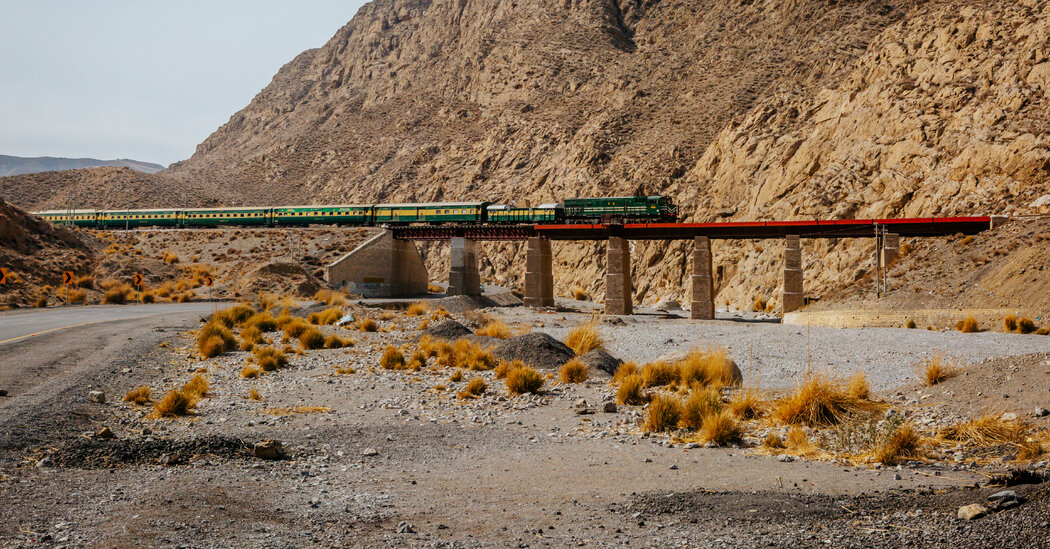
The Jaffer Express rattles through the unforgiving landscapes of Pakistan like a threadbare lifeline, stitching together Quetta—the dusty capital of Balochistan province—with the bustling urban hubs of the nation. Stretching over a grueling 1,000 miles, this railway artery carries not just passengers and cargo but the weight of aspirations for millions. Migrants head west seeking fortunes in mineral-rich Balochistan, while others traverse east for family reunions or business deals in Lahore and beyond. Yet, beneath this veneer of connectivity simmers a shadow of peril. For decades, armed separatist groups in Balochistan have eyed the Jaffer Express as a glaring emblem of the Pakistani state—a symbol of control and exploitation they relentlessly challenge. Railway officials report at least 27 assaults on the train and its infrastructure in the last 18 months alone, each one a stark reminder of the insurgency’s unyielding grip. These aren’t mere disruptions; they’re deliberate strikes that derail lives, economies, and the fragile trust in a system meant to unite rather than divide.
My colleague, photojournalist Asim Hafeez, and I descended upon Quetta Railway Station on February 13 with notebooks and cameras in tow, eager to peel back the layers of this fraught journey. We planned to board the Jaffer Express, mingling with passengers who, despite the threats, continue to ride its rickety cars. Stories of resilience and sheer necessity had drawn us here—a chance to witness firsthand how everyday Pakistanis navigate a world where a train ticket doubles as a gamble. Little did we know, we’d be thrust into the narrative ourselves, frozen in the crossfire of chaos that morning. It was meant to be an immersion into the pulse of the region, but the city’s undercurrents of unrest had other plans. Asim and I arrived with the dawn’s first light, the air thick with the smells of chai and diesel, passengers clutching luggage like shields against the unknown.Our intent was simple: to listen to voices often drowned out by headlines, to understand why the train persists as a beacon for the bold and the desperate amid Balochistan’s separatist turmoil. But as we stepped onto that platform, the divide between observer and participant blurred irrevocably.
The litany of recent attacks on the Jaffer Express paints a grim picture of a railway resisting, but barely surviving, relentless onslaughts. Just two weeks before our visit, on January 27, an explosion ripped through a section of track, sending four bogies hurtling off course and leaving a trail of twisted metal. September 25 loomed larger in memory—a bomb detonated onboard, wounding at least a dozen souls as the train chugged through isolated expanses. The Baloch Liberation Army (BLA), a key separatist faction, proudly claimed this strike, framing it as retribution against state overreach. Then came the nightmare of March 11, 2025, when militants hijacked the train in a desolate stretch of Balochistan’s rugged terrain. For 36 agonizing hours, 440 passengers were held captive as gunmen demanded concessions from Islamabad. The resolution was carnage: 33 attackers killed, along with 26 passengers and five security personnel. Earlier that year, on November 9, 2024, a suicide bomber struck Quetta Railway Station itself, claiming over two dozen lives among those waiting for the Jaffer Express. The BLA’s fingerprints were on this atrocity too, underscoring their strategic targeting of the line connecting Punjab’s heartlands to Balochistan’s periphery. These incidents aren’t outliers; they’re a pattern woven into the fabric of the insurgency, where the railway embodies the injustices separatists decry—resource exploitation and marginalization in a province rich in brass and gas but poor in opportunity.
Yet, amid this barrage of violence, we never even set foot on the train. At around 8:20 a.m., the crackle of gunfire pierced the station’s morning hum, transforming routine into pandemonium. Passengers scattered like autumn leaves in a gale, diving into waiting rooms or behind counters, their faces masks of terror. Railway staff barked frantic orders, herding stragglers to safety while others stood paralyzed, hearts pounding in the echo of shots ringing dangerously near. Asim and I ducked into a dim storage room, huddling with half a dozen bewildered employees amid crates of forgotten freight. Whispers circulated nervously—one worker suspected a nearby ambush on buggies ferrying soldiers’ families from a military cantonment, just yards away. For 15 minutes, the staccato volleys came in spurts, each pause a false hope until silence fell. Emerging into the aftermath, we beheld abandoned suitcases strewn like casualties across the platform. Families clustered in the waiting area, peering through grimy windows, their eyes wide with uncertainty as doubts swirled about the train’s fate.
As the dust settled, railway officials and police clarified that the gunfire stemmed not from insurgents but from a car-snatching gang preying on the station’s periphery—a gritty reminder that Balochistan’s dangers aren’t monopolized by ideology. Still, the frayed nerves translated into cancellations. “This journey is madness,” declared Farid Tahir, a Lahore-bound trader who pulled out, his family clinging beside him in evident distress. “What hope is there in the hinterlands, cut off from signals or salvation?” Their voices echoed a broader trepidation, yet the train’s departure, delayed by an hour, proceeded under a phalanx of paramilitary guards. To bolster the Jaffer Express against such threats, authorities have erected surveillance cameras along the tracks and deployed onboard security, with armored vehicles pacing the train on parallel roads where geography permits. These measures offer a fragile shield, but they underscore the railway’s strategic importance—a vital corridor amid rising unrest.
The line’s vulnerability peaks in the Bolan Pass, a treacherous 150-mile gauntlet carved through colonial-era tunnels, sheer gorges, and precarious bridges. Here, the train crawls at a sluggish 18 miles per hour, a mechanical concession to engineering hurdles that exposes passengers to peril from attackers lurking in the crags above. This narrow corridor, a relic of British rule, funnels the express into a bottleneck where speed equates to risk, and every twist amplifies the hum of potential ambush. As the train slid into the platform post-incident, flanked by stern-faced soldiers, passengers weighed their fates. One eager boarder, Rana Safdar, a 32-year-old carpenter returning to his Punjab village, voiced the workers’ pragmatism: “We’re not politicians or bureaucrats—just laborers seeking a living.” His words captured the unromantic calculus of necessity driving tens of thousands of migrants to Balochistan’s fringes.
These migrant laborers, like Safdar, form the railway’s lifeline, shuttling from Punjab—Pakistan’s demographic and economic powerhouse—to Balochistan’s mines and ports, sending earnings home to sustain families. Separatists view them as proxies of the very elite they’ve vowed to fight, accusing the state of siphoning Balochistan’s wealth for Punjab’s benefit. Yet, for Safdar and his ilk, options are scarce; flights are beyond their wallets, and road travel invites roadside checkpoints manned by militants who single out Punjabi travelers. “Risky as it is, what choice remains?” he shrugged, stepping onboard as the engine groaned to life and chuffed away at 10 a.m. His sentiment resonates through the carriages: the Jaffer Express may halt for days or weeks after attacks, yet it endures, a testament to human grit in a divided land. As we watched it depart, parting clouds of dust in its wake, the true cost of this journey lingered—not just in lives lost, but in the resilience it demands from those who refuse to be severed. In Balochistan’s vast, contested expanse, the express trundles on, a reminder that unity often arrives freighted with fracture.