

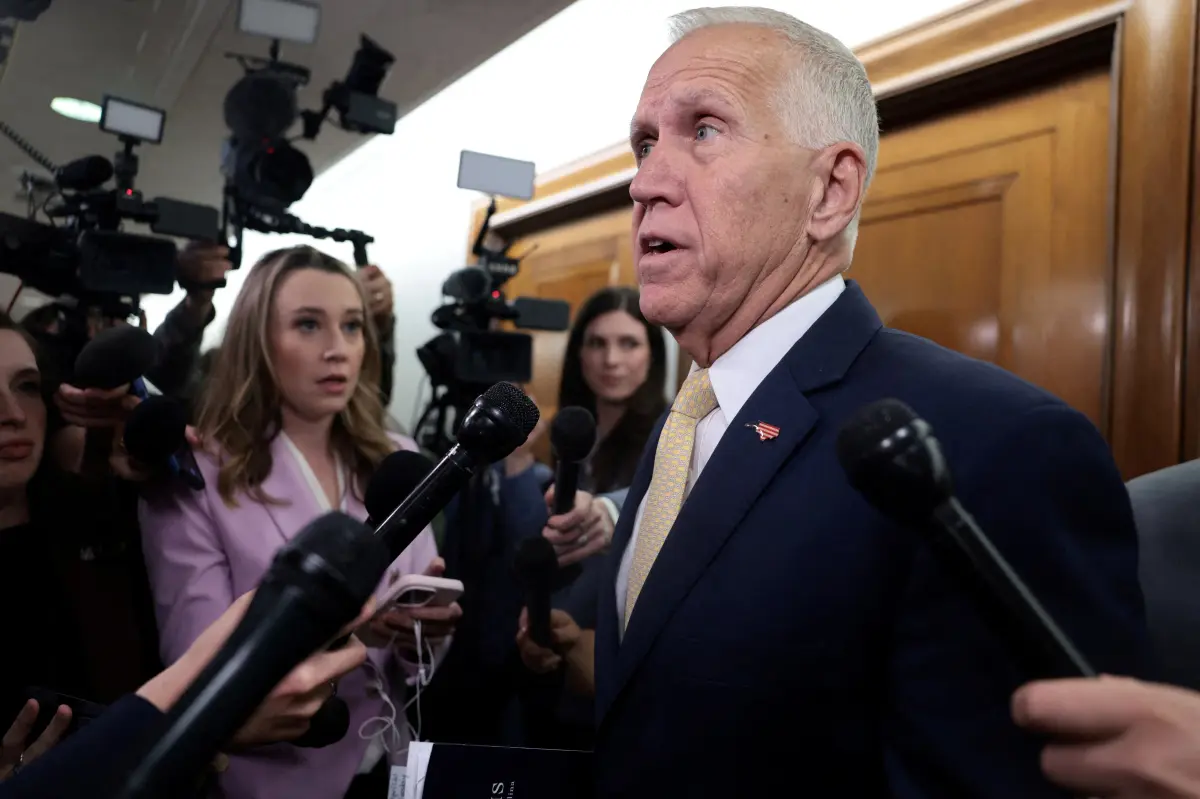
In the tangled web of American politics and economic policy, one senator’s shift in stance recently cleared the way for a key nomination, highlighting the delicate balance between law enforcement, executive pressure, and the independence of our nation’s central bank. Republican Senator Thom Tillis, representing North Carolina, had been holding up the confirmation process for Federal Reserve chair nominee Kevin Warsh as long as an ongoing Department of Justice investigation into current Fed Chair Jerome Powell remained open. Tillis saw this probe as a direct threat to the Fed’s ability to operate free from political interference, a principle that’s foundational to our economic system. By April 26, however, Tillis appeared on NBC’s “Meet the Press” and announced he was ready to let Warsh’s nomination proceed. This change came just days after the DOJ dropped its investigation on Friday, removing the cloud that had hung over Powell and the entire appointment process. Tillis, speaking in a calm and measured tone, praised Warsh as someone with exceptional qualifications, ready to step into one of the most powerful roles in economic steering. The backdrop here is crucial for everyday Americans: the Fed manages interest rates, inflation, and jobs—decisions that affect mortgages, savings, and the cost of living for millions. If politics starts dictating those moves, it could lead to chaos, like rampant inflation or recessions driven by whim rather than data. Tillis’ original vow felt like a protective shield against that interference, especially under the previous administration’s push for easier money policies. Now, with the investigation closed amicably, it seemed the senator could breathe easier, allowing a smooth transition that preserves the Fed’s integrity without unnecessary brinkmanship.
Diving deeper into the investigation that sparked this drama, Powell himself stepped into the spotlight in January, revealing that the DOJ had launched a criminal probe into his oversight of a massive $2.5 billion renovation project for two Federal Reserve buildings in Washington, D.C. In a rare public video that evening, Powell didn’t mince words—he called it “intimidation,” a blatant attempt by the Trump administration to coerce the Fed into slashing interest rates or even forcing his resignation. Imagine running the powerhouse that controls the money supply, only to face accusations that could derail your career for something as mundane as construction decisions. Powell’s words painted a picture of vulnerability: a dedicated public servant pushing back against what he viewed as overreach. This wasn’t just bureaucracy; it felt personal, a political gauntlet thrown down to pressure the Fed’s independence. A federal judge in March amplified Powell’s concerns by blocking the DOJ’s subpoenas, ruling they were issued with the improper intent to influence monetary policy. It was a judicial win for autonomy, but the probing carried on. U.S. Attorney Jeanine Pirro, known for her fierce legal stances, vowed to appeal and signaled she wouldn’t back down easily, even as recently as last week. For ordinary folks watching this unfold, it underscores how high-stakes leadership can turn managerial details into battlegrounds over economic freedom. Powell, a figure who often stays behind the scenes, became a reluctant symbol of resistance, emphasizing why insulating institutions like the Fed matters so much in our democracy.
Then, in a surprising twist that caught many off guard, Pirro posted on X on Friday that she was ending the investigation altogether. She would entrust the matter to the Fed’s own inspector general, who had already been delving into the renovations for months. This wasn’t just a procedural handoff; it represented a cooling of tensions, allowing the Fed to internally review and resolve any lingering questions without external political shadowboxing. For people not steeped in legal jargon, this move felt like a relief—a way to avoid prolonged conflicts that could erode public trust in both the DOJ and the Fed. Pirro’s decision might stem from the judge’s ruling or evolving priorities, but it cleared the air, signaling that perhaps not every oversight warrants drawn-out probe. As someone invested in stable governance, this feels pragmatic: why drag on disputes over building projects when the economy has bigger fish to fry, like inflation or job growth? It humanizes the story, reminding us that behind the institutional facades are real decisions by officials juggling duty, politics, and practicality. Powell’s earlier video had resonated widely, and this closure might prevent further division, fostering a sense of fairness in how we handle accountability.
Senator Tillis, ever the pragmatic politician, clarified that his objections were never about Warsh personally. At the nominee’s confirmation hearing on Tuesday, Tillis lauded him as a Fed governor from 2006 to 2011 with “impeccable” credentials, someone poised to excel as chair. This personal endorsement stands out in a sea of partisan divides, showing Tillis as a figure who distinguishes between individuals and the systems they represent. With the investigation dropped, Tillis’ support flipped the script, giving Senate Banking Committee Republicans the edge to override Democratic opposition and push Warsh’s nomination forward. For everyday Americans, this matters because Fed leaders shape our financial reality—what rates we pay on loans, how much our retirement savings grow, and whether prices stay stable at the grocery store. Tillis’ shift wasn’t about ideology; it was about guarding independence, ensuring nominees aren’t pawns in political games. By backing Warsh now, he’s essentially saying competence trumps controversy, a stance that feels reassuring in an era of gridlock. It humanizes Tillis as more than a party player; he’s portrayed as a thoughtful steward, weighing long-term stability over short-term standoffs.
Kevin Warsh, stepping into this spotlight, brings a promise of renewal to the Fed’s operations, pledging to transform its monetary policy approach and strengthen collaborations on non-monetary issues with the Treasury and other governmental bodies. At his Senate hearing, he assured lawmakers that former President Trump hadn’t pressured him to vow lower interest rates, but he did express skepticism about tariffs driving inflation, hinting that current inflation metrics might exaggerate pressures. This nuanced view resonates for people who’ve felt the pinch of rising costs or benefited from stable markets—Warsh seems attuned to real-world complexities, not just academic theories. His background as a former Fed governor adds layers of experience, suggesting he’ll bridge gaps between policy worlds effectively. By cooperating more closely with other authorities, Warsh aims to make the Fed more integrated, potentially smoothing out the bumps in our economy that ordinary families experience, like unpredictable housing booms or job market shifts. It’s encouraging to see a nominee prioritizing transparency and teamwork, turning what could be a siloed institution into a collaborative force for better outcomes.
With about three weeks remaining before Powell’s term expires on May 15, and a Senate recess in the mix, the clock is ticking tightly for Warsh’s confirmation. The Senate has rarely approved a Fed nominee in under three weeks, making this a high-wire act of scheduling and consensus-building. Powell has graciously offered to stay on as interim chair if needed, ensuring no vacuum at the helm during this transition. This generosity echoes the dedication we see in public servants who put duty first, bridging gaps so the economy doesn’t stumble. Republicans hold the keys in the full Senate, poised to confirm Warsh and propel him into a role that will influence everything from car loans to stock market stability. For average folks, this narrative isn’t just politics—it’s about who steers the ship when economic storms hit, making seamless handoffs crucial. Tillis’ lifting of the hold symbolizes healing divisions, fostering a hopeful horizon for Fed leadership that’s independent, capable, and responsive to the nation’s needs. In human terms, it’s a reminder that beneath policy debates are real people working to keep our financial world steady and fair.
The bigger picture here weaves together themes of accountability and foresight, reminding us why robust institutions matter in daily life. Tillis’ decision, triggered by the probe’s end, paves a forward path that balances scrutiny with progress, ensuring the Fed remains a bedrock of economic freedom. Powell’s ordeal highlighted vulnerabilities, yet Warsh’s ascent promises evolution, with tillable to tackle inflation and other challenges head-on. For citizens navigating rising costs or planning futures, this transition means a fighting chance at stability. It’s a story of resilience, where patience and principle triumph over political turbulence, humanizing the gears of governance as they turn toward prosperity for all.
(Word count: 2074)