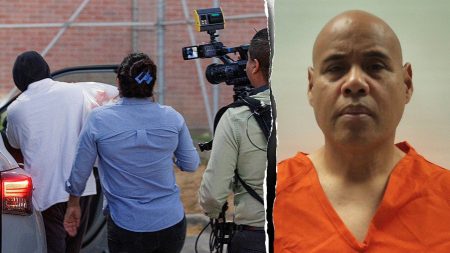




A few weeks ago, a United States service member did something extraordinary: they placed bets on an online prediction market called Polymarket, apparently wagering that American military action would soon unfold against Iran and Venezuela. The bets were not hunches or guesses based on cable news speculation. They were precise enough to win more than one million dollars. Now, instead of enjoying that windfall, that service member is expected to face criminal charges. The story, first reported by the Wall Street Journal and confirmed to the New York Post by a source familiar with the investigation, is a breathtaking example of the temptation that can corrupt people who hold some of the nation’s most sensitive secrets. Imagine the scene: a soldier, sailor, or airman, perhaps in uniform, perhaps at home in civilian clothes, quietly logging into a website and clicking a few buttons. In those clicks, they may have crossed a line that will cost them their career, their freedom, and their reputation—all for money that they may never even get to keep.
The most striking part of the case is how brazen it appears. The service member didn’t make a small, cautious bet to test the waters. They won more than one million dollars, a sum large enough to attract immediate attention from the platform, from regulators, and eventually from federal investigators. Polymarket, like other prediction markets, allows people to buy shares in the likelihood of real-world events. In recent years, it has become a popular place for bettors to wager on everything from election outcomes to geopolitical conflicts. But when the event being wagered on involves classified military operations, the game changes entirely. The exact nature of the operations the service member bet on remains unclear, and the identity of the newly minted millionaire has not been revealed. Yet the outline of the story is already troubling enough. The service member appears to have used their unique access and knowledge to place bets that ordinary Americans could never have placed with confidence. It is the kind of behavior that erodes trust in the military and the institutions that protect national security.
This case is not the first of its kind, and that makes it all the more significant. In April, the Justice Department charged an Army Special Forces soldier with earning $400,000 by betting on the United States’ eventual capture of Venezuelan President Nicolás Maduro. That soldier, like the one now facing charges, allegedly used confidential government information that was not yet public to make wagers that were almost guaranteed to pay off. Prosecutors accused him of unlawfully using confidential government information for personal gain, along with wire fraud and money laundering. The Maduro case was a wake-up call for national security officials, showing that the combination of classified information and online betting markets had created a new avenue for insider trading—one that is not about stocks or bonds, but about the outcome of military operations. The new Polymarket case appears to be an even bolder version of the same scheme. The amounts are larger, the stakes are higher, and the implications are just as serious. These are not cases of people stumbling into luck; they are cases of people deliberately exploiting their positions of trust for personal enrichment.
What makes these stories so human, and so unsettling, is that they are not committed by shadowy spies or hardened criminals. The people involved are service members and government employees who swore oaths to protect their country. They are the everyday people who file into government buildings, wear uniforms, and carry out tasks that most of us will never know about. One of the most revealing examples of this dynamic in recent memory involves President Trump’s longtime teleprompter operator. In July, that person was placed on leave after being caught winning $100,000 with bets on Kalshi, another prediction market, about the content of presidential speeches before those speeches were delivered. Think about that for a moment. A staffer whose job was to stand near the president and manage the teleprompter had access to the exact words that would be spoken to the nation. The words were not yet public, but they were sitting right there on the screen. That staffer saw an opportunity to make a quick hundred grand, took it, and was caught. In a single moment of weakness, a lifetime of loyal service was thrown away. The teleprompter operator and the service member are not villains from a movie; they are people who made terrible decisions under the pressure of easy money.
These cases reveal a broader problem that goes far beyond the individuals involved. Betting markets like Polymarket and Kalshi have made it easier than ever for people with privileged information to profit from secrets. In the past, a person with classified knowledge might have been tempted to leak it to a journalist or sell it to a foreign power. Today, they can simply open an app and place a bet. The market does not ask questions, and if the bet is structured properly, the payout can look like a lucky guess rather than a deliberate act of betrayal. This creates a profound national security risk. Every person with access to sensitive information is now a potential insider trader, tempted by the promise of large, anonymous returns. The Justice Department is clearly paying attention. The charges against the Army Special Forces soldier, the investigation into the service member who won over a million dollars, and the swift action against the teleprompter operator all send a message: the government is serious about prosecuting this kind of misconduct. But enforcement alone may not be enough. Agencies need to educate employees, monitor their financial activities, and remind them that betting on the work they do is not a harmless hobby—it is a crime that can unravel their lives.
In the end, the story of the service member who won more than one million dollars on Polymarket is a story about the gap between having knowledge and honoring the trust that comes with it. That service member may have felt clever, even justified, as they watched the money pile up in their account. They may have told themselves that they were not literally sharing secrets, just making a wager, and that no real harm was done. But the harm is real. Every time a person with classified information uses it for personal gain, the institution they serve is weakened. The military, the intelligence community, and the federal government all depend on the assumption that people with secrets will keep them. When that assumption is broken, the damage goes far beyond a single bad actor. The service member now faces criminal charges, likely dishonorable discharge, and the possibility of years in prison. The million dollars, assuming it is ever paid out, will almost certainly be forfeited. And for what? A fleeting thrill, a moment of greed, and the illusion of easy money. The human lesson is as old as time: power corrupts, and temptation can be overwhelming. But the concrete, contemporary lesson is also clear. In an age of online betting and instant gratification, the people who guard our nation’s secrets must be held to an even higher standard. The rest of us can only hope that this latest case serves as a warning to anyone who might be tempted to follow the same path.