


The Washington-Brasília Rift: Inside the U.S. Decision to Classify Brazil’s Most Powerful Gangs as Terrorist Organizations
A Bold Geopolitical Gambit: Washington’s Unilateral Strike in South America’s Political Heartland
In a move that has sent shockwaves through the diplomatic corridors of the Western Hemisphere, the United States government has formally designated Brazil’s two largest and most notorious transnational criminal organizations—the First Capital Command (PCC) and the Red Command (CV)—as foreign terrorist organizations. This policy shift, effective June 5, comes on the heels of a highly calculated, months-long lobbying campaign orchestrated by the political dynasty of Brazil’s populist former president, Jair Bolsonaro. Specifically, the designation was finalized just days after a high-profile White House visit by two of Bolsonaro’s sons, including Senator Flávio Bolsonaro, who is actively preparing a campaign to reclaim the presidency for his family’s conservative movement later this year. By granting this request, the Trump administration has not only redefined the legal framework for combating organized crime in South America, but has also thrust itself directly into the volatile domestic politics of Brazil. The State Department’s declaration that these syndicates represent an imminent threat to American public safety—asserting that their operational networks now span more than a dozen U.S. states—marks a dramatic departure from traditional counternarcotics strategies. Instead of treating these groups as localized law enforcement challenges, Washington has elevated them to the level of global ideological insurgencies, setting the stage for a profound realignment of bilateral security cooperation that blurs the lines between international spot-policing and partisan campaign optics.
Inside the Shadowy Empires of the PCC and the Red Command
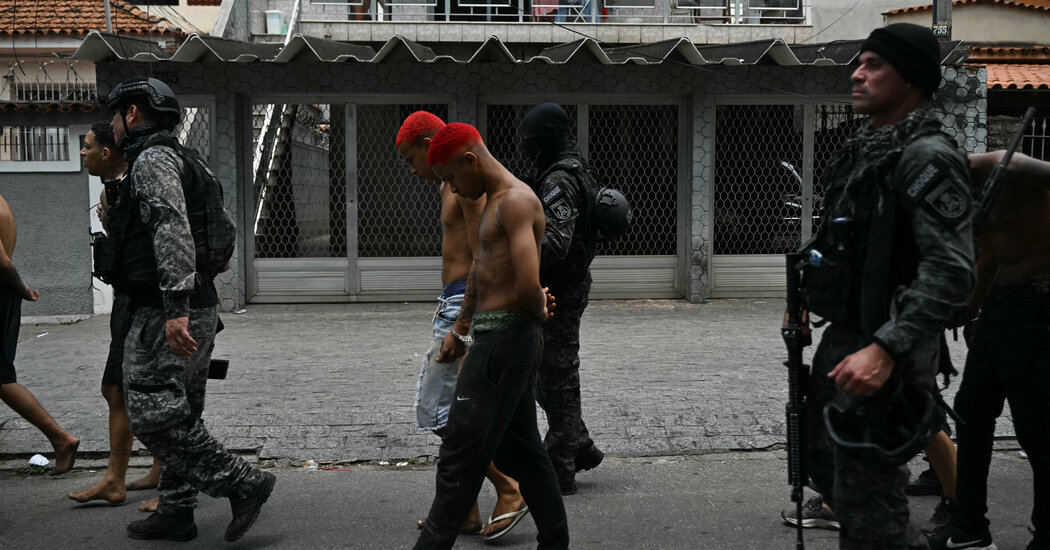
To understand the gravity of Washington’s new classification, one must examine the extraordinary evolution of the Primeiro Comando da Capital (PCC) and the Comando Vermelho (CV), two organizations that began decades ago inside Brazil’s brutal penitentiary systems before transforming into sophisticated multinational conglomerates. The PCC, which emerged from the aftermath of a bloody prison riot in São Paulo in 1993, and the Red Command, born in Rio de Janeiro’s infamous Ilha Grande prison during the late 1970s, have systematically expanded their empires across the South American continent, controlling key transit routes in the Amazon basin and the lawless Triple Frontier border region. Today, these syndicates generate billions of dollars annually by orchestrating the bulk flow of Andean cocaine to lucrative markets in Western Europe, Africa, and the Middle East, using container ships departing from major Atlantic deep-water ports like Santos. Yet, security analysts and transnational crime experts have quickly pointed out a glaring paradox in the State Department’s justification: while both gangs possess terrifying military-grade arsenals and exercise iron-fisted control over vast urban territories, neither has historically prioritized the North American market, which remains overwhelmingly dominated by Mexican cartels. This discrepancy has fueled intense debate over whether the terrorist designation is genuinely rooted in an urgent assessment of domestic threat levels within the United States, or if it represents a symbolic, politically motivated weapon designed to demonstrate the Trump administration’s aggressive stances on border security and hemispheric law-and-order.
The Electoral Cauldron: How a Washington Decree Reshapes Brazil’s Presidential Race
                             BRAZILIAN PRESIDENTIAL ELECTION (OCTOBER)
                             ┌───────────────────────────────────────┐
                             │       Security & Foreign Policy       │
                             └───────────────────┬───────────────────┘
                                                 │
                       ┌─────────────────────────┴─────────────────────────┐
                       ▼                                                   ▼
        Bolsonaro Dynasty (Flávio)                              Lula Administration (Left)
┌──────────────────────────────────────────┐ ┌──────────────────────────────────────────┐
│ • Leverages U.S. Terrorist Designation │ │ • Rejects U.S. Designation as Meddling │
│ • Campaigns on Hardline Security stance │ │ • Targets Financial Assets & Polices │
│ • Deflects focus from Corruption Scandal │ │ • Defends National Sovereign Autonomy │
└──────────────────────────────────────────┘ └──────────────────────────────────────────┘
Within Brazil, the geopolitical maneuvers in Washington have ignited a fierce political storm, perfectly aligning with the electoral strategies of Flávio Bolsonaro as he prepares to challenge the incumbent leftist President, Luiz Inácio Lula da Silva, in the upcoming October election. For the Bolsonaro dynasty, which has long championed an uncompromising, militarized approach to public safety, this U.S. declaration serves as an invaluable external validation of their political platform, allowing them to frame current domestic security challenges as a global crisis that the Lula administration is supposedly too weak or incompetent to handle. Flávio Bolsonaro immediately took to social media to celebrate the announcement, openly taking credit for influencing the Trump administration’s decision while simultaneously launching vitriolic attacks against the president for being dangerously soft on organized crime. This high-profile foreign policy victory arrives at a critical juncture for the younger Bolsonaro, whose campaign had recently begun to falter under the weight of a domestic corruption scandal linking him to a disgraced financier under investigation for a massive money laundering scheme. By refocusing the public discourse on the existential threat of terrorism, the conservative opposition hopes to tap into the deep-seated anxieties of an electorate weary of urban violence, effectively transforming a U.S. foreign policy tool into a cornerstone of their domestic campaign rhetoric.
Sovereignty, Insurgency, and the Ideological Battle Over Counter-Terrorism Tactics
The aggressive rollout of this designation has met with fierce resistance from President Lula da Silva and his foreign policy establishment, who view the move as an unacceptable infringement on Brazilian national sovereignty and a dangerous politicization of judicial matters. Leading the intellectual counter-offensive is Celso Amorim, Lula’s chief foreign policy adviser, who used a high-profile security forum in Moscow to articulate Brasília’s strong opposition to Washington’s unilateral actions. Amorim argued that while the Brazilian state is fully committed to dismantling these heavily armed criminal syndicates, equating organized crime with political terrorism is a flawed methodology that obscures the socioeconomic and structural drivers of delinquency. The Lula administration believes that the most effective way to combat organizations like the PCC and the Red Command is through robust intelligence-led policing, targeted financial investigations, and deep international police cooperation, rather than adopting sweeping American-led labels that carry neo-imperialist undertones. This diplomatic friction is further complicated by a history of perceived U.S. interference, particularly during the turbulent end of Jair Bolsonaro’s administration, when President Trump leveraged targeted tariffs and economic sanctions in a highly controversial attempt to shield his close ally from impending domestic prosecution following the 2022 election disputes.
The Financial Minefield: Secondary Sanctions and Systemic Risk to Brazilian Banking
Beyond the heated geopolitical rhetoric, the U.S. terrorist designation carries profound, highly destabilizing implications for the Brazilian economy, particularly its deeply integrated financial sector. Because the PCC and the Red Command have successfully evolved past simple street-level drug distribution, they have systematically infiltrated the legitimate corporate fabric of Brazil, laundering their illicit capital through extensive holdings in fuel distribution networks, agricultural land, upscale real estate developments, high-value commodities, and sophisticated cryptocurrency platforms. By categorizing these gangs as foreign terrorist organizations, the U.S. government unlocks a sweeping array of economic weapons, most notably the power to impose devastating secondary sanctions on any foreign financial institution that conducts transactions with individuals or entities tied to the groups. Consequently, Brazilian commercial banks, which serve as the engine of South America’s largest economy, now face an unprecedented compliance nightmare, as they must construct incredibly complex forensic screening protocols to ensure they do not unknowingly facilitate transactions for shell companies associated with the gangs. The looming threat of being completely severed from the U.S. dollar clearing system could force major financial institutions to restrict lending, avoid volatile sectors, and adopt over-cautious compliance stances, potentially triggering capital flight and severely dampening foreign direct investment in a country already struggling with economic volatility.
┌─────────────────────────────────────────────────────────────────────────────┐
│ SECONDARY SANCTIONS RISK PATHWAY │
├─────────────────────────────────────────────────────────────────────────────┤
│ [PCC / Red Command] ──► Infiltrate ──► [Formal Economy: Real Estate/Crypto]│
│ │ │
│ Processes │
│ ▼ │
│ [U.S. Treasury Dept] ◄─── Threaten ◄─── [Brazilian Banks] ───┐ │
│ (Secondary Sanctions) (Dollar Clearing Ban) │ │
│ ▼ │
│ [Economic Volatility]│
└─────────────────────────────────────────────────────────────────────────────┘
Fractured Alliances: The Long-Term Fallout for Bilateral Relations in the Americas
As the June 5 implementation date swiftly approaches, the long-term prognosis for bilateral relations between the two largest democracies in the Western Hemisphere remains deeply troubled, marked by an increasingly partisan divide in diplomatic priorities. The groundwork for this confrontational posture was quietly laid months ago when Secretary of State Marco Rubio informed Brazil’s foreign minister of the impending designations, signaling that Washington intended to move forward with the plan regardless of whether Brasília agreed to align its own security classifications. Despite a brief, polite state visit by President Lula to the White House earlier this month, where both leaders carefully avoided publicly addressing the contentious issue, the sheer unilateral force of this decision has shattered any illusions of a unified hemispheric security strategy. By prioritizing a highly politicized counter-terrorism model that elevates the Bolsonaro family’s domestic ambitions, the Trump administration risks permanently alienating a crucial regional partner whose cooperation is vital for addressing migration, energy security, and environmental protection in the Amazon basin. Ultimately, this decision underscores a broader, more aggressive U.S. foreign policy trend that favors isolationist, transactional security measures over collaborative diplomacy, leaving a fractured landscape where crime control is increasingly dictated by the shifting tides of electoral politics rather than a shared commitment to regional stability.