



The Echo of Empires: How Tehran is Framing the Looming Diplomatic Detente
As rumors of a watershed diplomatic breakthrough began to circulate through the corridors of power in Washington and the capitals of the Middle East, the Iranian foreign ministry’s chief spokesman, Esmail Baghaei, chose to respond not with the dry prose of statecraft, but with an evocative journey into the ancient past. On his official social media channels, Baghaei published an image of the famous Naqsh-e Rostam relief—a monumental third-century rock carving etched into the cliffs of Fars province that depicts the Roman Emperor Valerian kneeling in abject surrender before the Sassanian King of Kings, Shapur I, after the disastrous Battle of Edessa in 260 AD. Accompanying this potent visual metaphor was a pointed caption that seemed aimed directly at the political elite in Washington: “In the Roman mind, Rome was the undisputed center of the world. The Iranians shattered that illusion.” For a regime that has spent the last year enduring a relentless military and economic onslaught from the United States and Israel, the deployment of this classical imagery was a calculated opening gambit in a sophisticated domestic and regional public relations campaign designed to frame an impending, highly compromised cease-fire negotiation as an epochal triumph of Persian resilience over Western imperial overreach. By invoking the long-dead ghosts of Roman-Sassanian rivalries, Tehran is signaling to its domestic constituency, its regional proxies, and the broader Global South that its willingness to engage with the administration of President Donald J. Trump is not an admission of defeat, but rather the hard-won concession of a sovereign equal that has successfully defended its borders, weathered a storms of fire and steel, and forced the self-proclaimed hegemon of the twenty-first century to abandon its dictates of unconditional capitulation in favor of structured diplomacy.
Inside the Preliminary Accord: The Strategic Mechanics of a Fragile Truce
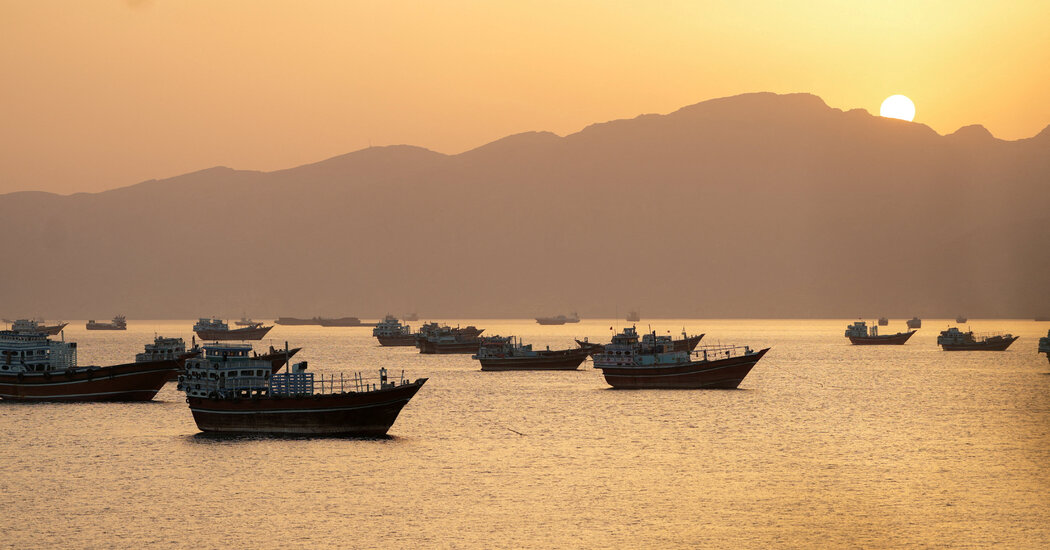
The immediate catalyst for this historical posturing was the disclosure by a senior United States official, speaking on the strict condition of anonymity, that Washington and Tehran have hammered out the contours of a tentative, preliminary agreement aimed at halting their escalating conflict before it spirals into a catastrophic regional conflagration. According to the high-ranking source, the nascent framework hinges on a two-pronged structural compromise: the immediate and complete reopening of the critical Strait of Hormuz to international shipping in exchange for Iran systematically disposing of its highly contentious stockpile of highly enriched uranium, a critical component that international inspectors fear could be rapidly converted into weapons-grade material. However, the American official was careful to emphasize that this diplomatic blueprint remains un-inked and is entirely contingent upon the formal, personal authorization of both President Donald Trump and Iran’s newly active Supreme Leader, Mojtaba Khamenei. Conspicuously absent from this first-phase document are the highly complex and contentious issues that have poisoned bilateral relations for decades, including the long-term future of Iran’s domestic civilian nuclear enrichment programs, its development of nuclear-capable ballistic missiles, and its extensive network of allied regional militias—the so-called “Axis of Resistance.” By deliberately deferring these intractable security dilemmas to a hypothetical second phase of negotiations, both administrations have opted for a transactional, minimalist triage strategy designed to avert immediate economic and military catastrophe, leaving Tehran’s state-controlled media apparatus free to maintain a disciplined silence regarding the specific concessions required under the deal while privately preparing for a high-stakes diplomatic chess match.
From ‘Unconditional Surrender’ to Compromise: The Paradox of Trump’s Iran Strategy
To fully comprehend why Iranian officials are so eager to project an aura of geopolitical victory, one must examine the stark contrast between the current diplomatic reality and the aggressive rhetoric that characterised the Trump administration’s public posture just a few short months ago. At the height of the recent military campaign, President Trump had repeatedly vowed that his administration would entertain absolutely no diplomatic resolutions with Tehran short of “unconditional surrender,” a maximalist policy that sought to leverage unprecedented economic sanctions and devastating military strikes to force a complete capitulation of the clerical state. Yet, the emerging contours of the proposed bilateral understanding suggest that Washington has been compelled to quietly abandon this absolutist doctrine, accepting instead the fundamental Iranian premise that sustainable stability in the Persian Gulf can only be achieved through mutual concessions and structured bilateral diplomatic negotiations. As Ellie Geranmayeh, a prominent foreign policy analyst and the author of the European Council on Foreign Relations’ Iran Nuclear Monitor, points out, this sudden pivot allows the clerical establishment to present themselves to their core supporters as the ultimate regional underdogs who successfully neutralized the combined military and intelligence capabilities of two nuclear-armed adversaries. By maintaining operational control over the flow of global energy through the Strait of Hormuz and demonstrating that the White House’s nuclear anxieties cannot be resolved through sheer kinetic force, Tehran has effectively preserved its core sovereign infrastructure while forcing a highly skeptical American president back to the negotiating table on terms that look remarkably similar to traditional statecraft.
The Changing Guard in Tehran: Mojtaba Khamenei’s High-Stakes Geopolitical Recklessness
This newfound strategic assertiveness is directly linked to a profound and generational transition of power currently unfolding within the secretive corridors of the Islamic Republic’s ruling elite. For nearly four decades, the late Supreme Leader Ayatollah Ali Khamenei—who was killed during the devastating opening exchanges of the joint U.S.-Israeli military campaign—had pursued a highly cautious, deeply calculated doctrine of asymmetrical deterrence, consistently seeking to avoid a ruinous direct military confrontation with the United States while project power through proxy forces. However, his son and successor, Mojtaba Khamenei, alongside an aggressive new generation of military commanders, has rapidly dismantled this predictable defensive playbook in favor of a highly risky, confrontational foreign policy posture. Rather than retreating in the face of overwhelming Western military superiority, Iran’s new leadership demonstrated a shocking willingness to weaponize the global economy, completely closing the Strait of Hormuz to international maritime commerce—even at the cost of crippling their own commercial shipping—and launching direct, sophisticated missile barrages against key neighboring Gulf Arab states that host critical American military installations. Mohammad Ali Shabani, a leading regional expert and editor of the independent news platform Amwaj.media, observes that this calculated unpredictability has fundamentally altered Washington’s strategic calculus, proving to the international community that the new regime in Tehran is entirely willing to absorb immense physical damage and inflict systemic disruption on the global energy market to compel its adversaries to negotiate on an equal footing.
Domestically Battered but Strategically Sovereign: The Economic Underpinnings of Tehran’s Stance
While Tehran’s diplomats proudly contrast their modern strategic resilience with the triumphalist carvings of the Sassanian Empire, the domestic reality on the ground inside Iran remains exceptionally grim. The country is currently suffering through a catastrophic macroeconomic crisis, with its domestic currency in freefall, hyperinflation eroding the purchasing power of ordinary citizens, and key industrial sectors—including steel mills, petrochemical installations, and refining facilities—lying in ruins after months of sustained, highly precise aerial bombardments. Under these desperate domestic circumstances, any preliminary agreement that offers even temporary sanctions waivers for the export of Iranian crude oil or facilitates the unfreezing of tens of billions of dollars in overseas financial assets represents an indispensable economic lifeline for the regime. Farzan Sabet, an expert on international sanctions and weapons proliferation at the Geneva Graduate Institute, notes that while these economic relief measures will be hailed domestically as a historic capitulation by the West, the regime’s long-term geopolitical leverage remains highly vulnerable. Indeed, the temporary nature of Iran’s control over the Strait of Hormuz is already accelerating plans by powerful regional competitors like Saudi Arabia, the United Arab Emirates, and Qatar to invest heavily in expansive trans-peninsular pipeline networks designed to bypass the strategic waterway entirely, potentially neutralizing Tehran’s most potent geopolitical weapon within the coming decade.
The Mirage of Victory: Why This Diplomatic Detente May Yield a Fragile Lose-Lose Standoff
Ultimately, much of the optimism surrounding this potential bilateral understanding may rest on a profound misreading of what a “preliminary deal” can realistically achieve in the current, highly polarized global security environment. Ali Vaez, the Iran Project Director at the International Crisis Group and a seasoned observer of backchannel diplomacy, expresses deep skepticism regarding the viability of transitioning this temporary pause in hostilities into a comprehensive, legally binding diplomatic treaty. In Vaez’s estimation, the structural political impediments in both Washington—where congressional hawkishness remains entrenched—and Tehran make it highly unlikely that either side will possess the domestic political capital necessary to navigate a highly complex second phase of negotiations. Rather than representing a clear victory for either Donald Trump’s unilateral pressure campaigns or Mojtaba Khamenei’s aggressive doctrine of asymmetric resistance, this fragile understanding is best understood as a desperate, mutual retreat from the brink of a mutually assured economic and military disaster. It is a temporary stabilization mechanism born out of sheer exhaustion, offering both nations a brief, highly unstable respite from a conflict that has left both parties strategically diminished, economically battered, and no closer to a permanent resolution of their deep-seated geopolitical rivalries.