



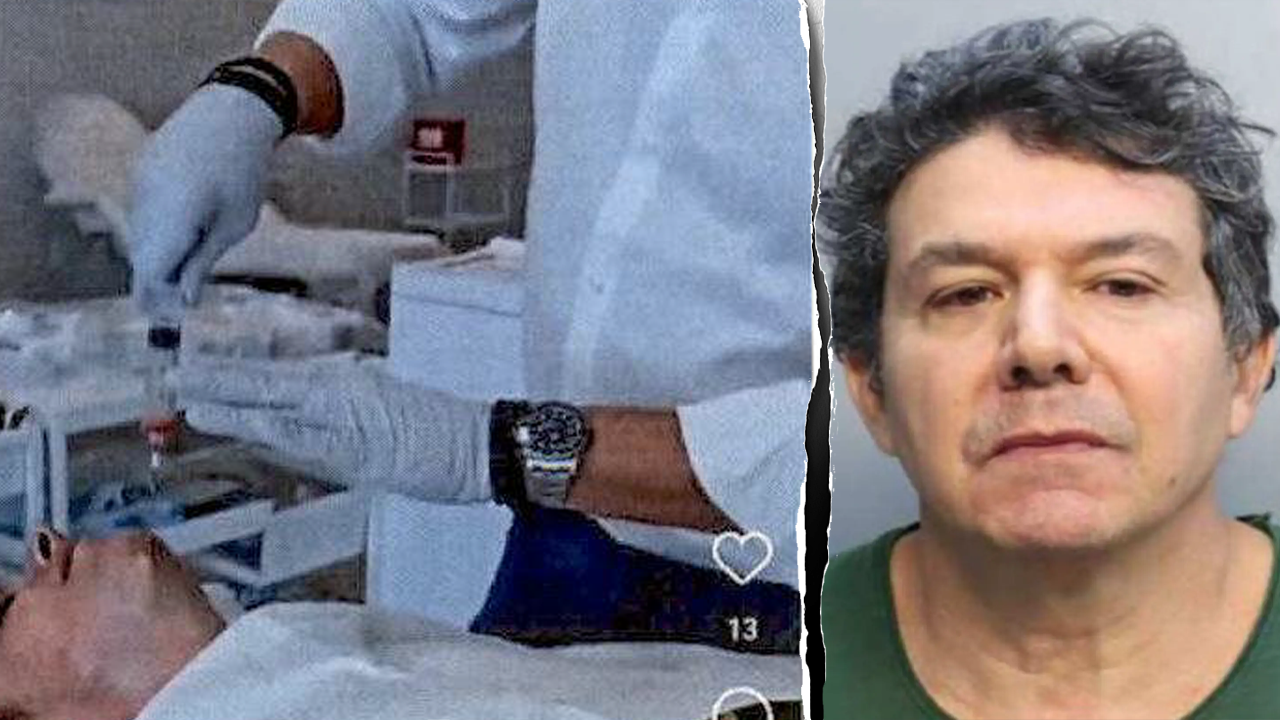
In the sun-washed, image-obsessed world of Miami, where beauty often feels like a form of currency, a man once dubbed “Dr. Frankenstein” was supposed to finally face the music. Instead, he has become a ghost. Joao Batista Cunha De Araujo, a 57-year-old Brazilian national, vanished just days before he was scheduled to go on trial, leaving behind a trail of unanswered questions, abandoned legal battles, and a tampered ankle monitor that now serves as a symbol of his alleged betrayal. Authorities say Araujo, who is accused of performing plastic surgeries without a medical license, had been living on borrowed time, moving through Miami’s glittering corridors of cosmetic enhancement while prosecutors were building a 14-count case against him, 13 of them felonies. The charges paint a picture of a man who allegedly traded in dreams—charging thousands of dollars for procedures he had no legal right to perform, and leaving patients with physical and emotional scars that no amount of filler could fix. The nickname “Dr. Frankenstein” was never a compliment. It was a warning, spoken by critics who saw in Araujo something monstrous lurking behind a charming professional facade. But now, instead of a courtroom reckoning, there is only silence, a locked high-rise apartment, and a global manhunt that may ultimately lead back to his native Brazil.
To understand how Araujo ended up on the run, you have to go back to the investigation that first exposed him. It began, as so many good police stories do, with a whisper. Authorities received a pair of anonymous tips that led them to suspect that Araujo was operating a rogue medical practice, offering invasive procedures without the proper credentials. Rather than storming in with accusations, law enforcement orchestrated a sting. An undercover detective walked into Araujo’s office, pretending to be a potential patient seeking chin liposuction. The detective was allegedly given a quote for the procedure, a moment that would become a key piece of evidence in a case that accused Araujo of theft, fraud, and practicing medicine without a license. The arrest that followed was dramatic, but the allegations were even more disturbing. According to the Florida Department of Health, neither Araujo nor his co-defendant, Amanda Soares Felizardo Ungaro, had any kind of medical license in the state. Yet they were allegedly performing procedures on real people, people who came to them seeking confidence, hoping to change something about themselves they didn’t like. It is impossible to overstate the vulnerability that cosmetic patients bring into a consultation room. They are often at their most self-critical, their most hopeful, and their most trusting. That trust, according to prosecutors, was exploited in the most cynical way imaginable.
What followed Araujo’s arrest should have been a straightforward legal process, but it quickly became a game of cat-and-mouse. A judge ordered Araujo to surrender his passport and placed him on an ankle monitor while he awaited trial. His attorney, Mark Eiglarsh, was preparing a vigorous defense, saying his client had pleaded not guilty and intended to fight the charges. To the outside world, it seemed like Araujo was going to stay and defend his name. But on Saturday, August 1, three days before his trial was scheduled to begin, the ankle monitor sent out a chilling alert: tamper. Two police officers raced to his last known location, a high-rise on the Bay Harbor Islands just north of Miami Beach. What they found was an empty residence. No Araujo. No monitor. No answers. The house arrest was immediately revoked, and a Miami judge issued a new arrest warrant, this time authorizing full extradition. It was a stunning development, one that made the phrase “fleeing justice” feel chillingly real. Even Araujo’s own lawyer expressed bewilderment. “For reasons unknown to me, he has chosen to make himself unavailable to continue fighting for his innocence,” Eiglarsh said. It is a strange moment when a defense attorney, trained to expect the unexpected, is left standing in the courtroom wondering where his client went. Eiglarsh insisted he was prepared to challenge the prosecution’s allegations, but his words carried the unmistakable echo of abandonment.
The mystery deepened when reports surfaced that Araujo may have already left the country, likely bound for Brazil. The question everyone wanted answered was how. He had surrendered his passport months earlier, and his ankle monitor had been tracking his every move. Yet somehow, the man accused of being a phantom surgeon had apparently slipped through the cracks. The U.S. Marshals and Brazilian government were both unreachable for comment, leaving the public to fill in the gaps with speculation and disbelief. Then came the almost taunting video. Araujo’s wife, Amanda Soares Felizardo Ungaro, who had already been deported to Brazil earlier in the year, posted a video online showing her husband smiling across a restaurant table, looking relaxed, looking happy, looking like a man who had somehow escaped the long arm of the law. Ungaro herself had been charged with seven counts in connection with the case, and now she appeared to be living openly with the man authorities desperately wanted to find. The optics were devastating. For the alleged victims, it must have felt like the ultimate insult: the man who supposedly harmed them was out there, eating dinner, smiling, living his life, while they were left to pick up the pieces. Araujo had previously asked the court for permission to return to Brazil while awaiting trial, a request that was flatly denied by Judge Tanya Brinkley, who reportedly feared he would not come back. She was right.
The human cost of this case is perhaps best illustrated by one patient, identified only as “AJ,” whose story reads like a cautionary tale about the dangers of placing beauty in the wrong hands. AJ told police that she visited Araujo seeking lip and jaw filler, a routine cosmetic treatment that millions of women undergo safely every year. What she received, according to court documents, was something else entirely. In just one sitting, she was injected with seventeen bottles of filler. Seventeen. The procedure was not just excessive; it was dangerous. The filler hardened under her skin, leaving painful lumps in her lips, jaw, and cheekbone. She had paid $15,000 for the privilege, though the price was later reduced to $7,000, perhaps a tacit admission that something had gone terribly wrong. Eventually, she had to seek help from a licensed plastic surgeon to try to undo the damage. One can only imagine the emotional toll: the humiliation, the physical pain, the shame of feeling like you were conned while staring at a distorted reflection in the mirror. This is not a case about vanity. It is about vulnerability, and how one person allegedly weaponized that vulnerability for profit. Every patient who walked into Araujo’s office handed over more than money; they handed over their bodies, their fears, and their aspirations. And according to authorities, they handed it all to a man with no credentials, no accountability, and no conscience.
As the search for Araujo continues, his story has become a strange kind of parable for our times, a reminder that in a world obsessed with perfection, there will always be those willing to sell it fraudulently. The term “Dr. Frankenstein” may once have been the stuff of science fiction, but in this case, it describes a very real nightmare. For the alleged victims, there is little comfort in knowing that the world is looking for him. They wanted their day in court, a chance to look him in the eye, and a verdict that would validate their suffering. Instead, they got an ambiguous social media post and a man who chose to vanish rather than face the consequences. His lawyer’s promise to continue fighting on his behalf feels hollow without a client to defend. His wife’s smiling video feels like salt in the wound. And the legal system, so careful to protect his rights, now must confront the reality that he spat on those protections by running away. Whether Araujo is found in Brazil or somewhere else entirely, his flight has already told the world more about him than any trial ever could. A man who truly believed in his own innocence would not abandon his defense. A man who respected his victims would not flee. But then again, a man who performed surgery without a license, left patients with lumps in their faces, and charged them thousands of dollars was never interested in being the hero of this story. He was, it seems, always destined to be the villain, a Frankenstein of his own making, running from the lightning rather than standing in its light.