

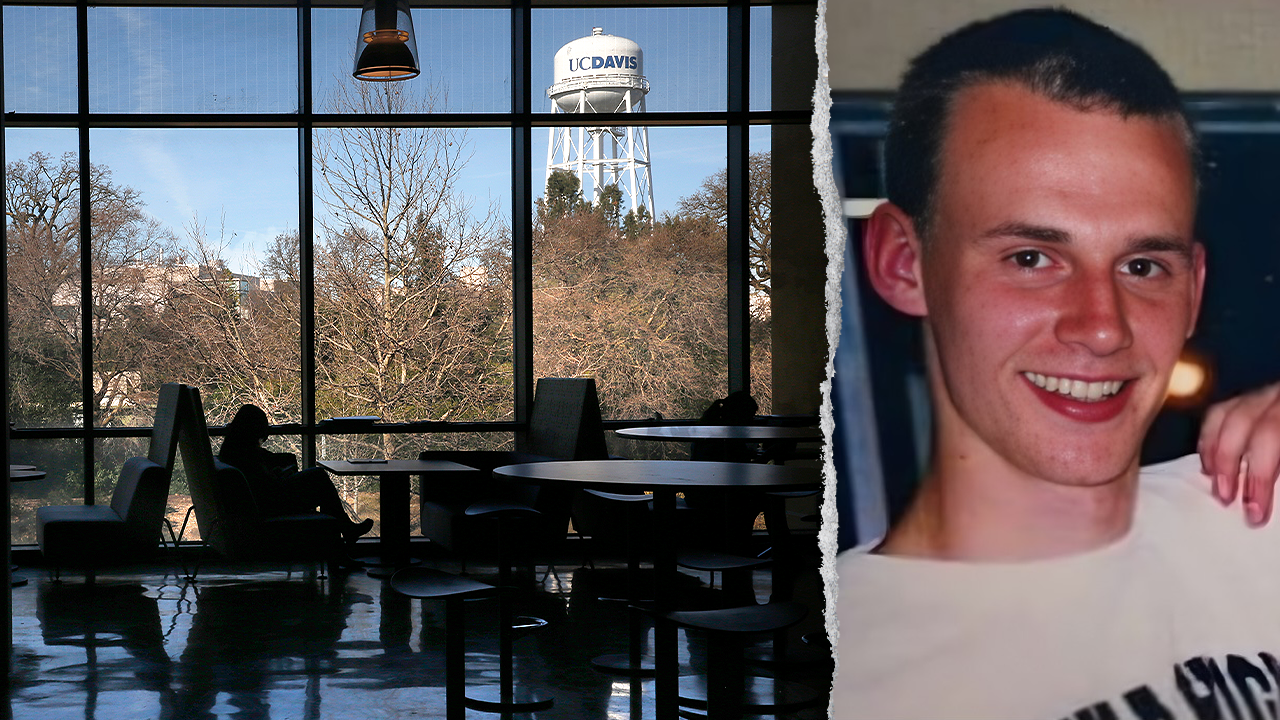
Twenty five years ago, the quiet college town of Davis inside California was shattered by a grim discovery that would alter a family life forever and leave an enduring shadow over the University of California Davis campus. Andrew Wieman was a bright young junior with his entire future ahead of him, navigating the challenges and excitement of college life as an active member of the Kappa Sigma fraternity. However, the promise of his youth was violently cut short on the chilly afternoon of January fourth, two thousand and one, when his lifeless body was discovered in his locked fraternity dorm room. The scene was nothing short of horrific because the young student had suffered twenty nine distinct stab wounds, a devastating and bloody end that sent shockwaves through the campus community and deeply traumatized his close family. To those who loved him, Andrew was not just a headline or a student ID number; he was a beloved son, loyal brother, and cherished friend whose sudden absence left an agonizing, hollow void. The initial shock of his death soon transformed into a complex and multi decade struggle for clarity as his family began to grapple with the official narrative presented by law enforcement. The sheer brutality of the scene seemed fundamentally incompatible with the quiet and gentle young man they knew, sparking an immediate and profound sense of disbelief. In the days following the tragedy, as fraternity brothers packed their bags and the campus tried to return to normalcy, the Wieman family found themselves frozen in time, standing at the precipice of a grueling twenty five year journey to uncover what truly happened behind that locked door. They were left to wonder how a young man on the cusp of adulthood, who had so much to look forward to in his future, could meet such a violent, isolated, and sudden end in what should have been a safe haven. This tragic loss ignited decades of intense grief and unresolved questions they still ask today.
Following a rigorous and highly publicized thirteen month joint investigation that united the resources of the UC Davis Police Department, the Yolo County Coroner’s Office, and the California Department of Justice, authorities ultimately delivered a ruling that stunned the Wieman family: Andrew’s violent death was officially classified as a suicide. In presenting their final conclusion, investigators pointed to a collection of circumstantial and physical evidence that they believed, when viewed in its totality, left no room for alternative explanations. Among these key factors was a handwritten note recovered from his room, alongside the determination that the knife used to inflict the wounds belonged to Andrew himself and bore only his fingerprints. Furthermore, detectives emphasized that there were no signs of forced entry, no evidence of a struggle within the pristine room, the windows were thoroughly secured from the inside, and all keys to the room were accounted for, implying an absolute isolation. The then UC Davis Police Chief, Calvin Handy, publicly characterized Andrew as a troubled individual, suggesting that his tragic end was the result of a silent, internal battle that culminated in an unimaginable act of self harm. Yet, for Andrew’s grieving family, this official perspective felt less like a resolution and more like a dismissive, incomplete analysis of a young man’s life and death. They struggled to reconcile the image of their vibrant Andrew with the troubled caricature presented to the press, and they vehemently questioned how a person could physically or psychologically inflict such a massive volume of self harm without hesitating or showing any defensive biological reactions. This deep seated skepticism became the driving force behind their twenty five year quest for answers, keeping Andrew’s memory alive while pushing back against a systemic determination they felt was designed to quiet a scandalous campus tragedy rather than uncover the objective truth. The family remains convinced that key investigative avenues were left completely unexamined, further cementing their refusal to accept an easy explanation that they believe is a major historical injustice.
What exactly makes Andrew Wieman’s ending so uniquely disturbing, and what continues to capture the attention of forensic experts and true crime investigators alive, are the highly anomalous and strange physical details of the scene that defy conventional medical and psychological understanding. The official autopsy revealed that Andrew was stabbed twenty nine times, with several of those wounds being immediately and independently fatal, piercing through vital organs. Yet, the toxicology reports confirmed that he had absolutely no drugs, alcohol, or substances in his system at the time of his death, a fact that means if he did indeed inflict these wounds upon himself, he did so in a state of complete unanesthetized sobriety, enduring excruciating pain with each consecutive strike. Furthermore, the bizarre circumstances of how his body was discovered add a layer of chilling abnormality to the suicide theory; investigators found Andrew seemingly tucked into bed and wearing earplugs. These peculiar details, which were largely kept from public scrutiny during the initial investigation, raise profound questions about human behavior and physical capability: how does a person inflict twenty nine agonizing stab wounds upon themselves and then cleanly tuck themselves into bed, or conversely, why would someone prepare for sleep with earplugs if they were planning to violently end their own life? The sheer logistics of self inflicting multiple fatal sharp force injuries without any hesitation marks, a standard clinical expectation in most suicide cases, remains a central question for independent medical examiners. The total lack of biological panic or defensive reactions further complicates this picture, leaving experts to ponder how anyone could survive the shock of the first several fatal blows to continue. For decades, these unanswered questions have lingered in the minds of those who refuse to let this case fade away, pointing to a severe disconnect between the clinical theories of the joint investigation and the raw, unyielding physical reality of human biology under extreme trauma, an inconsistency that still fuels the family’s many decades of skepticism and their unresolved grief.
At the heart of this unresolved mystery lies a gaping, sixty hour void that represents the final chapter of Andrew Wieman’s life, a prolonged period of silence that remains entirely unaccounted for in the official timeline. The last confirmed sighting of Andrew occurred in the quiet, early morning hours of January second, two thousand and one, meaning that nearly two and a half days passed before his body was ultimately discovered on the afternoon of January fourth. Sixty hours is an eternity in the context of a missing person or a crime, representing a vast stretch of time during which anyone could have entered or exited the fraternity house, and during which untold events could have played out behind closed doors. Investigators and podcasters alike are left to wonder what transpired during those silent hours: was Andrew alone, retreating into a dark and isolated psychological space, or was there another presence, a visitor whose tracks were somehow covered or overlooked by initial responders? Now, a quarter of a century later, the passage of time introduces a powerful new element to the case, as individuals who were once young college students, perhaps paralyzed by fear, social pressure, or the protective omertà of fraternity life, have grown into mature adults with families and careers of their own. As these former classmates and fraternity brothers reflect on their own lives and the value of truth, their changing perspectives may finally outweigh the fear that once bound them to silence. The hope of Andrew’s family and modern investigators is that the heavy burden of keeping a secret for twenty five years may finally become too much to bear, prompting someone to come forward with a crucial piece of information that they were too intimidated to share in the immediate, emotionally charged aftermath of two thousand and one. Even a single memory, a missed detail, or a long guarded confession could easily hold the key to reconstructing those lost sixty hours and finally bringing the truth to light.
This enduring quest for answers has recently been granted a powerful new platform through the dedicated efforts of Emmy Award winning producer Kyle Olson, who is diving deep into Andrew’s case for the highly anticipated second season of his true crime investigative podcast, “Love & Justice.” Olson’s commitment to the project is fueled by a profound sense of human empathy and personal understanding of the devastating impact of unsolved tragedies; the first season of his podcast focused on the unresolved murder of his own childhood friend, Ashley Love, an experience that gave him firsthand insight into the endless purgatory of grief that families endure when justice is left unserved. Rather than seeking to sensationalize Andrew’s death or force a pre packaged conspiracy theory onto his listeners, Olson and his production team are utilizing a thoughtful, objective, and intellectually rigorous approach to re examine the historical files and physical evidence. By collaborating with renowned forensic experts and utilizing modern anatomical reconstruction technology, the podcast aims to analyze the biological feasibility of the official suicide ruling, exploring whether advancements in science over the past twenty five years can shed new light on the mechanical possibility of the wounds. Olson is not interested in alienating those who believe the original suicide ruling was correct, but is instead creating an open, multi faceted dialogue that invites perspectives from all sides of the debate, including the original investigators, forensic professionals, and those close to Andrew. By blending personal loss with highly objective investigative methodologies, Olson hopes to bridge the gap between cold administrative records and the emotional reality of a grieving family. His ultimate goal is to provide a platform for honest inquiry, using the power and reach of modern investigative journalism to dismantle the wall of silence that has surrounded this case for decades and to offer the Wieman family the thorough, unbiased examination they have desperately sought since two thousand and one. Their one persistent hope is that this dedicated media spotlight will catalyze major breakthroughs.
At its core, the renewed interest in Andrew Wieman’s tragic death is not merely an exercise in historical curiosity or true crime entertainment, but a deeply human crusade to restore dignity to a young life cut short and to bring lasting peace to a family that has spent twenty five years suspended in a painful state of limbo. The journey of the Wieman family highlights the profound, lasting scars left by ambiguous loss, demonstrating how the lack of a satisfying and logical resolution can prevent the natural process of healing and force a family to carry the heavy mantle of advocacy for decades. By shining a modern, empathetic light on Andrew’s story, Kyle Olson’s “Love & Justice” podcast serves as a powerful reminder that no victim is ever truly forgotten, and that the passage of time should never be an excuse for the abandonment of truth. As we reflect on this agonizing case and the complex emotional landscape surrounding suicide, mental health, and violent loss, we are reminded of the critical importance of compassion and support systems for those battling silent struggles; resources like the national Suicide & Crisis Lifeline at 988 stand as vital beacons of hope, offering help to anyone navigating their darkest hours. For the Wiemans, the hope remains that this new wave of forensic scrutiny and public awareness will finally break through the historical narrative of suicide, revealing whether Andrew’s death was a lonely tragedy or a dark secret hidden away in a fraternity dorm room. By courageously demanding a closer look at those twenty nine wounds, the locked doors, and the missing sixty hours, they are not only fighting for their beloved son but asserting a fundamental human truth: that every life deserves an honest, transparent accounting, and that justice, no matter how long delayed, is always worth fighting for. Ultimately, their tireless search for peace continues to inspire all who believe that the memory of a cherished young man must never be allowed to pass quietly into the night.